
- By Ridam Sharma
- Thu, 25 Jun 2026 06:06 PM (IST)
- Source:JND
Breathing Techniques For Anxiety: The anxiety can creep in at any moment, from in between meetings, in a chaotic commute, or while you are struggling to balance personal and professional responsibilities. One quick way to move your body from the state of alertness to relaxation is to stop and take a few deep breaths. In a modern, fast-paced, rushed world, breathing techniques have become a necessary life skill.
So, next time you feel anxious in the middle of the day, take just a minute and try these easy breathing techniques. Practice will give you quick results, and might make you feel better focused and present.
5 Key Breathing Techniques To Calm Down Your Anxiety In The Middle Of The Day
Life can be hectic, stressful and unpredictable. Therefore, here are 5 breathing exercises that you can do to relax, refocus, and manage the symptoms of anxiety, suggested by the National Health Service.
1. Diaphragmatic (Belly) Breathing
Belly breathing activates the parasympathetic nervous system, which slows the heart rate and decreases levels of stress hormones.
How To Do It?
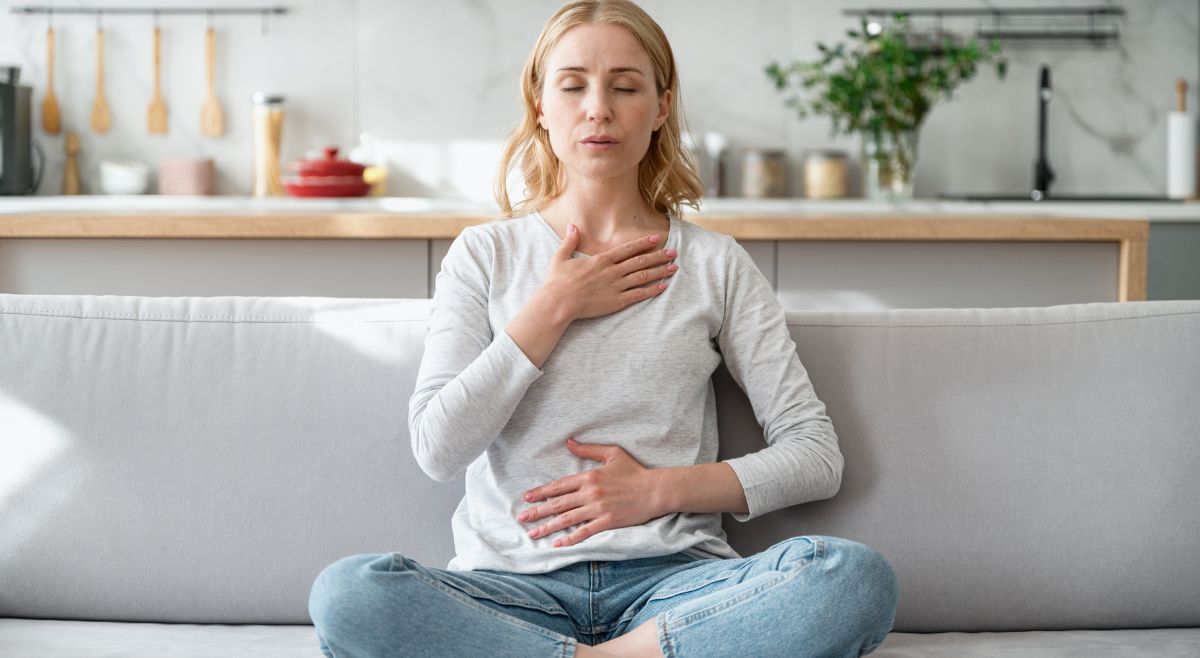
Sit up straight or stand up tall. Put one hand on your chest and another on your stomach. Inhale slowly through the nose for four counts; let your stomach expand (your chest should not move much). Exhale slowly through your mouth for six counts. Perform the exercise for 4-6 breaths.
2. 4-4-8 (Box) Breath
Box Breath is all about a consistent rhythm that distracts your brain from obsessive thinking and soothes the body.
How To Do It?
Take a four-count inhale through the nose, followed by a breath hold of four counts and an exhale through the mouth for eight counts. Do this three to five times.
3. 4-7-8 Relaxing Breath
Practice relaxing breath as extended exhale and breath-hold, it increases vagal tone, helping to relax and get some sleep in the evening.
How To Do It?
If possible, close your eyes. Inhale through the nose quietly for four counts, hold for seven counts and exhale through the mouth with sound for eight counts. Repeat four times.
4. Resonant (Coherent) Breathing
The Coherent Breathing technique tries to achieve the best breathing rhythm (five to six breaths a minute) for synchronisation of heart rate variability for better emotional management.
How To Do It?
Take five seconds inhaling air through your nose and five seconds exhaling the air from your body. Your breath must be steady and rhythmic. Perform this practice for five to ten minutes if possible, but even two minutes are beneficial.
ALSO READ: 7 Reasons Why Gen Z Is So Anxious Today
5. Alternate Nostril Breathing (Nadi Shodhana)
Nadi Shodhana is an alternate nostril technique that is good for balancing the nervous system and focusing one’s attention, thereby reducing any anxious responses.
How To Do It?
Sit in a comfortable position. Block your right nostril using your right thumb and breathe in slowly through your left nostril. Block your left nostril using your right ring finger, unblock your right nostril, and breathe out from it. Breathe in through the right nostril, block it, and breathe out from your left nostril. That completes one round. Repeat 6-10 rounds.
Quick Tips:
- Go easy. No need to gasp; taking deep, even breaths is most effective in public places or work environments.
- Straightening your posture, relaxing your shoulders and elongating your spine helps improve your breathing techniques.
- Do regular practice, as consistency plays a key role. Try these breathing exercises 5 to 10 minutes a day. This will improve the effectiveness of these methods.
Lastly, these techniques work well to calm your stress and anxiety to some extent, but the above-listed breathing techniques are not a substitute for medical advice and are only for general informational purposes. This content should not be relied upon to diagnose or treat any medical condition. Do not use this content as an excuse to not see a health care professional, and do not use it as a substitute for their advice.