
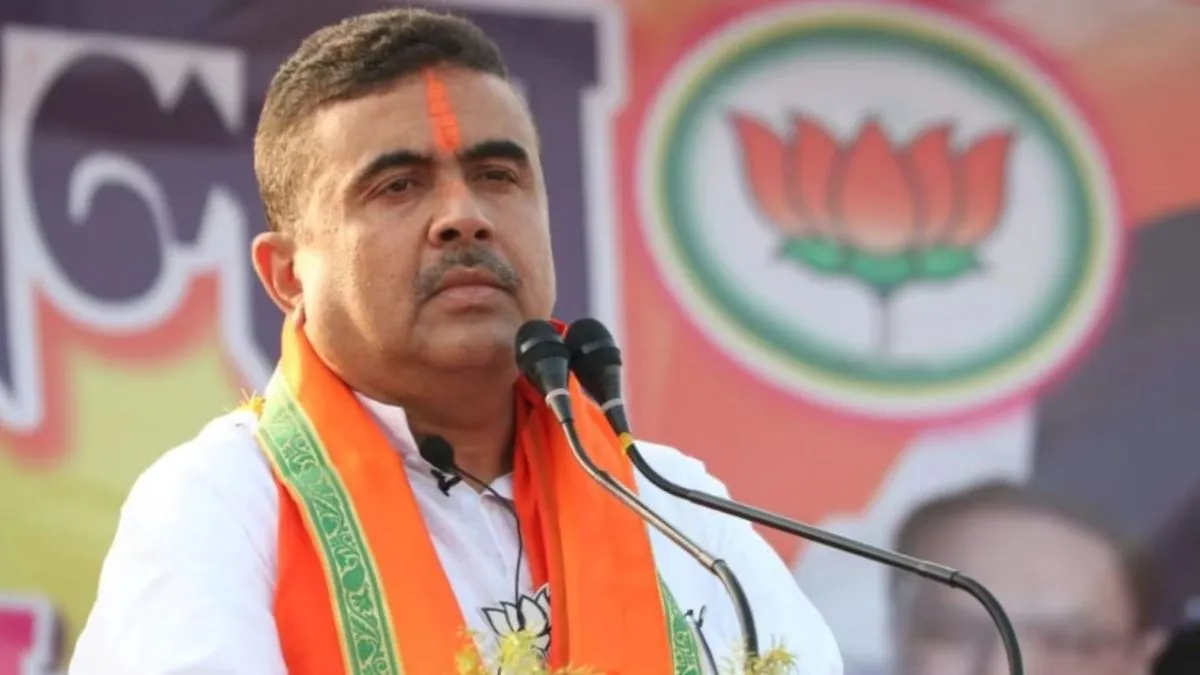
- By Surarika Das
- Mon, 25 May 2026 05:25 PM (IST)
- Source:JND
The newly elected BJP government in West Bengal on Monday operationalised its "Detect, Delete and Deport" policy, aimed at banishing the illegal immigrants from the state, by setting up a "holding centre" in Malda district, where nine suspected Bangladeshis have been housed.
This came two days after West Bengal CM Suvendu Adhikari ordered the authorities to set up "holding centres" for "apprehended foreigners" and "released foreign prisoners awaiting deportation or repatriation".
The holding centre, set up at Chandan Park in English Bazar, began functioning after nine people -- including three women and six minors -- were brought there from Gazole's Pandua area on Sunday.
The facility has been placed under layered security cover with CCTV surveillance, deployment of 12 police personnel, civil defence staff and civic volunteers.
"The holding centre has started functioning. At present, nine Bangladeshi nationals are being housed there. Necessary verification and legal procedures are being carried out. The detainees are being treated in accordance with prescribed legal norms," a senior police officer said as quoted by PTI.
BJP's Detect, Delete And Deport Policy
During the election campaign, the BJP used illegal immigration as one of its key issues. Now, the government's anti-infiltration agenda has entered the implementation phase.
In the first step towards the implementation of the policy, the state Home and Hill Affairs Department's Foreigners' Branch, on May 23, directed all district magistrates to build the required facilities to accommodate "arrested foreigners" and "released foreign prisoners" until the process of deportation is completed.
The order also mentioned a 2025 advisory released by the Union Home Ministry in May last year, providing thorough procedures for dealing with Bangladeshi nationals and Rohingya nationals found living illegally in India.
"In this connection, it is requested to take initiative/appropriate action for setting up of Holding Centres in the district for apprehended foreigners as well as for the released foreign prisoners awaiting deportation/repatriation," the order said.
Under the Centre's guidelines, people suspected of entering the country illegally may be kept in such facilities for up to 30 days while authorities verify their nationality and documents. The final say on the citizenship of the people would rest in the hands of district magistrates or officers of a similar rank.
The process also envisages the collection of biometric data, uploading records to central databases and eventual transfer of identified illegal immigrants to border security authorities for repatriation.
How Suvendu's Policies Are Similar To Trump's
The Bengal government's "Detect, Delete and Deport" policy has sparked comparisons with the tough immigration enforcement measures adopted in the US under President Donald Trump.
In July 2025, the US Immigration and Customs Enforcement (ICE) introduced a policy saying any immigrant who crossed the border without permission could face mandatory detention and could be held without a bond hearing, which is similar to bail in the immigration system.
ICE, therefore, held the power to detain millions of people for an indefinite period without allowing them to challenge the reasons for their detention.
Similarly, Suvendu Adhikari last week announced that infiltrators held by state police would be handed directly to the Border Security Force (BSF) for deportation instead of being pushed through lengthy legal procedures.
Suvendu maintained that those outside the purview of the Citizenship (Amendment) Act would be treated as illegal entrants. "Those who are outside the purview of the CAA are infiltrators and will be arrested by the state police and handed over to the BSF," Adhikari had said.
Under the proposed mechanism, the BSF would coordinate with Border Guards Bangladesh for deportation formalities. The mechanism also appeared linked to the Immigration and Foreigners Act, 2025, enacted by Parliament last year.
The law replaced multiple earlier legislations governing immigration, registration and foreign nationals and introduced a more technology-driven structure for surveillance, detention and deportation.
(With PTI Inputs)