
- By Raju Kumar
- Wed, 08 Apr 2026 01:23 PM (IST)
- Source:JND
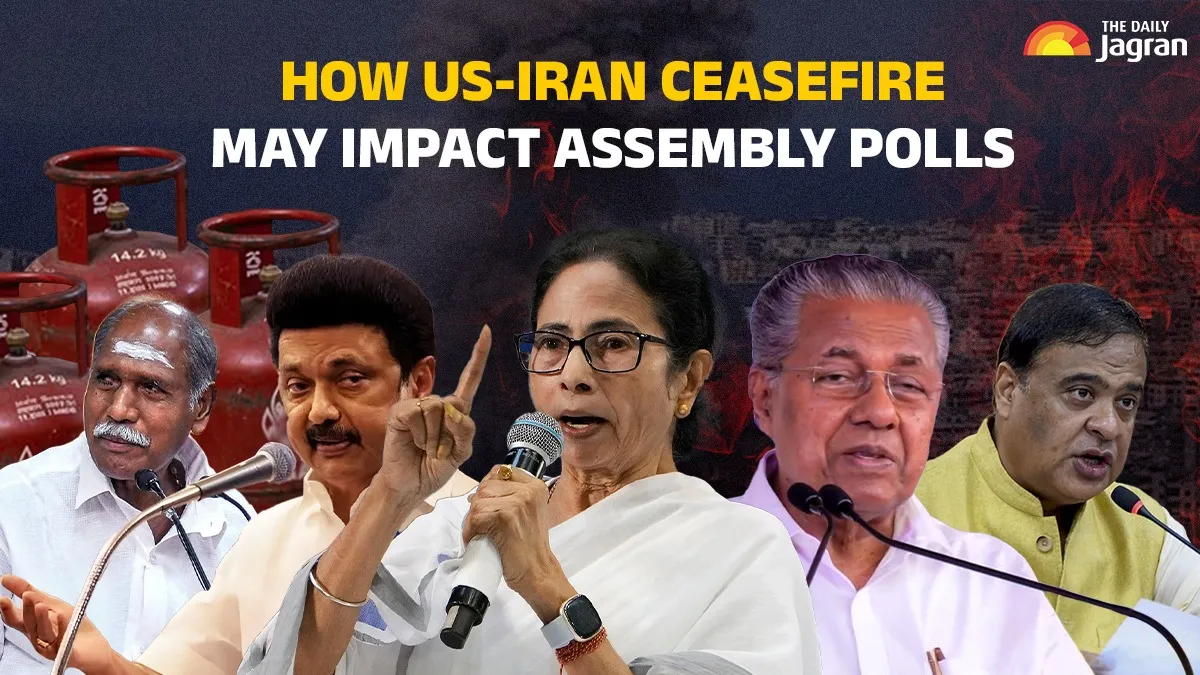
Assembly Elections 2026: India woke on Wednesday to news that provided a sigh of relief. The US and Iran announced a two-week ceasefire in the ongoing war, which created a global fuel crisis. Iran accepted the proposal to reopen the Strait of Hormuz, a critical global chokepoint which caters to one-fifth of the world's fuel needs. The development comes days ahead of crucial voting in the five states: Assam, Kerala, Puducherry, Tamil Nadu, and West Bengal. Assam, Kerala and Puducherry will vote on April 9, while Tamil Nadu on April 23 and West Bengal in two phases: on April 23 and 29.
The 40-day-long war created a fuel crisis in India as well. Long queues were seen in front of gas distributor offices across the country a few days ago. Prices of crude oil once remained over USD 100, impacting rates of several items, irking people in India. The inflation and LPG gas crises forced several hoteliers and eateries to close their businesses. Black marketing of the cylinders also added woes to the lives of common people. The Centre, led by Bharatiya Janata Party (BJP), was under attack as the Opposition parties blamed the ruling party for the crisis and mismanagement. There was also a fear that post-election, the rates of daily usage items may be hiked. Now, the ceasefire came as a big relief not only for the common people but also for the BJP and its allies.
How Ceasefire Will Impact Elections
As a fuel-importing country, India got a big relief as Iran accepted the proposal to reopen the Strait of Hormuz, a critical global chokepoint which passes one-fifth of the world's fuel needs. India imports about 60% of its LPG consumption, and out of these imports, about 90% come through the Strait of Hormuz. If the narrow sea passage is opened by Iran, normalcy will return in the gas supply across the states. Also, the ceasefire triggered a massive sell-off in the energy sector. Brent Crude plummeted 13.04 per cent to trade at USD 95.02 per barrel, while US Crude Oil dropped 13.76 per cent to USD 97.41, which means the prices of items will see a drop.
ALSO READ: Kerala Polls: LDF Reposes Faith On Sitting MLAs, UDF Bets On New Faces | Ticket Distribution Decoded
State-Wise Impact:
Kerala: Kerala's political landscape will be most impacted compared to other poll-bound states, as millions of people from the state work in the Gulf countries. The ceasefire brought relief for the families whose kin are living in the conflict region. 90 per cent of Kerala's 23.63 lakh diaspora live in the Middle East countries. Their safety was a big poll issue in the elections. Kerala CM Pinarayi Vijayan urged PM Modi to ensure safety and evacuations for Indians in the Gulf in the first week of the war.
ALSO READ: How Final 90 Minutes Stopped Iran's 'Total Obliteration'; What Made Trump Halt Strikes?
Tamil Nadu: Being a leading industrial state, oil prices and commercial gas shortage impacted it the worst. Tamil Nadu Chief Minister MK Stalin, on March 24, attacked the Centre over the lack of preparedness in ensuring LPG availability, asserting that preparedness cannot be outsourced to the people.
West Bengal: The state is seeing a tough fight between the ruling TMC and the BJP. The ruling party launched attacks on PM Modi when the LPG cylinder crisis was at its peak. TMC accused him of prioritising politics in Bengal, forcing people to queue up for LPG cylinders.
Assam: The gas crisis also hit Assam. Small eateries were forced to close their business for a brief period due to a lack of commercial and domestic gas. Congress criticised the state government as well as the Centre.
Puducherry: The All India NR Congress (AINRC) government, backed by the BJP, also faced the heat of the fuel crisis like other state governments.