
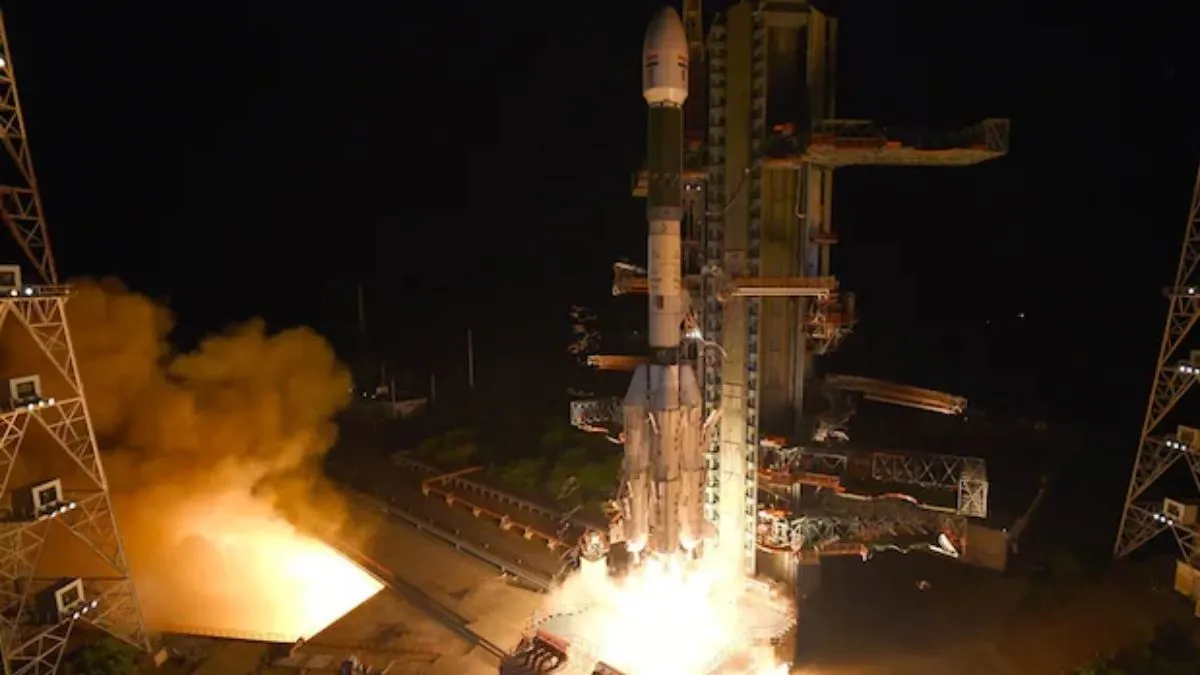
- ISRO successfully launched NVS-03 satellite via GSLV-F18 rocket.
- Enhances India's NavIC navigation system with advanced capabilities
- Features indigenous atomic clock and new L1 frequency signal.
Indian Space Research Organisation (ISRO) has successfully launched its next-generation navigation satellite NVS-03 aboard the GSLV-F18 rocket, marking a significant step towards bracing India's independent satellite navigation system, Navigation with Indian Constellation (NavIC). The Geosynchronous Satellite Launch Vehicle (GSLV) carrying the satellite lifted off from the second launch pad at the Satish Dhawan Space Centre (SDSC-SHAR) at 11:51 pm on Friday. NVS-03 is a crucial addition to the NavIC system, India's answer to GPS.
The launch marked the flight of India's Geosynchronous Satellite Launch Vehicle (GSLV), which injected the 2,250 kg satellite into a Geosynchronous Transfer Orbit (GTO). NVS-03 is the third satellite in Isro's second-generation navigation satellite series, structured to ensure continuity and enhance the availability of navigation services under the NavIC.
ALSO READ: ISRO Satellite Captures Huge Cloud Cover Splitting India Into Two; What It Means?
What's Significant in NVS-3?
NavIC is one of India's indigenous navigation systems, such as the American GPS. It is structured to provide positioning and timing services across the Indian subcontinent and a region extending approximately 1,500 km beyond the country's geopolitical boundaries. The new system features new applications such as road and maritime navigation, disaster management, satellite farming and strategic operations by the armed forces.
Recommended For You
NVS-03 carries an indigenous atomic clock alongside procured atomic clocks, a significant milestone for India's efforts to build self-reliance in critical navigation technology. Additionally, it launched the L1 frequency signal with the existing L5 and S-band signals. The addition of L1 is likely to enhance compatibility with navigation receivers and consumer devices, potentially expanding NavIC's usability.
Resurgence After NVS-02 Setback
The NVS-o3 launch comes after a significant setback in January 2025, when the NVS-02 satellite was placed into GTO aboard GSLV-F15 but was unable reach its designated operational orbit. This occured due to an issue involving the electrical activation of a pyrotechnic valve prevented the satellite's Liquid Apogee Motor from receiving the required oxidiser flow, leaving it stranded in its transfer orbit.
ALSO READ: 'Goal Is Indian Space Station By 2035, Moon By 2040': PM Modi At International Space Summit
To prevent any such mishaps, Isro incorporated corrective measures during the launch of NVS-O3.However, the journey does not end here. Its onboard propulsion system must execute orbit-raising manoeuvres to reach its designated geosynchronous operational orbit.
PM Modi Congratulates ISRO for successful launch
Reacting to the succesful launch, PM Modi said that the mission marks a significant step in strengthening NavIC, our indigenous satellite navigation system. Sharing a post on X, the Prime Minister said, "Congratulations to our scientists and engineers at ISRO on the successful launch of GSLV-F18 carrying NVS-03.
Congratulations to our scientists and engineers at ISRO on the successful launch of GSLV-F18 carrying NVS-03. This mission marks an important step in strengthening NavIC, our indigenous satellite navigation system. Equipped with enhanced capabilities, NVS-03 will further our pursuit of self-reliance in critical technologies and support navigation services that benefit our people. The dedication and ingenuity of our space scientists continue to make our nation proud. @isro
— Narendra Modi (@narendramodi) October 31, 2026
This mission marks an important step in strengthening NavIC, our indigenous satellite navigation system. Equipped with enhanced capabilities, NVS-03 will further our pursuit of self-reliance in critical technologies and support navigation services that benefit our people. The dedication and ingenuity of our space scientists continue to make our nation proud. "