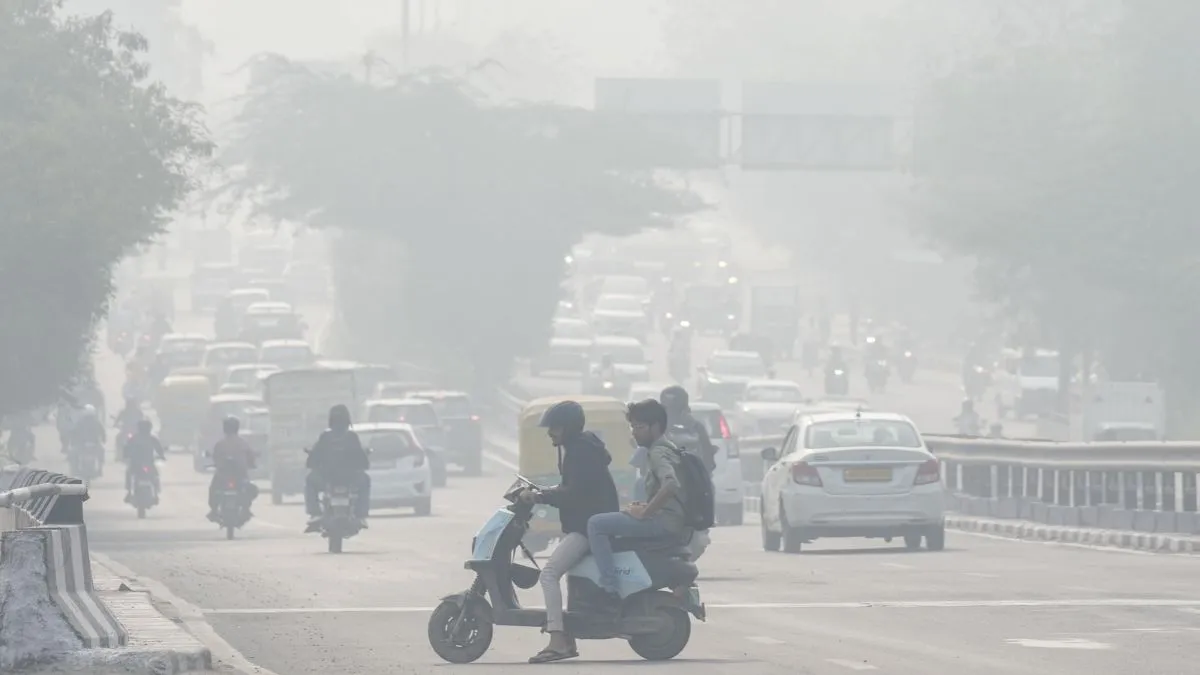
- Delhi's AQI recorded 369, categorized as 'very poor'.
- Air quality expected to turn 'severe' on Sunday.
- Unfavorable weather, Diwali, stubble burning worsen pollution.
Delhi Air Pollution: Delhi's air quality deteriorated further on the eve of Diwali, with thick smog blanketing the national capital. The city's average Air Quality Index (AQI) was recorded at 369, in the 'very poor' category on Saturday. The air quality is forecast to turn 'severe' on Sunday.
IIT Delhi Records Highest AQI In National Capital
Data recorded across 59 monitoring stations showed high pollution levels across the city. Air quality reached the 'severe' category at 16 stations, while 29 stations recorded 'very poor' air quality. The worst AQI in Delhi was recorded near IIT Delhi at 452.
Although the average AQI showed a slight improvement from 382 on Friday to 369 on Saturday, several localities have already breached the 400 mark.
Air Quality Likely To Turn 'Severe'
According to the Air Quality Early Warning System (EWS) for Delhi, air quality is expected to worsen over the coming days:
November 8 & 9: Air quality is likely to enter the 'severe' category on Sunday and Monday.
Extended Outlook: Pollution levels are likely to fluctuate between the 'very poor' and 'severe' categories over the next six days.
According to Central Pollution Control Board (CPCB) guidelines, an AQI between 0 and 50 is classified as 'good', 51 to 100 as 'satisfactory', 101 to 200 as 'moderate', 201 to 300 as 'poor', 301 to 400 as 'very poor', and 401 to 500 as 'severe'.
Recommended For You
Factors Behind The Deterioration In Air Quality
Weather and air quality experts have linked the expected deterioration in air quality to unfavourable weather conditions, Diwali celebrations, vehicular emissions, and peak stubble burning in neighbouring states.
Unfavorable weather is further compounding the problem. According to the EWS, a ventilation index below 6,000 square meters per second and average wind speeds under 10 km/h are preventing the dispersion of pollutants.
(With Inputs From PTI)