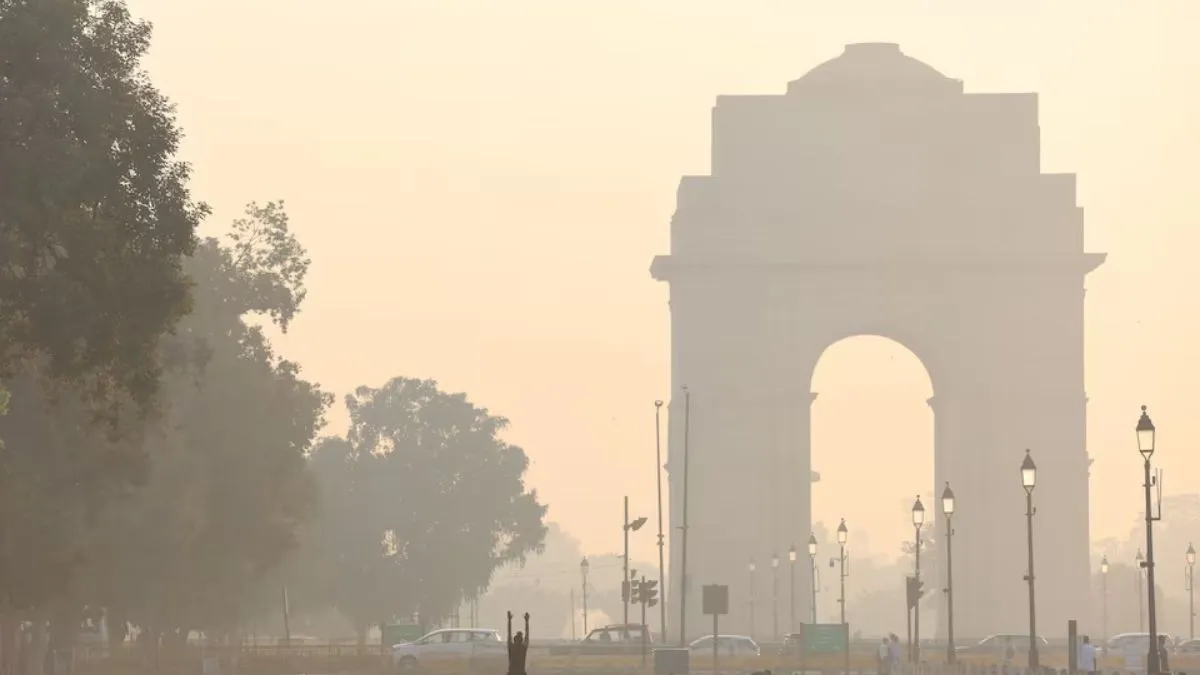
- Delhi's air quality deteriorated to 'severe' with AQI 403.
- Thick smog covered city, reducing early morning visibility.
- IIT Delhi recorded AQI 488.
Delhi's air quality deteriorated to the 'severe' category on Friday morning, with the national capital recording an overall Air Quality Index (AQI) of 403. A thick layer of smog continued to cover several parts of the city, reducing visibility during the early morning hours. According to data recorded by the Central Pollution Control Board (CPCB) at 7 am, PM10 and PM2.5 remained the major pollutants across the national capital.
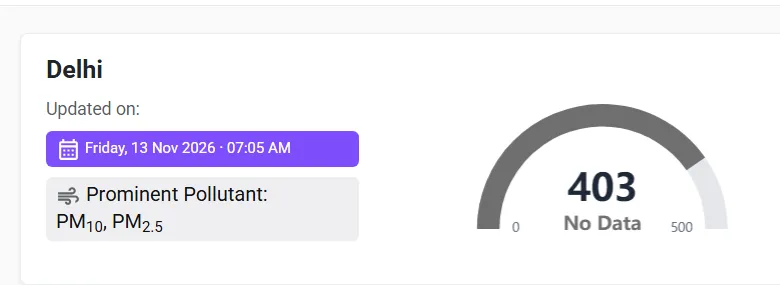
Delhi's air quality has continued to worsen since Diwali, with pollution levels remaining alarmingly high. Since October 2026, the national capital has recorded AQI levels above 400 on several occasions, with some areas reporting readings above 500 and even 600. On Friday, the overall AQI came close to 408, while several areas in Delhi-NCR recorded levels above 450.
#WATCH | Delhi | Air Quality Index (AQI) around AIIMS is 418, categorised as 'Severe', as per the CPCB (Central Pollution Control Board). (Visuals shot at 07:20 am) https://t.co/iJp6sk2Kpm
— ANI (@ANI) November 13, 2026
IIT Delhi Tops Chart With AQI Of 488
IIT Delhi recorded an AQI of 488, while other areas also reported dangerously high pollution levels. If the situation continues to worsen, Delhi could soon turn into a toxic gas chamber.
#WATCH | Delhi: Air Quality Index (AQI) at Rajokri Border is 402, categorised as 'Severe', as per the CPCB (Central Pollution Control Board). (Visuals shot at 06:50 am) https://t.co/m7oH0d9jz7
— ANI (@ANI) November 13, 2026
Air quality across several parts of the national capital remained alarming on Friday morning with higher pollution levels. Delhi Technological University (DTU) recorded an AQI of 443, Jahangirpuri 430, North Campus of Delhi University 478, Pusa road 469 and Punjabi Bagh 456. Vasundhara Enclave recorded an AQI of 431.
Other areas also reported very poor air quality, with R K Puram recording an AQI of 391, Mandir Marg 378, Dwarka Expressway 369, Uttam Nagar 363 and Lodhi Road 341.
Recommended For You
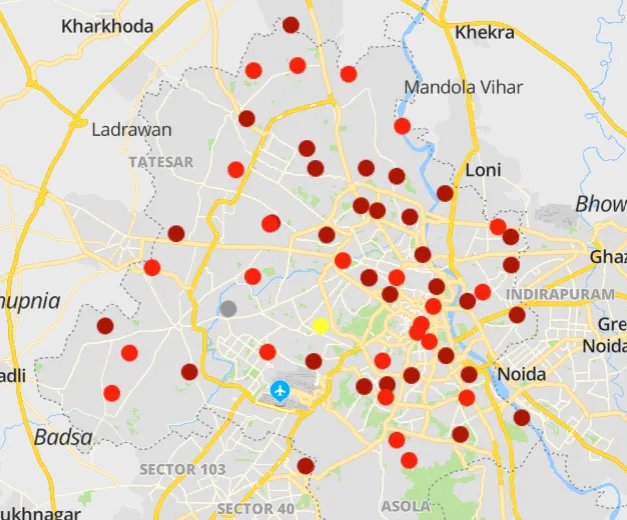
Meanwhile, the Delhi Cantonment area recorded the lowest AQI in the national capital at 160.
On Thursday, Delhi recorded its worst air quality since Diwali night as a thick layer of haze covered the national capital. The 24-hour average AQI rose to 350, compared to 313 on Wednesday, according to the CPCB.
Thursday's rise in pollution came even as stubble-burning incidents in neighbouring Punjab declined. Data from the ICAR-Indian Agricultural Research Institute showed that Punjab recorded 1,152 farm fire incidents on November 8. The number dropped to 198 on November 9, before rising to 345 on November 10 and 515 on November 11.
Despite the government's efforts to control air pollution, the situation on the ground remains concerning. Residents continue to bear the brunt of the worsening air quality, with many struggling to breathe in the polluted environment.
Children, elderly people and those with existing health conditions are among the worst affected. Exposure to such high levels of pollution can increase the risk of serious health problems. People in these vulnerable groups are being advised to avoid stepping outdoors unless necessary.
According to the CPCB's classification, an AQI between 0 and 50 is considered 'good', 51-100 'satisfactory', 101-200 'moderate', 201-300 'poor', 301-400 'very poor' and 401-500 'severe'.