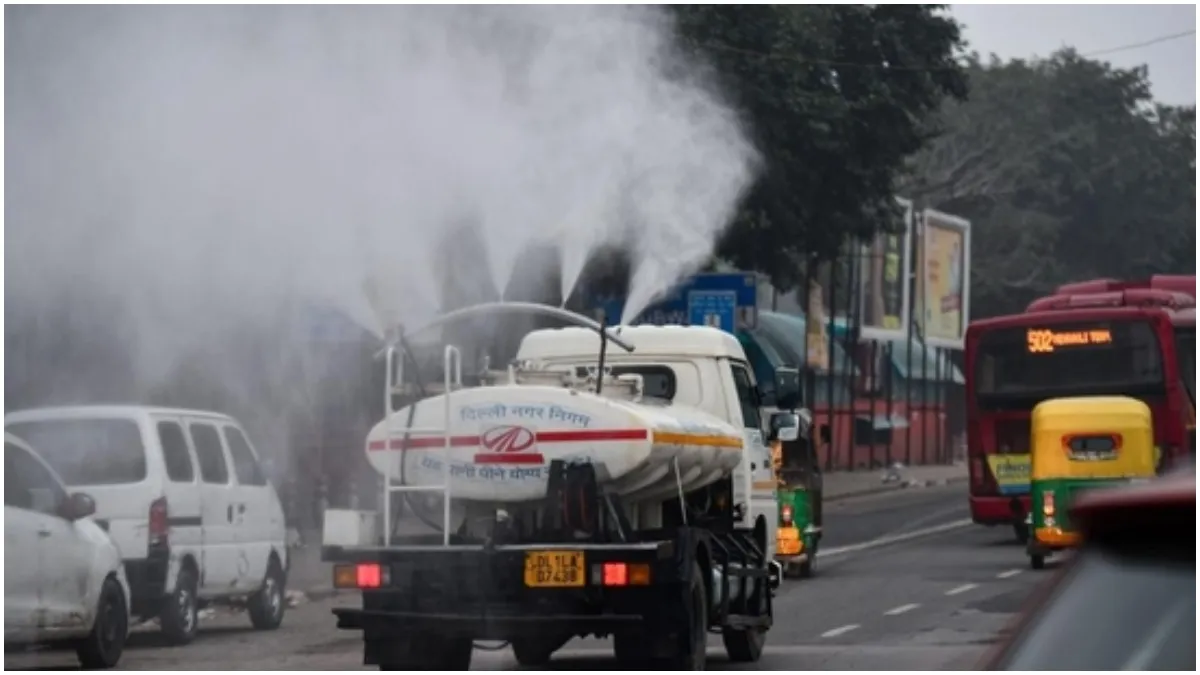
- Delhi's AQI improved to 307, still in 'very poor' category.
- PM2.5 and PM10 concentrations remained significantly high.
- No stations recorded 'severe' pollution on Tuesday.
On the second day after Diwali, the air quality in Delhi slightly improved on Tuesday but remained in the 'very poor' category, with an AQI of 307, according to data from the Central Pollution Control Board (CPCB). The concentration of PM2.5 concentration remained at 384 µg/m³, while the PM10 concentration was at 181 µg/m³.
Earlier on Monday, the morning AQI in the national capital was 368, with 12 stations recorded above 400, in the severe category for air pollution. In contrast, no station recorded severe air pollution on Tuesday.
The most polluted stations were Chandni Chowk and Pusa, with AQI at 395. NSUT Jaffarpur at 382 and the Commonwealth Sports Complex at 380 were among the most polluted areas.
Although still alarming, the AQI plunge brings a sigh of relief for residents, especially after the highest Diwali air pollution in five years with a 24-hour average AQI of 376. Since 2021, the air pollution has increased every year.
On Monday morning, the day after Diwali, the AQI settled at 371 at 10 AM as a hazy, thick layer of smog covered the city's skyline, according to news agency PTI.
The AQI of 371 was also the highest on a post-Diwali morning since 2021. Meanwhile, the Delhi Pollution Control Committee (DPCC) released the hourly air-quality data for Diwali night, and the day after it, the records went blank. The delayed figures revealed that the PM2.5 had surged up to 3,744 micrograms per cubic metre (µg/m³), which is over 60 times the national 24-hour standard of 60 µg/m³.
ALSO READ: Anti-Smog Guns Deployed As Delhi Witnesses Toxic Air After Diwali Celebrations; How It Works
The severe spikes were recorded across multiple monitoring stations, including Mundka (3,744 µg/m³ at 2:00 AM), Jawaharlal Nehru University (3,023 µg/m³ at 4:00 AM), NSUT West Campus (3,008 µg/m³ at 5:00 AM), among others.