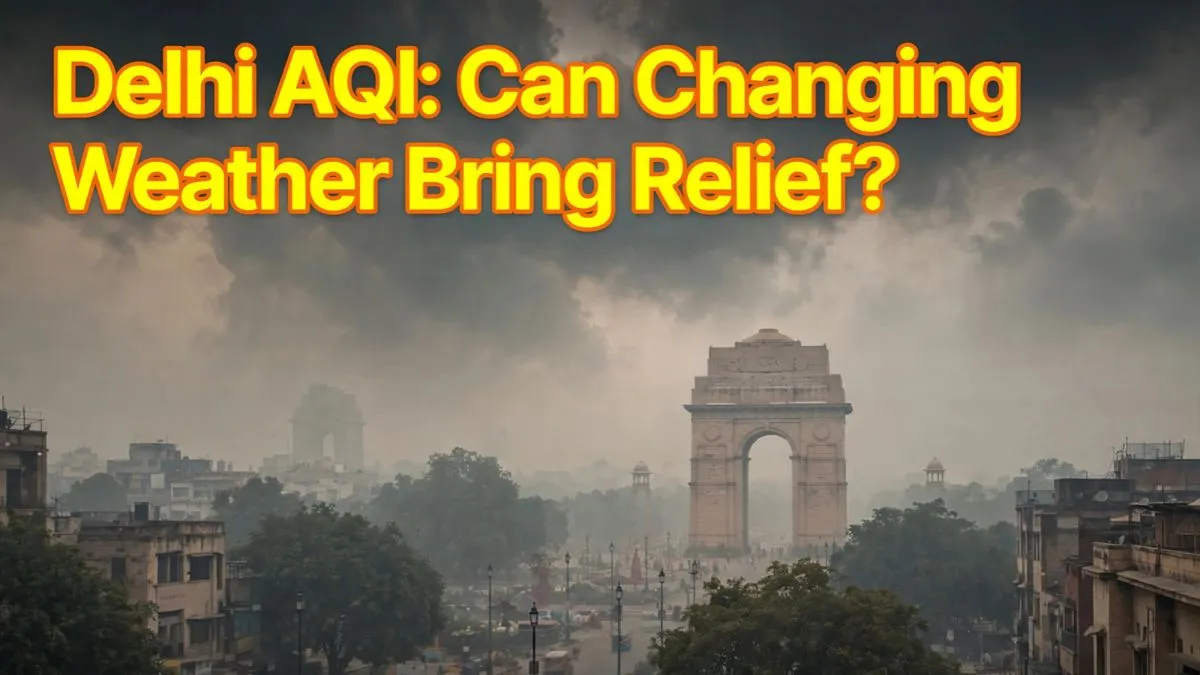
- Delhi's AQI improved slightly to 'poor' after Diwali.
- IMD predicts no immediate major relief from pollution.
- Slow winds trap pollutants, hindering air quality improvement.
Delhi Chokes After Diwali: After Diwali celebrations, pollution levels increased across several states, with Delhi being the worst affected. However, Delhi's air quality improved slightly on Tuesday, with the 24-hour average Air Quality Index (AQI) recorded at 299. This placed the city in the ‘poor’ category, just below the ‘very poor’ level.
But when will Delhi-NCR finally get clean air? According to the latest update from the India Meteorological Department (IMD), there is little chance of major relief from pollution in Delhi and nearby areas in the coming days. Although pollution levels have come down slightly after Diwali, the air quality remains poor.
The weather conditions needed to clear the polluted air have not yet arrived. Two western disturbances are expected to bring rain and snowfall to the mountains. However, these weather changes are unlikely to bring immediate relief to Delhi-NCR.
However, these weather systems are unlikely to provide any significant immediate relief from pollution in Delhi-NCR.
According to Jagran.com, meteorologists believe that Delhi's air quality may remain in the ‘very poor’ category for the next three to four days.
During this period, wind speeds are expected to remain between 10 and 15 kilometres per hour. Stronger winds are needed to carry pollutants away and improve air quality. However, slow winds are causing pollutants to remain trapped in the air, with little change in pollution levels.
Recommended For You
ALSO READ: India Accounts For 47 Of 50 Most Polluted Global Cities; Hisar Tops Chart, Delhi At 9
According to the Meteorological Department, the western disturbance may bring rain and snowfall to several parts of the Western Himalayan region until November 13. Heavy rain and snowfall are also possible in some parts of the Kashmir Valley. As a result, temperatures in the mountain regions may fall further.
However, Delhi and nearby plains are unlikely to receive any rainfall from this weather system. The IMD has not predicted rain in Delhi until November 15.
After snowfall in the mountains, temperatures in the plains may also fall due to northwesterly winds. Minimum temperatures in Delhi, Haryana and western Uttar Pradesh are expected to drop by two to three degrees Celsius over the next two to three days. This means mornings and nights are likely to become colder.
However, a drop in temperature alone will not help reduce pollution. Strong winds and favourable weather conditions are needed to lift pollutants and carry them away from the region.
ALSO READ: Delhi's Air Quality Improves After 5-Year High On Diwali, But Remains In 'Very Poor' Category
According to the IMD forecast, wind direction may change around November 12-13. However, wind speeds are likely to remain low, which means Delhi-NCR may not get any major relief from pollution immediately. Any improvement in air quality will depend on how weather conditions change over the next few days.
Meanwhile, a low-pressure area may develop over the Bay of Bengal around November 13. This could bring rainfall to eastern and southeastern parts of the country. However, dry weather is expected to continue in Bihar, Jharkhand, Chhattisgarh and most parts of central India.
( With inputs from Jagran Bureau )