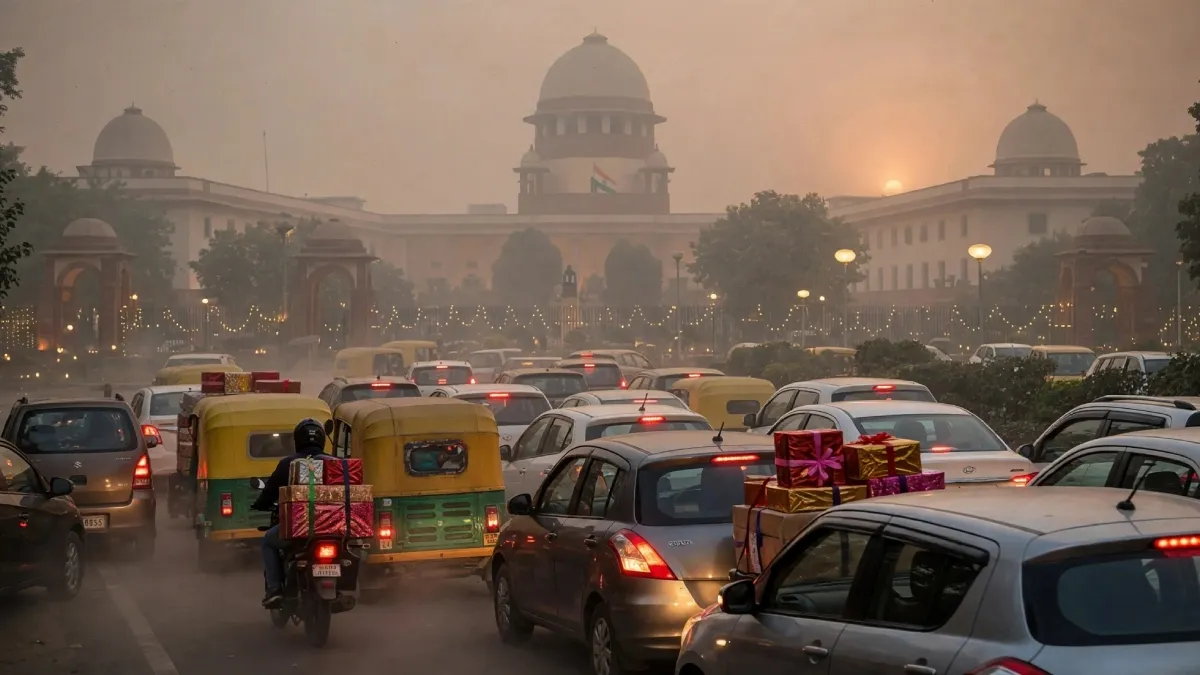
- SC mandates only BS-6 vehicles in Delhi-NCR.
- Proposes five-year roadmap for commercial vehicle entry.
- Suggests border warehouses to manage essential goods supply.
The Supreme Court on Monday took a stern view on rising air pollution in Delhi-NCR, making it apparent that it will not allow vehicles below the BS-6 category. While hearing a petition on restrictions faced by polluting vehicles and difficulties faced by owners of BS-IV vehicles in getting the Pollution Under Control Certificate (PUCC) and accordingly fuel, Justice Joynalya Baghchi said, "We are clear we will allow only BS6 vehicles in Delhi, if not NCR."
The top court also stressed a need for a long-term plan to prevent polluting vehicles from entering the national capital while ensuring that supplies of essential commodities remain intact.
Making an observation on a need to strike a balance, Chief Justice of India Surya Kant suggested a five-year roadmap to gradually decrease the polluting commercial vehicles' entry into the capital.
CJI Kant suggested that warehouses could be established along Delhi borders to store essential goods outside.
"Why not ensure that commercial vehicles don’t enter Delhi at all? But it does not mean that Delhi people don’t require [essential goods]. They have a lot of necessities. They require vegetables, they require fruits, they need other day-to-day items, daily items. So everything will have to be available. So what can be the alternative?" the CJI asked.
He added that the goods could be brought inside using battery-operated vehicles or using other non-polluting mediums. "This kind of arrangement may not be possible this year, may not be possible next year. But why not have this for five years? So five years. To ensure that no single commercial vehicle enters Delhi," he said.
Recommended For You
While the apex court argued in favour of banning the commercial vehicles, it also cautioned against considering an immediate blanket ban, saying that it could have far-reaching repercussions as availability of essential commodities would be at risk.
The court thus emphasised the need for careful planning for a gradual transition so that it could be implemented over a longer period.