- By Jaiprakash Ranjan
- Thu, 10 Sep 2026 01:25 PM (IST)
- Source:JND
- Eleven BRICS nations gather, each with distinct national interests.
- China aims for global power, India seeks development cooperation.
- Russia defies sanctions, Iran asserts diplomatic legitimacy.
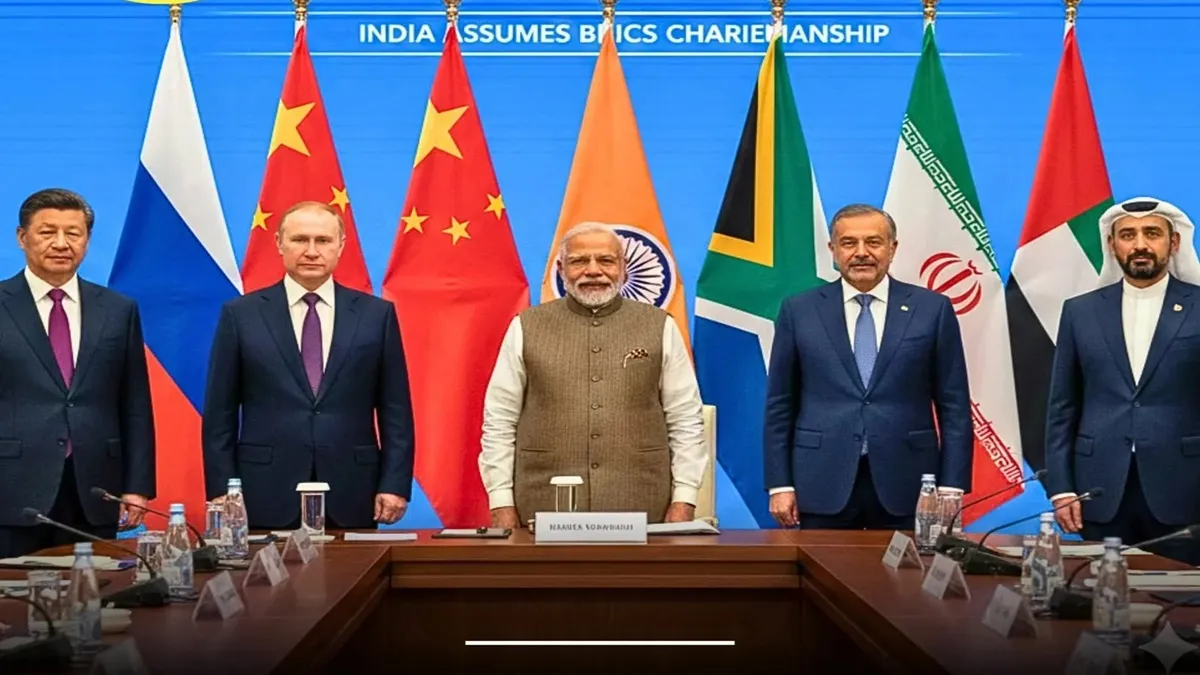
With the global order faltering amid wars, sanctions, trade barriers, and the crisis in West Asia, the eyes of the world are fixed on the BRICS summit scheduled for September 12-13. Eleven member nations will gather at Bharat Mandapam for this 18th summit. Representing nearly half the world's population and a significant share of the global economy, BRICS has gained considerable diplomatic clout. However, a unified, overarching agenda for the bloc has yet to emerge; instead, each nation utilises this platform to advance its own national interests.
This summit is no exception. China seeks to showcase its partnerships against the backdrop of waning trust in the US; India aims to prioritise development and pragmatic cooperation; Russia intends to demonstrate its global presence despite sanctions; and Iran seeks to send a diplomatic message by sharing a platform with major powers. Brazil, South Africa, Egypt, Ethiopia, Indonesia, Saudi Arabia, and the UAE are also bringing issues such as energy, trade, Africa-Asia connectivity, and transactions in local currencies to the table.
China: Ambitions Of A Global Power
China aims to position this summit as an alternative to the US-centric global order. President Xi Jinping’s agenda is clear: at a time when trust in the US is wavering in many nations, major powers like Russia and India, alongside countries like Ethiopia and Indonesia are exchanging ideas within an organisation formed under China's leadership. China will emphasise trade, investment, the digital economy, and the expansion of the New Development Bank. It will advocate for increased trade in local currencies and reforms in global governance, specifically amplifying the voices of developing nations within the IMF and the United Nations. Furthermore, China seeks to expand its economic reach by establishing BRICS as a platform for the Global
South.
India: Diplomatic Balancing
Host India’s agenda reflects the pragmatism of its traditional diplomacy. On one hand, India is a member of the Quad alongside the US; on the other, it is a member of the SCO and BRICS.
India advocates for a multipolar world. Furthermore, it seeks to position BRICS not as an anti-West alliance, but as a platform for development cooperation. India will emphasise MSMEs, startups, digital public infrastructure, payment systems like UPI, artificial intelligence, and clean energy. It is also striving to build consensus among nations like Iran and the UAE regarding West Asia to ensure the joint statement does not get stalled. As the host, New Delhi aims for BRICS to move beyond mere discussion and deliver tangible results.
Russia: Global Presence Despite Sanctions
President Vladimir Putin will use this platform to demonstrate that Western sanctions have failed to isolate Russia. Moscow claims that the majority of its transactions with BRICS nations are now conducted in national currencies. Russia intends to discuss food security, grain trade, energy cooperation, defense, and transport corridors. It seeks to transform BRICS into a platform for an alternative financial system, one that operates outside the Western-dominated SWIFT payment network, though countries like India are wary of turning it into an explicitly anti-dollar campaign. Trade, energy, and defense projects are likely to feature in the bilateral meeting between Putin and PM Modi. For Russia, this summit also serves as a display of diplomatic legitimacy, showcasing that major economies like China and India are sharing the same table.
Iran: Unbroken And Backed By Major Powers
Iran’s primary agenda is to demonstrate to the world that, despite five months of conflict, it remains unbroken and retains allies on the global stage. It views this summit as a source of diplomatic relief amidst US pressure and regional tensions. President Masoud Pezeshkian also aims to signal to his domestic detractors that Tehran is not entirely isolated. Iran seeks to boost trade, energy exports, the Chabahar Port, and payments in local currencies. It intends to present its stance on the West Asia crisis and challenge the UAE's position.
ALSO READ: BRICS 2026: PM Modi To Hold Bilateral Meeting With China's Xi Jinping? What We Know
Brazil: Global South And Environment
In President Lula's absence, Brazil will send a high-level delegation. Brazil will emphasise climate finance, Amazon conservation, agricultural exports, and concessional finance for developing nations. It aims to maintain BRICS as a platform for South-South cooperation and seeks increased resources from the New Development Bank for green projects.
South Africa: Africa's Voice And Mineral Supply
While advancing the African agenda, President Cyril Ramaphosa will seek to align South Africa's industrial development, critical minerals, energy transition, and African Union priorities with BRICS. He will reiterate the demand for greater African representation in global institutions.
Egypt: Suez, Energy, And Regional Stability
President Abdel Fattah el-Sisi will focus on trade routes, energy cooperation, and food security. Egypt aims to integrate the Suez Canal and regional connectivity into BRICS supply chains. Peace in West Asia and investment will also feature on its agenda.
Ethiopia: African Development And Infrastructure
Prime Minister Abiy Ahmed seeks development finance, infrastructure, agriculture, and investment for Africa. Ethiopia aims to position BRICS as a partner in African industrialisation and energy projects.
Indonesia: Indo-Pacific Region And Trade
As a new full member, President Prabowo Subianto will focus on trade, maritime connectivity, and food.