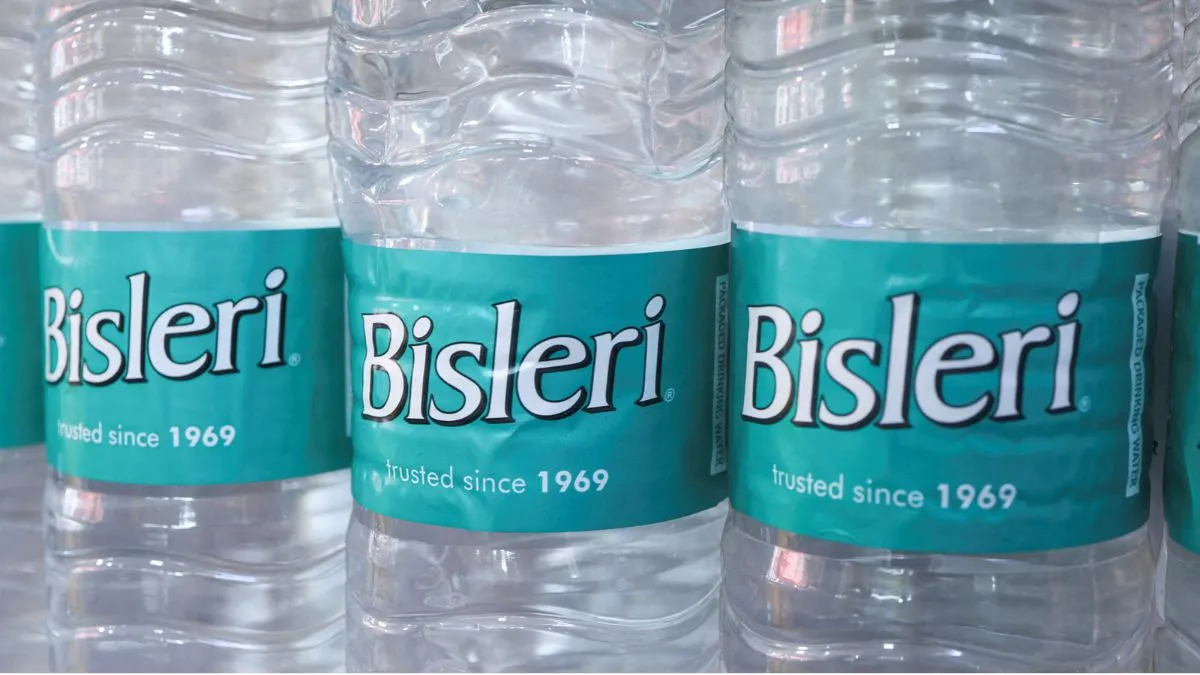
- Bisleri, an Italian brand, entered India in 1965.
- Parle Group acquired Bisleri in 1969 for Rs 4 lakh.
- FSSAI found bromate and PAHs in the Bisleri water sample and imposed sanctions.
Water is an essential need. Whether you are indoors or outdoors, getting a safe drinking water bottle is an everyday instinct. Today, it is not difficult to find packaged drinking water for Rs 10 or Rs 20 at any grocery store, canteen, or even roadside vendors. However, this simple idea of purified bottled water in India was once considered a luxury, and Bisleri was among the first brands to bridge that gap.
Since its entry in India in 1965, Bisleri became a household name, and it became popular to such an extent that people often use Bisleri instead of saying water. However, the packaged drinking water has come under scrutiny after a lab test found carcinogenic chemicals in a sample of its packaged water, and it was subsequently sanctioned for prosecution by the Food Safety and Standards Authority of India (FSSAI).
Also Read: German Tourist Found Dead Under Mysterious Circumstances In Kolkata Hotel Room; Police Launch Probe
How Was Bisleri Started?
Originally an Italian brand, Bisleri was first created by Felice Bisleri, an Italian doctor. He developed several products, including mineral water. The brand traces its roots back to the Angelica spring in the Italian town of Nocera Umbra.
Recommended For You
Entered India In 1965
Bisleri was introduced in India around 1965 when Italian doctor Cesari Rossi partnered with Indian businessman Khushroo Suntook. At the time, the water quality in Indian cities was considerably poor. Jumping at the chance, they set up a factory in Thane and initially sold the bottled water to premium hotels and restaurants in Mumbai in glass bottles in two varieties -- bubbly and still.
The 1969 Takeover
By 1969, the brand was struggling and wanted to exit the Indian market and was acquired by Parle Group's Jayantilal Chauhan for Rs 4 lakh. After the acquisition, the partners produced beverages, soft drinks, and soda alongside Bisleri. Later, his son, Ramesh Chauhan, took over the business and scaled it.
Bisleri's Big Pivot
In 1991, Parle introduced the 20-litre Bisleri pack, which became synonymous with homes and offices. Since then, Bisleri has been one of the best-selling packaged drinking water brands in India and has introduced different types of drinking water. In 2018, Bisleri launched what it described as the world's first vertical manufacturing plant for mineral water. Its portfolio includes packaged drinking water, premium Vedica Himalayan Spring Water, and carbonated beverages.
Why Bisleri Is Under The Scanner?
Bisleri came under scrutiny after a laboratory test was conducted on a sample collected from Bisleri's Goa facility and was declared unsafe due to exceeding permissible bromate limits. Later, the sample tested positive for the polynuclear aromatic hydrocarbons (PAHs) at a referral lab, making it unsafe for use.
Responding to it, Bisleri has contested the finding and maintained that its water remains completely safe for consumption. The company cited discrepancies between test results and said it has not received any formal notice of the reported regulatory action.
In a statement, Bisleri said the matter pertained to a batch manufactured in September 2025 at its Goa facility, one of 143 plants in its network. The regulatory sampling exercise dates back more than 14 months, the company said.
"The FSSAI collected six samples from the facility on September 30, 2025. Initial testing found that five complied with applicable standards, while the sixth recorded bromate levels of 12 micrograms per litre against the prescribed limit of 10 micrograms per litre," the statement said.
"Following an appeal by the company on November 22, 2025, the sample was sent to a referral laboratory for retesting. While the referral laboratory found bromate levels within the prescribed limit, it separately flagged the presence of PAHs," it added.
Questioning the difference between the findings, the company arranged for the same sample to be tested independently at an FSSAI-approved laboratory. That analysis also found bromate levels within permissible limits, it said.
What Is Bromate?
Bromate can form as a by-product of certain water disinfection processes, including ozonation, and is subject to regulatory limits because of potential health risks associated with exposure.
What Are PAHs?
PAHs are a group of chemical compounds, some of which are associated with toxic and carcinogenic properties. The specific compounds and concentrations detected are important in assessing the potential health implications of any contamination.