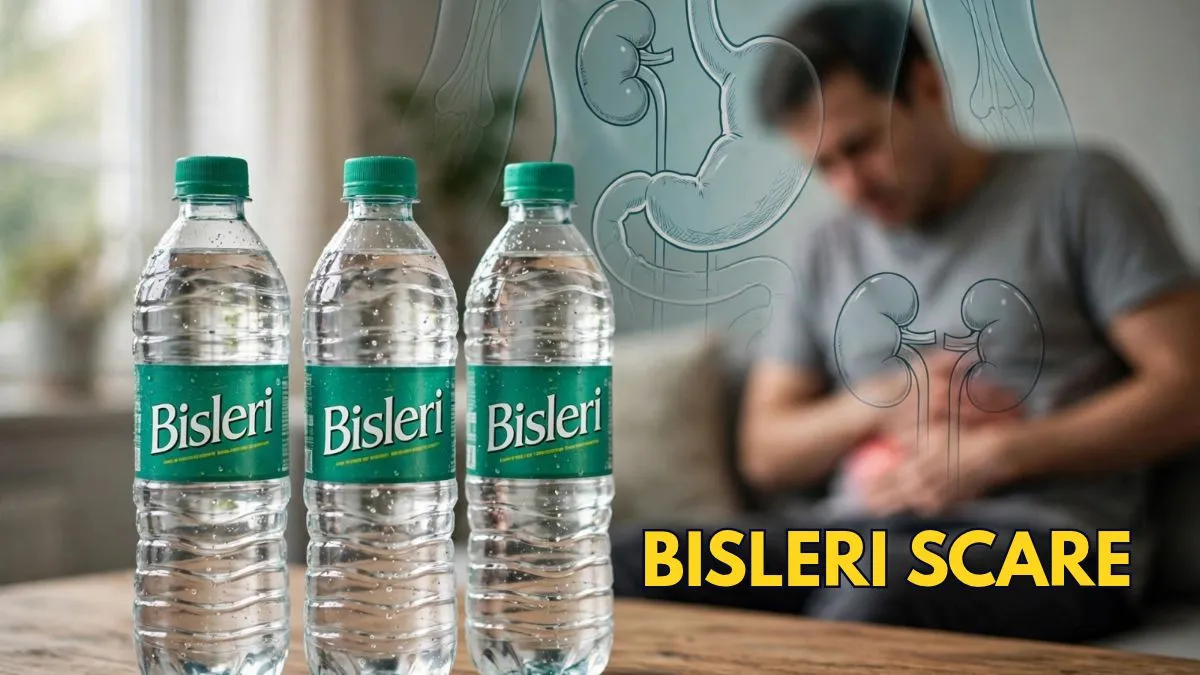
- FSSAI found unsafe Bisleri water sample from Goa plant.
- Sample contained bromate and polynuclear aromatic hydrocarbons (PAHs).
- Bisleri assures product safety, pledges cooperation with FSSAI.
Packaged drinking water company Bisleri International Pvt. Ltd. has said that its products are safe to drink after the Food Safety and Standards Authority of India (FSSAI) approved prosecution against it over a water sample that was declared "unsafe".
The development comes after the food regulator approved legal action against Bisleri on Sunday under the Food Safety and Standards Act, 2006, following laboratory tests that found a sample of its packaged drinking water did not meet safety standards.
What Bisleri Said?
The packaged drinking water company said the issue relates to one batch manufactured in September 2025 at its Goa plant. It added that the plant is one of its 143 manufacturing units and that it has not yet received an official notice from FSSAI.
Responding to the development on Monday, Bisleri said it follows strict quality checks and that its products are safe for consumption.
"Drinking water safety is a priority for Bisleri. We maintain stringent quality controls of over 90 tests across our 10-step manufacturing process and will continue to cooperate with FSSAI to address the matter through the appropriate regulatory process. A trusted brand for years, Bisleri remains safe for consumption," the company said.
Bisleri also said it would cooperate with the regulator and follow the required legal process.
What Did FSSAI Find In Water Sample?
According to FSSAI, six water samples were collected from Bisleri's Goa plant on September 30, 2025. The first round of tests found that five samples met the required safety standards.
However, the sixth sample contained 12 micrograms of bromate per litre, while the permitted limit is 10 micrograms per litre.
Bisleri challenged the findings on November 22, 2025, following which the sample was sent to another laboratory for testing.
The second laboratory found that the bromate level was within the permitted limit but detected another group of chemicals called polynuclear aromatic hydrocarbons (PAHs).
FSSAI said the sample was declared "unsafe" after the second laboratory also found it non-compliant with safety standards.
"The laboratory findings established violations relating to unsafe food under the FSS Act, 2006. Sanction has been granted to launch prosecution under the FSS Act, 2006, against M/s Bisleri International Pvt. Ltd.," the regulator said.
In response, Bisleri said it had also got the sample tested at another FSSAI-approved laboratory, which found the bromate level within the permitted limit.
Which Chemicals Were Found In Bisleri Water Bottle? Know Health Risks
The two chemicals mentioned in the FSSAI findings are bromate and polynuclear aromatic hydrocarbons (PAHs). Both have been linked to health risks, but their effects depend on the amount and duration of exposure.
Recommended For You
1. Bromate
Bromate is a chemical that can form during the process of treating drinking water. It is mainly produced when ozone, which is used to kill harmful bacteria and other microorganisms, reacts with naturally occurring bromide in water.
The chemical is a health concern because the International Agency for Research on Cancer (IARC) classifies it as possibly carcinogenic which means it is capable of causing or tending to cause cancer to humans.
Studies mainly conducted on animals have also linked long-term exposure to bromate with tumours in the kidneys, thyroid and other organs. High levels of exposure can also cause nausea, vomiting, stomach pain and kidney damage. In some cases, it has also been linked to hearing problems.
2. Polynuclear Aromatic Hydrocarbons (PAHs)
PAHs are a group of chemicals that form when materials such as coal, oil and wood do not burn completely. These chemicals can be found in vehicle smoke, industrial pollution, contaminated soil and some foods cooked at very high temperatures.
Not all PAHs are equally harmful. However, some can increase the risk of cancer. Benzo[a]pyrene, for example, is classified as carcinogenic ( capable of causing or tending to cause cancer ) to humans by the IARC.
When certain PAHs enter the body, they can form substances that damage DNA. Long-term exposure to some of these chemicals may increase the risk of cancer.
ALSO READ: How To Choose Safe Packaged Drinking Water: Things To Check Before Buying
Other Packaged Drinking Water Brands Also Under Scanner
The findings have also led to wider checks on packaged drinking water brands. According to ANI, samples of other brands from across the country have been collected and sent for testing.
Inspections and checks are expected to continue to ensure that packaged drinking water companies follow the required safety standards.