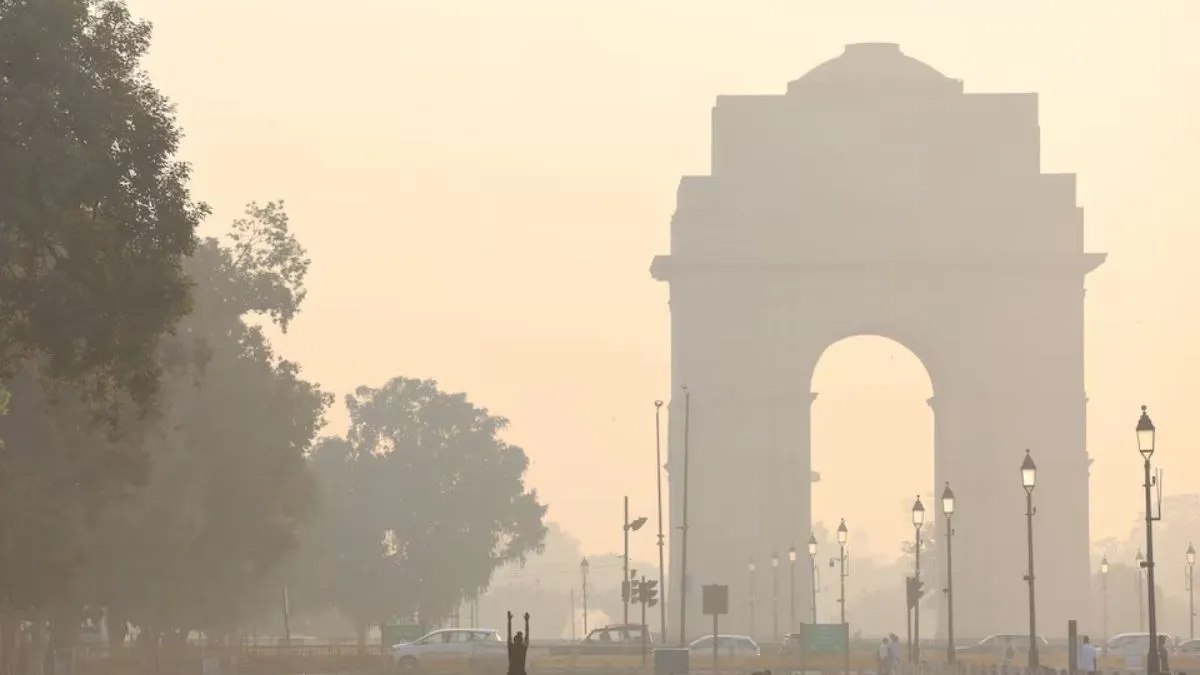
- Delhi's AQI at 269, categorized as 'Poor' before Diwali.
- Mumbai (161) and Kolkata (155) show 'Moderate' air quality.
- Chennai (81) and Hyderabad (71) have 'Satisfactory' AQI.
Air Pollution: Winter is slowly setting in across the country, especially in North India. With the change in weather, pollution levels have also started to rise. The latest air quality readings from some of India's major cities show a mixed picture, with a few cities recording relatively clean air while others are seeing higher pollution levels.
Delhi is likely to witness a sharp rise in pollution the day after Diwali. Weak winds are expected to trap pollutants over the city, making air quality worse. However, changing wind patterns may help clear some of the smog on the day of the festival.
Meanwhile, Chennai and Hyderabad continue to report relatively better air quality. Chennai recorded an AQI of 81, while Hyderabad registered 71. Both cities fall under the ‘Satisfactory’ category. Bengaluru also has relatively better air quality, with an AQI of 110, placing it in the ‘Moderate’ category.
Recommended For You
On the other hand, pollution levels are higher in some major cities. Mumbai recorded an AQI of 161, while Kolkata registered 155. Both cities fall under the ‘Moderate’ category. Delhi reported an AQI of 269, placing it in the ‘Poor’ category.
AQI in Indian Cities on November 4
The latest Air Quality Index (AQI) readings across six major Indian cities are as follows:
| City | AQI |
|---|---|
| New Delhi | 269 |
| Mumbai | 161 |
| Kolkata | 155 |
| Bengaluru | 110 |
| Chennai | 81 |
| Hyderabad | 71 |
What Does AQI Mean?
The Air Quality Index (AQI) is used to measure the level of air pollution and show how it may affect people's health. It gives a simple picture of air quality by measuring different pollutants present in the air.
According to the CPCB, an AQI between zero and 50 is classified as good, 51 and 100 as satisfactory, 101 and 200 as moderate, 201 and 300 as poor, 301 and 400 as very poor, and 401 and 500 as severe.
The AQI is calculated using the levels of different pollutants, including PM2.5, PM10, nitrogen dioxide (NO2), sulphur dioxide (SO2) and ozone (O3), among others.
Who Should Be Cautious?
Air pollution can affect everyone, but some people are more at risk than others. These include people with asthma and other breathing problems, those with heart conditions, children and older adults.
When pollution levels are high, spending long hours outdoors or doing heavy physical activity can increase the risk of health problems. People living in affected cities should keep track of daily AQI updates and take necessary precautions.
ALSO READ: Gurugram Diwali Alert: Green Crackers Allowed For 2 Days, Full Ban From Nov 9 | Check Timings, Rules
It is advisable to avoid unnecessary outdoor activities when pollution levels are high. People should also limit strenuous outdoor exercise and reduce their exposure to polluted air as much as possible.
Air quality can change throughout the day depending on weather conditions, wind speed and pollution levels. AQI readings may also differ between monitoring stations and air quality platforms. Residents are advised to check the latest local updates for accurate information.