
- By Dr Sadhana Kala
- Wed, 24 Dec 2025 05:44 PM (IST)
- Source:JNM
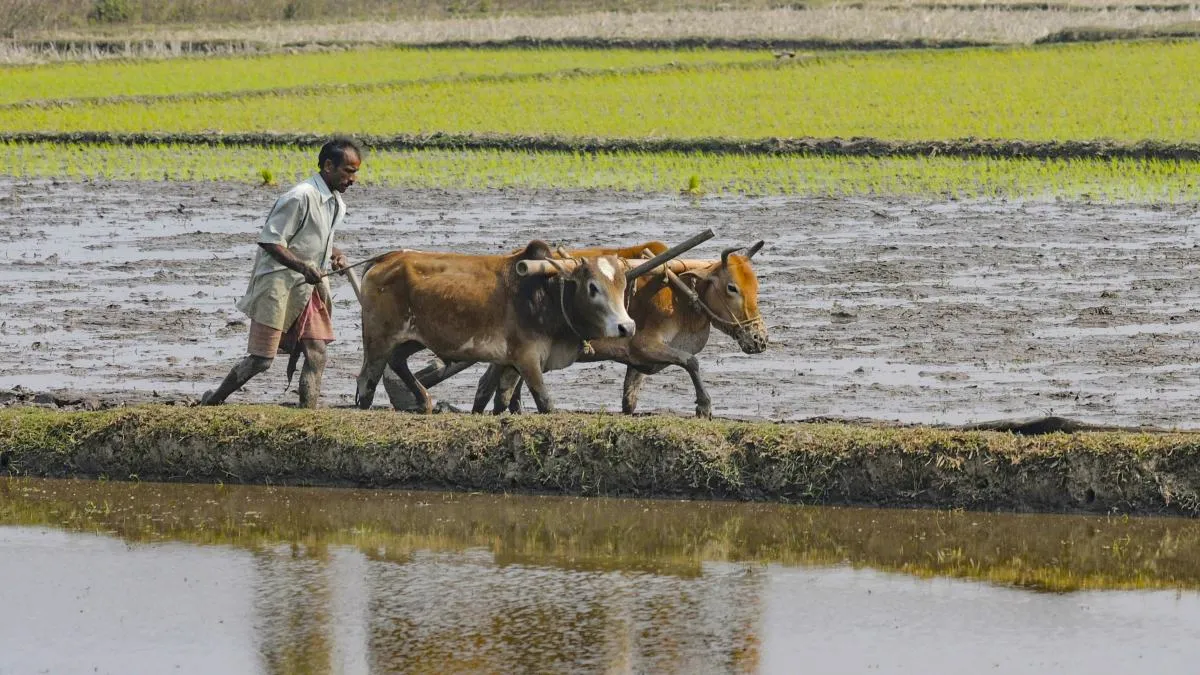
December 23 is National Farmers Day (Kisan Diwas) in India. The day honours the men and women whose labour sustains the nation. This day commemorates the birth anniversary of Chaudhary Charan Singh, a leader who consistently championed farmers' rights and believed that India’s true strength lies in its villages.
Today, as India advances as a global economic and technological force, this occasion serves as a crucial reminder that agriculture is not only an economic activity but also a foundational pillar of civilisation.
The Enduring Centrality of Farmers
Nearly half of India's population depends directly or indirectly on agriculture for their livelihood. Farmers cultivate food grains that ensure national food security and produce cotton, sugarcane, spices, fruits, and vegetables that support both industry and exports. Their contributions go far beyond mere statistics. Agriculture shapes India’s landscapes, diets, festivals, and cultural memory. The cycles of sowing and harvest have defined the country’s relationship with land and seasons for centuries.
Despite rapid urbanisation and the growth of the services and manufacturing sectors, agriculture remains the bedrock that absorbs economic shocks. During crises—whether economic downturns or pandemics—rural India and its farmers have repeatedly demonstrated resilience, ensuring a steady food supply amid uncertainty.
A Profession Tested by Change
However, modern Indian farmers face immense pressure. Climate change has resulted in increasingly unpredictable weather patterns. Erratic monsoons, prolonged droughts, floods, and rising temperatures have disrupted traditional farming calendars. Many regions are experiencing strained soil health due to the overuse of chemical inputs, and water scarcity poses a serious threat to sustainability across large parts of the country.
Market volatility adds another layer of uncertainty. Fluctuating input costs, price instability, and fragmented supply chains often leave farmers vulnerable. For small and marginal farmers—who constitute the majority—the challenge is not only to produce crops but also to ensure that farming remains economically viable.
Thus, National Farmers Day is not merely a ceremonial tribute. It encourages honest reflection on the realities faced by those who feed the nation and on the systems that must evolve to support them.
Technology and the New-Age Farmer
Encouragingly, Indian agriculture is undergoing a quiet transformation. Digital tools, once considered disconnected from rural life, are increasingly integral to everyday farming decisions. Weather advisories, satellite-based crop monitoring, soil testing, and mobile market information are now helping farmers make informed decisions.
Precision agriculture, drip irrigation, and mechanisation are enhancing productivity while conserving resources. Farmer-Producer Organizations (FPOs) facilitate collective bargaining, improve market access, and reduce dependence on intermediaries. Agri-tech start-ups are developing solutions specifically for smallholders to address gaps in credit, logistics, storage, and market access.
However, technology alone cannot be the answer. Its success hinges on affordability, accessibility, and awareness. Bridging the digital divide is essential to ensure innovation reaches the smallest farms, not just the most connected.
Women farmers: The invisible workforce
Any conversation about Indian agriculture is incomplete without acknowledging the essential role of women. From sowing and weeding to harvesting and post-harvest processing, women are the backbone of agricultural labor. However, their contributions often go unrecognised, unpaid, or undocumented. They face significant challenges, including skewed land ownership, limited access to credit, and a lack of decision-making power.
Empowering women farmers has a ripple effect that improves nutrition for families, education for children, and prosperity in rural areas. Policies that secure land rights, promote financial inclusion, provide skills training, and create leadership opportunities for women are not merely equity issues; they are crucial to agricultural efficiency and long-term sustainability.
Sustainability as a Necessity, Not a Choice
Sustainable farming practices play a crucial role in ensuring India's food security. Over-extraction of groundwater, declining soil fertility, and biodiversity loss present serious risks. Today's farmers often bear the brunt of environmental changes long before society at large feels the impact.
People are paying more attention to natural farming, regenerative agriculture, organic practices, and crop diversification. Modern science is discovering and integrating traditional knowledge that harmonises with nature. Supporting farmers through this transition is vital to ensure that the pursuit of sustainability does not compromise their livelihoods.
Incentives, research support, assured markets, and consistent long-term policies can encourage the adoption of climate-resilient practices while safeguarding incomes.
Beyond Gratitude: The Policy Imperative
National Farmers Day should transition the conversation from symbolic appreciation to actionable measures. Implementing fair and transparent pricing mechanisms, improving procurement systems, enhancing storage infrastructure, and reducing post-harvest losses can significantly elevate farmer incomes. Access to affordable credit and insurance must be streamlined, particularly for small and tenant farmers who often remain excluded from formal systems.
Listening to farmers is equally crucial. Effective policy design integrates grassroots realities rather than imposing top-down assumptions. Creating platforms for dialogue, feedback, and collaboration among farmers, researchers, policymakers, and private entities can foster trust and develop shared solutions.
Farmers and India’s development narrative
As India envisions itself as a developed nation in the coming decades, agriculture cannot be regarded as a secondary sector. Rural prosperity is vital for achieving balanced growth, social stability, and national cohesion. When farmers succeed, rural economies flourish, migration pressures diminish, and food systems become more resilient.
Farmers are not just producers of crops; they are stewards of land, water, and ecological balance. Recognising this role elevates agriculture from mere subsistence to a strategic national sector.
A shared responsibility
On National Farmers Day, the most meaningful tribute lies in our collective responsibility. Consumers should value food not just for its price but for the labour that goes into its production. Corporations can establish ethical supply chains. Policymakers ought to prioritise long-term resilience over short-term solutions. Society at large can shift from viewing farming as a fallback to recognising it as a profession that requires skill, innovation, and dignity.
The well-being of India's farmers significantly impacts the future of its food systems, environment, and rural economy. Honoring them today means committing, each day, to policies, practices, and choices that respect their work and ensure their future.
When farmers are strong, the nation is strong.
(Note: Dr (Prof) Sadhana Kala is a USA-trained robotic & laparoscopic surgeon, Uppsala University, Sweden, trained fertility specialist, Icon Endoscopic Surgeon of North India, and National Icon Endoscopic Surgeon of India. She is rated as India's Best Gynecologist by Google.)
(Disclaimer: The views expressed in this article are the personal opinions of the author.)