
- By Priyanka Koul
- Tue, 21 Apr 2026 03:02 PM (IST)
- Source:JND
The Mumbai Autorickshawmen’s Union, the largest body representing auto drivers, has announced a statewide agitation beginning May 4, following a Maharashtra government directive that makes knowledge of the Marathi language mandatory for autorickshaw and taxi drivers operating in the state.
According to the union, drivers across Maharashtra plan to submit a signed memorandum to Transport Minister Pratap Sarnaik by April 28, demanding the withdrawal of the directive. If the decision is not reversed, they will launch daily protests in both urban and rural areas, as per a Mid-Day report.
Vijay Patil, general secretary of the Navi Mumbai Rickshaw Taxi Sanyukt Kruti Samiti, told Mid-Day, "Why did the transport department issue licences in the first place to non-Marathi speakers? Now that helpless drivers have invested relatively huge amounts to get their permits, the department suddenly turns against them. This is unfair."
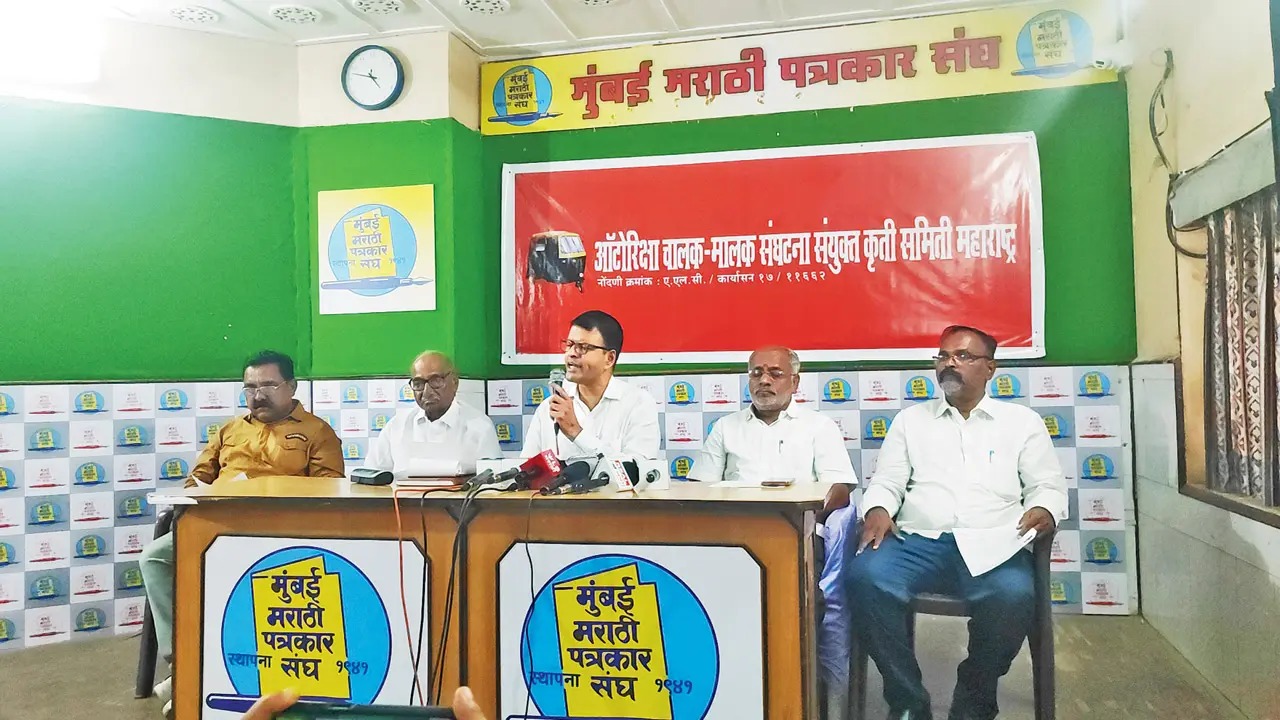
( Shashank Sharad Rao (centre), president of the Autorickshaw Driver-Owner Joint Action Committee, announces the decision to launch a statewide protest if the govt’s decision is not rolled back, on Monday. PICS/SARTHAK MEHTA )
The union has warned that the agitation could significantly disrupt services and may even lead to a shortage of autorickshaws on the roads.
Shashank Sharad Rao, president of the committee, said, “This move will endanger the livelihood of lakhs of self-employed auto drivers who are already struggling to make ends meet. This decision has been taken by the transport minister only to provide financial benefits to aggregator companies and private industrialists; 75 per cent of auto and taxi drivers primarily speak Hindi in the Mumbai Metropolitan Region, and the figure must be 50 to 60 per cent for the rest of Maharashtra. This move unnecessarily threatens their livelihood.”
Union leaders said nearly 15 lakh auto drivers across Maharashtra are expected to participate in the protests, including around 5 lakh from the Mumbai Metropolitan Region (MMR). Demonstrations will be held daily if the government does not roll back the order.
Ahead of the agitation, the union will submit a memorandum to Maharashtra Transport Minister Pratap Sarnaik on April 28, reiterating their demand that the Marathi proficiency requirement be withdrawn before it comes into effect on May 1.
Santy Shetty, a Kandivli resident, told Mid-Day, ‘Speaking Marathi shows respect for the state, but one cannot simply confiscate licences/permits. They can just be advised to learn some basics, as it will be helpful for them, too.'
ALSO READ: TMC MP Yusuf Pathan's Father-In-Law, Other Relatives Arrested In Mumbai Assault Case
Another resident, Sunil Shah, said, ‘Auto drivers and cabbies must know the local language. Even basic understanding/speaking skills will do. There must be an acceptance and willingness to learn. When one has that attitude, one can learn very quickly.'
A Dharavi resident Asraf Ansari also said, ‘I’ve been driving since 2006. I had paid Rs 5000 then for my permits. We are already losing business to bike taxis. Earlier, we managed to earn Rs 25,000 to Rs 30,000 a month. But now, the figure is between Rs 15,000 and Rs 16,000. It seems that 80 per cent will lose even these meagre earnings if this rule is implemented’
As per the government’s directive, all licensed auto and taxi drivers in Maharashtra will be required to demonstrate their ability to read and write Marathi.
ALSO READ: Iran-US Ceasefire Nears End: Will 2nd Round Of Talks Yield Result? A Look At What Both Sides Demand
The verification process will be conducted across 59 regional and sub-regional transport offices, and authorities have indicated that drivers who fail to meet the requirement could face cancellation of their licences.
Across Maharashtra, around 15 lakh permits have been issued, supporting an equal number of families making the issue not just regulatory but also socio-economic in nature.