
- By Raju Kumar
- Tue, 31 Mar 2026 08:10 PM (IST)
- Source:JND
- University asks student to remove Supreme Court criticism post
- Debate centers on Article 19 free speech vs university reputation
- Experts say universities can intervene only if law violated.
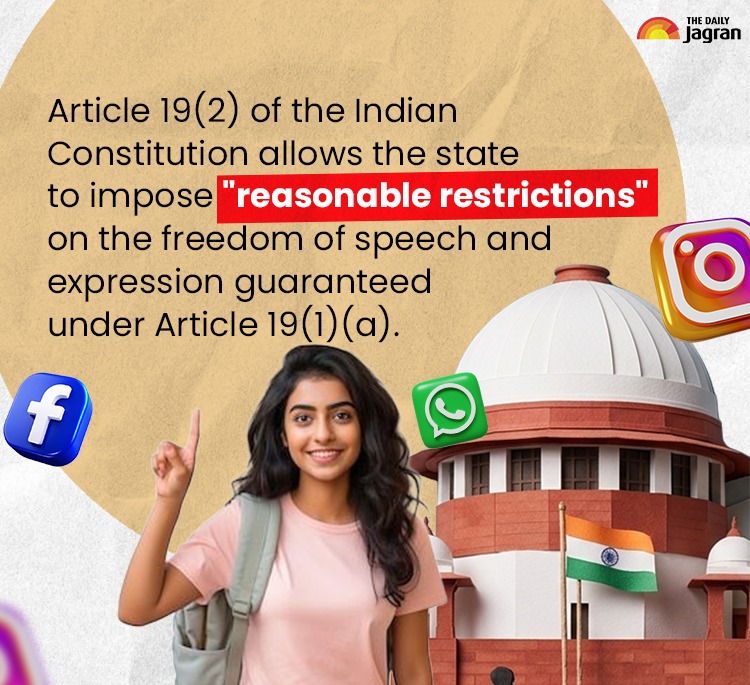
It's My Right: The soul of democracy lies in the delicate balance between Article 19(1)(a) of the Indian Constitution that guarantees all citizens the fundamental right to freedom of speech and expression, and Article 19(2) that allows the state to impose "reasonable restrictions" on the freedom of speech and expression. An imbalance between the two Articles, which are the cornerstone of the Constitution, leads to chaos and sometimes to a power struggle between authorities and citizens' rights. In a healthy democratic setup, the system encourages the youth to exercise their right to free speech and be vocal about issues affecting the people of the country. However, it is not as simple as it appears. In a country like India, where politics outmanoeuvres almost everything, individuals land in trouble. Recently, a diktat by an educational institute to a student, asking him to delete his post on the internet, sparked a debate: Can a university ask a student to remove his social media post?
The issue cropped up after a law student in Tamil Nadu claimed that his university had asked him to remove a Substack post criticising the Supreme Court. The varsity reasoned that it was a matter of the institution's "reputation" and the "best interest" of the university and the student. Rishi Kumar, a final-year law student, wrote a post on March 14 questioning the legality of the top court’s decision to ban an NCERT school textbook with a chapter referring to “corruption in the judiciary”. His opinion drew a diktat from the institution to remove the post.
What Has The University Said In Its Letter?
Explaining its stance, the university said, "This was necessitated in light of representations received from certain members of the legal fraternity who had expressed strong objections to the language employed in the article and had called upon the University to initiate action against the student." The varsity, however, categorically declined to take any punitive measures. The university takes "pride in nurturing our students to be torchbearers of law, justice, and constitutional values", and "does not, and will not, kowtow to the external pressures that seek to undermine these foundational principles," a portion of the letter published by ThePrint read.
The student, Rishi Kumar, said he made it "unequivocally clear" that he would not comply with the direction of the university, asserting that he was ready to face "disciplinary" action. Kumar said he wanted to be fair to his university and emphasised that the management (of the university) is supposed to be a line of defence for their students.
What Is NCERT Book Issue?
On February 26, the Supreme Court imposed a "complete blanket ban" on any further publication, reprinting or digital dissemination of NCERT's Class 8 social science book as it contains "offending" contents on corruption in the judiciary, saying they have fired a gunshot and the judiciary is "bleeding".
In the digital era, youth have become very vocal, more than ever, as the advent of social media provides them with impactful platforms. Therefore, it is imperative to know the boundaries for both individuals and institutions. In no scenario can a gag act be justified.
The Daily Jagran spoke to former Professor, Jawaharlal Nehru University (JNU), Santosh Mehrotra, to understand the issue.
"If one violates the law, he could face consequences. No wrong if a Vice Chancellor (VC) steps in over his social media post in which he violates a law. The VC has the ethical right to protect students from legal troubles. It's much better than police action. End of the day, a university is supposed to safeguard students, but the University authorities should not interfere if no law is violated," said Prof Mehrotra.
How Law Play Its Role
Speaking on the issue Ashish Chaubey, SC Advocate, said a university cannot compel a student to remove a post in every situation. However, if the post violates rules or laws, the university may take legal or disciplinary action, which can include pressuring the student to delete the post, he added.
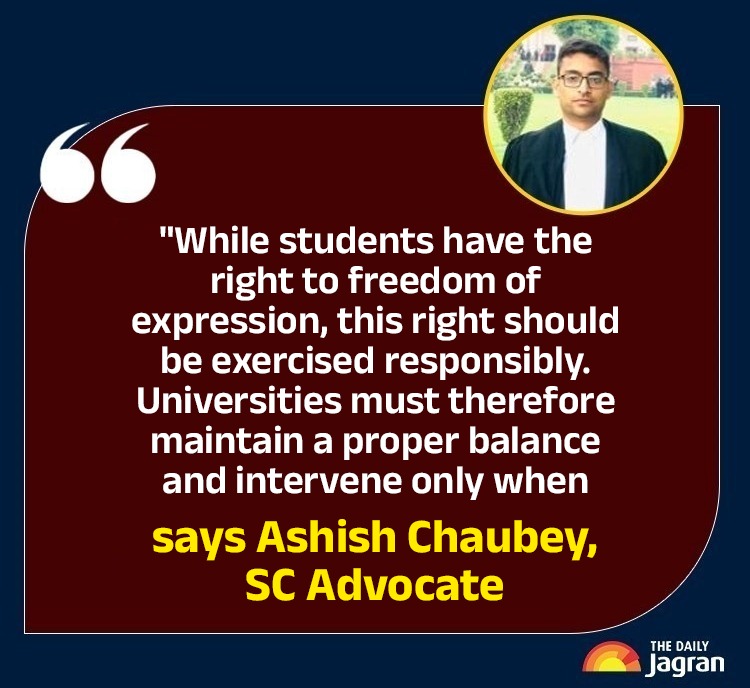
"Article 19(1)(a) of the Indian Constitution guarantees every citizen the right to freedom of expression, which includes expressing opinions on social media. Therefore, under normal circumstances, a university cannot directly force a student to delete a post as this may be considered a violation of their fundamental rights. However, this right is not absolute," Chaubey explained.
ALSO READ: It's My Right: Ordered Smartphone, Received Soap Bar? Know Your Consumer Rights And Legal Remedies
"Under Article 19(2), the university or the government can impose reasonable restrictions in matters such as national security, public order, decency or defamation. If a student's post contains elements that spread hatred, incite violence or defame an individual or institution, the university may take disciplinary action and direct the student to remove the post. In addition, universities have their own codes of conduct that students are required to follow. If a post seriously harms the institution's reputation or violates its rules, the university can intervene," he added.
(Disclaimer: This article is part of the series 'It's My Right'. The views expressed in the article are for informational purposes only and do not constitute legal advice. To read more articles in the series, click here https://www.thedailyjagran.com/search/It's-My-Right)