
- By Raju Kumar
- Fri, 29 May 2026 05:02 PM (IST)
- Source:JND
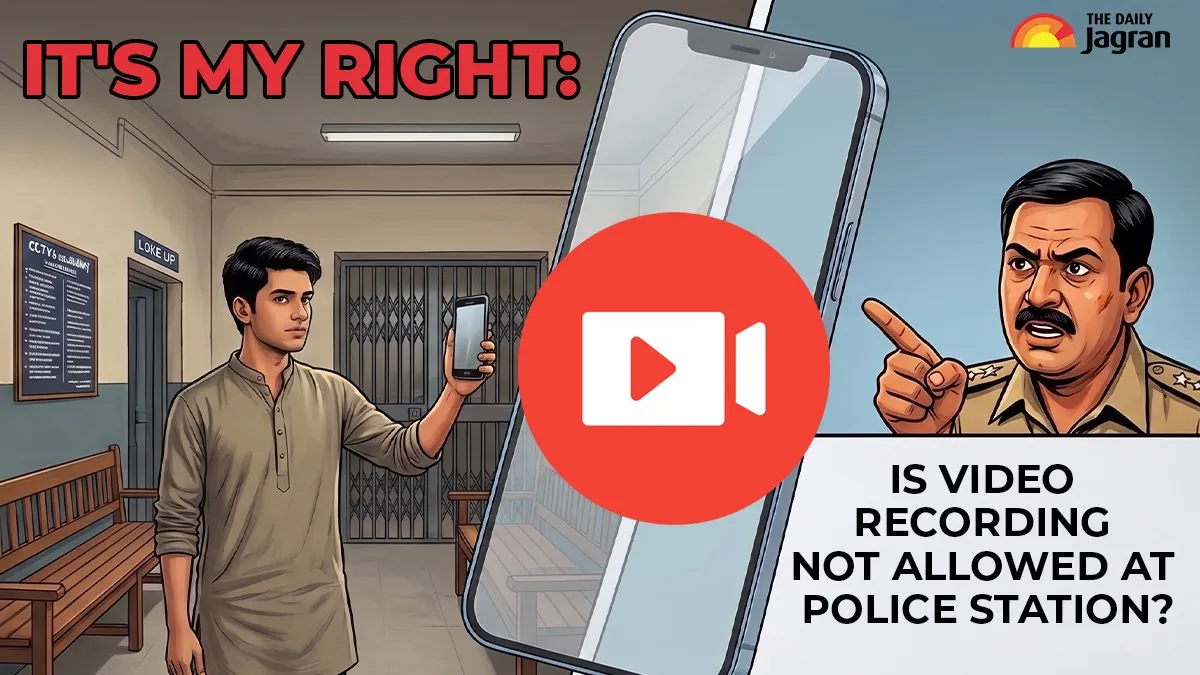
It's My Right: The Daily Jagran's special campaign, It's My Right, brought the latest addition to its series, focusing on one's right to record on a phone inside a police station. This is important as on several occasions, your phone-recorded video emerges as key evidence against errant police officials.
On April 6, 2020, a court in Madurai awarded death penalty to nine police officers, who were accused of custodial torture leading to the death of two men, father and son, namely Jeyaraj and Benniks. Both father and son were mercilessly beaten and brutally tortured by the accused police officials during the interrogation.
Quiz
The court upheld that the case is a clear instance of abuse of authority and falls in the rarest of the rare cases.
The crime by cops highlights the misuse of constitutional power. Experts say the CCTV surveillance inside the police station can stop custodial deaths or torture. But what if CCTV cameras are not installed at the police station? Can a person or their family use their mobile phone to record what is happening with them inside the police station?
According to the law, there is no prohibition on using a mobile camera unless it affects the probe. Legally, one is entitled to record on a phone if police officials are not cooperating or coercing. However, it is not an absolute right. There are some restrictions as well.
ALSO READ: It's My Right: Gag Or Protection? Can University Ask A Student To Remove Social Media Post?
Supreme Court's Stand On The Issue
In August 2025, the Supreme Court of India took suo motu cognisance of 11 custodial deaths reported in Rajasthan in a span of just seven to eight months. Initiated as a Public Interest Litigation (PIL) titled "Lack of Functional CCTVs in Police Stations", the court flagged the police's reluctance to provide CCTV footage of investigations. The top court bats for CCTV surveillance.
While hearing the suo motu case, a bench of Justices Vikram Nath and Sandeep Mehta said, "Now this country will not tolerate this. This is a blot on the system. You can't have deaths in custody," the bench said.
What Expert On Police Affairs Said
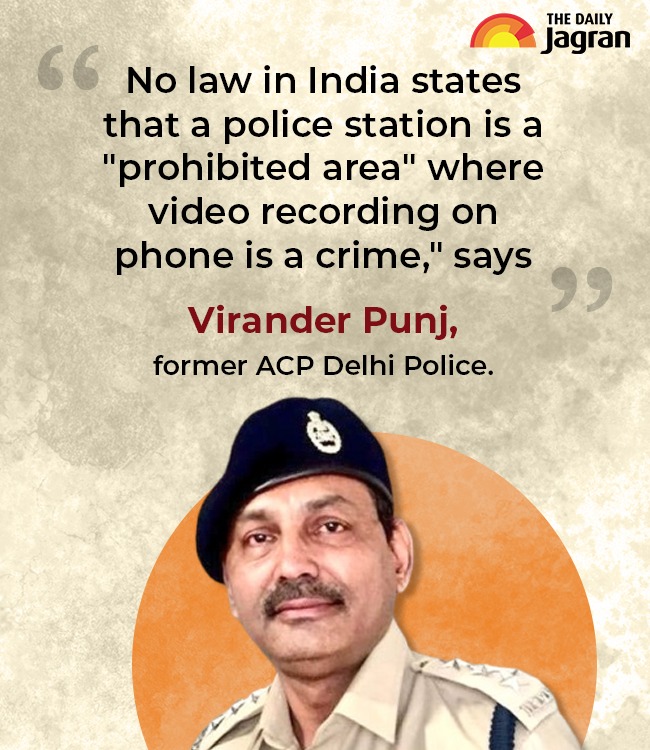
The Daily Jagran spoke to Virander Punj, former ACP Delhi Police and Advocate, who explained the legality involved in using a mobile phone to record inside a police station. No law in India states that a police station is a "prohibited area" where video recording is a crime, said Punj, adding that the Constitutional Rights: Article 19(1)(a) of the Indian Constitution guarantees citizens' freedom of expression.
"Courts have held in various judgments that a citizen can video record public officials (including the police) while on duty to ensure their safety and transparency. Police stations are also generally not considered prohibited places under the Official Secrets Act, 1923, so mere recording cannot be considered a crime," he explained.
"In every police station and unit, there is an unavoidable and mandatory requirement as per the landmark Supreme Court Judgment in Paramvir Singh Saini v. Baljit Singh (2020) case for comprehensive coverage and strict data retention apart from installation of CCTV cameras at all strategic points and corners," the former ACP said.
Rights Of the Accused
The Court ruled that if an accused person alleges physical torture or ill-treatment inside a police station, they have the right to demand access to the CCTV footage, he asserted, adding that they can approach the State/District Level Oversight Committees to access these recordings and use them as evidence.
Landmark Judgement By Bombay High Court
While hearing a case in October 2022, the Bombay High Court's Nagpur bench made a landmark observation, saying a police station is not included as a prohibited place as defined under the Official Secrets Act, and hence, shooting a video inside a police station cannot be an offence.
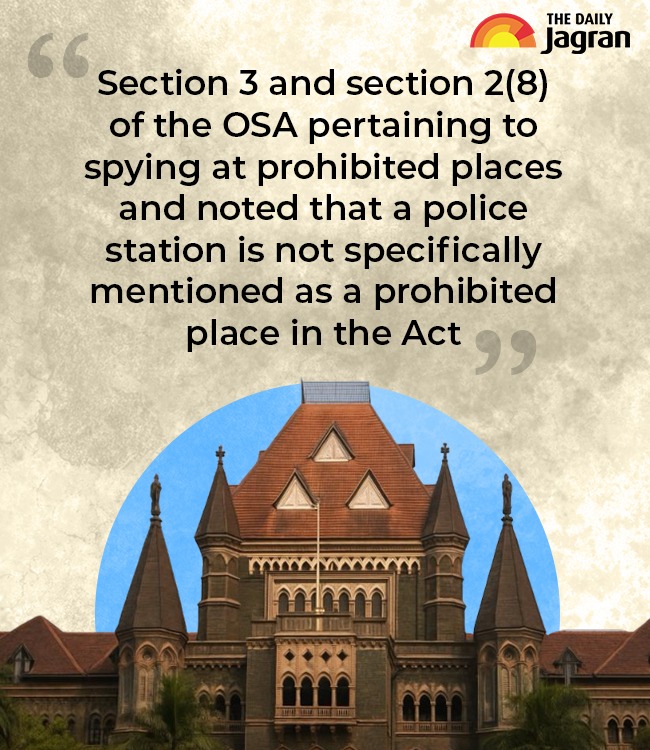
The court quashed a case lodged against one Ravindra Upadhyay under the Official Secrets Act (OSA) for recording a video inside a police station in March 2018. The bench in its order referred to section 3 and section 2(8) of the OSA about spying at prohibited places and noted that a police station is not specifically mentioned as a prohibited place in the Act.
ALSO READ: It's My Right: Ordered Smartphone, Received Soap Bar? Know Your Consumer Rights And Legal Remedies
"The definition of 'prohibited place' as defined in section 2(8) of the Official Secrets Act is relevant. It is an exhaustive definition, which does not specifically include a police station as one of the places or establishments, which could be included in the definition 'prohibited place'," the court said in its order.
It's Not Absolute Right, One Should Exercise Caution: SC Lawyers
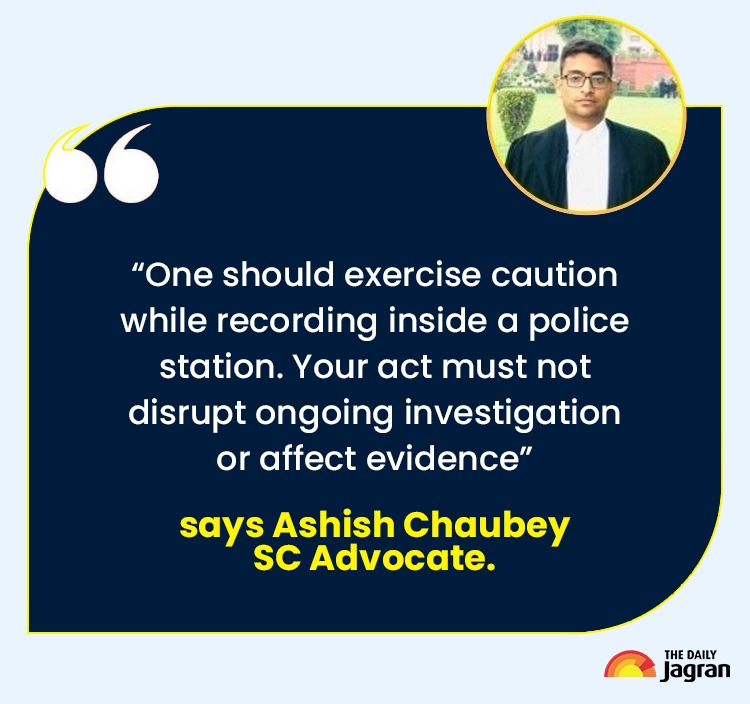
"There is no law preventing you from capturing video footage in a public space, including a police station, but it is essential to be aware of your surroundings and act responsibly. Know your rights, remain calm, and ensure that you do not obstruct law enforcement activities. Avoid disrupting police work or ongoing investigations while recording, as this may lead to complications and legal action," said Ashish Chaubey, SC Advocate.
Do not engage in any act that obstructs government work, as doing so may make you legally liable, he cautioned, adding that under Section 221 of the Bharatiya Nyaya Sanhita (BNS) (formerly Section 186 of the IPC), obstructing a public servant in the discharge of their duties is an offence.
A person who intentionally obstructs any public servant or government official while they are performing their duties may be punished with imprisonment for up to three months or a fine of up to 2,500, or both, he added.
(Disclaimer: This article is part of the series 'It's My Right'. The views expressed in the article are for informational purposes only and do not constitute legal advice. To read more articles in the series, click here https://www.thedailyjagran.com/search/It's-My-Right)