- By Ajeet Kumar
- Tue, 12 May 2026 02:32 PM (IST)
- Source:JND
- Global fuel crisis impacts India's energy security.
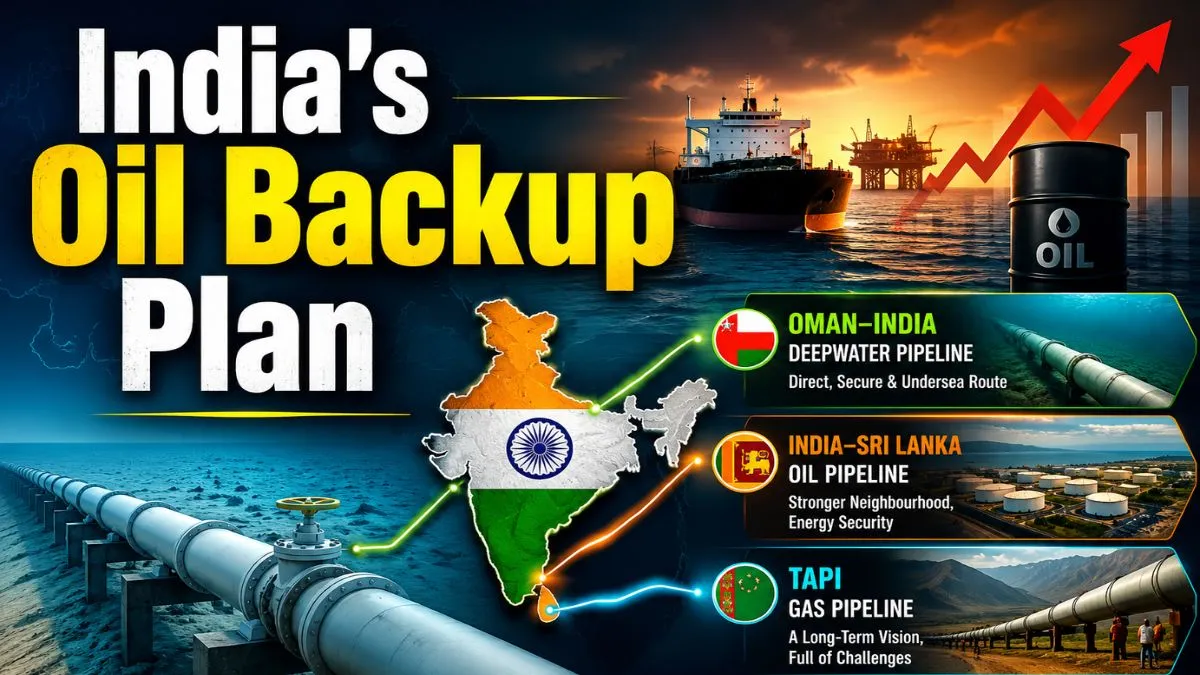
- India re-examines three major pipeline projects.
- Aims to reduce reliance on imported crude oil.
The ongoing conflict in the Middle East has triggered a major global fuel crisis, pushing up oil prices and raising concerns over shortages of petrol, diesel, and LPG across many countries. Although India has so far managed to shield consumers from a sharp spike in domestic fuel prices, the situation remains worrying due to the prolonged war involving the US, Israel, and Iran, along with disruptions around the strategically crucial Strait of Hormuz.
Amid rising energy uncertainty, Prime Minister Narendra Modi has urged citizens to conserve fuel by working from home, preferring virtual meetings, and using petrol and diesel carefully.
While these measures may provide temporary relief, India’s deeper challenge remains its heavy dependence on imported crude oil. The country currently imports nearly 85–90 per cent of its oil requirements, leaving it highly vulnerable to global supply disruptions and price shocks.
The latest crisis has once again revived interest in several long-pending pipeline projects that were first proposed decades ago as long-term energy security solutions.
Three options that India can still explore
Oman-India Deepwater Multipurpose Pipeline
One of the most ambitious proposals is the Oman-India Deepwater Multipurpose Pipeline (OIDMPP). First discussed in the 1990s, the project involves a 1,600-km undersea pipeline connecting Oman’s Ras Al Jifan to Porbandar in Gujarat. Running along the seabed at depths of up to 3,500 metres, the pipeline would transport natural gas directly to India, bypassing politically sensitive land routes and maritime chokepoints. Experts believe the project could provide gas at rates cheaper than imported LNG while ensuring more stable supplies during geopolitical crises.
India-Sri Lanka cross-border oil pipeline
Another project gaining attention is the India-Sri Lanka cross-border oil pipeline. Revived in 2026 with participation from India, Sri Lanka, and the UAE, the proposed pipeline would connect Nagapattinam in Tamil Nadu to Sri Lanka’s Trincomalee Tank Farm before extending to Colombo. The project is expected to strengthen regional energy cooperation while providing India with strategic storage facilities and a shorter, more secure fuel supply route.
Turkmenistan-Afghanistan-Pakistan-India pipeline
The third project, the Turkmenistan-Afghanistan-Pakistan-India (TAPI) gas pipeline, remains the most geopolitically complicated. The 1,814-km pipeline aims to transport natural gas from Turkmenistan to South Asia. While construction has progressed in Turkmenistan and parts of Afghanistan, the Pakistan segment continues to face political and security hurdles. India’s long-standing trust deficit with Pakistan remains a major obstacle to the project’s full implementation.
ALSO READ: Say Goodbye To Office? COVID-Style WFH Could Return Amid Record Fuel Costs
Why WFH is not a permanent solution
While fuel conservation measures may help in the short term, experts say India ultimately needs structural solutions to reduce its exposure to global energy disruptions. If completed, projects like the Oman-India pipeline, the India-Sri Lanka oil link, and TAPI could significantly strengthen India’s long-term energy security and reduce dependence on vulnerable sea routes.
You may also like to watch