
- By Priyanka Koul
- Sat, 02 May 2026 12:21 PM (IST)
- Source:JND
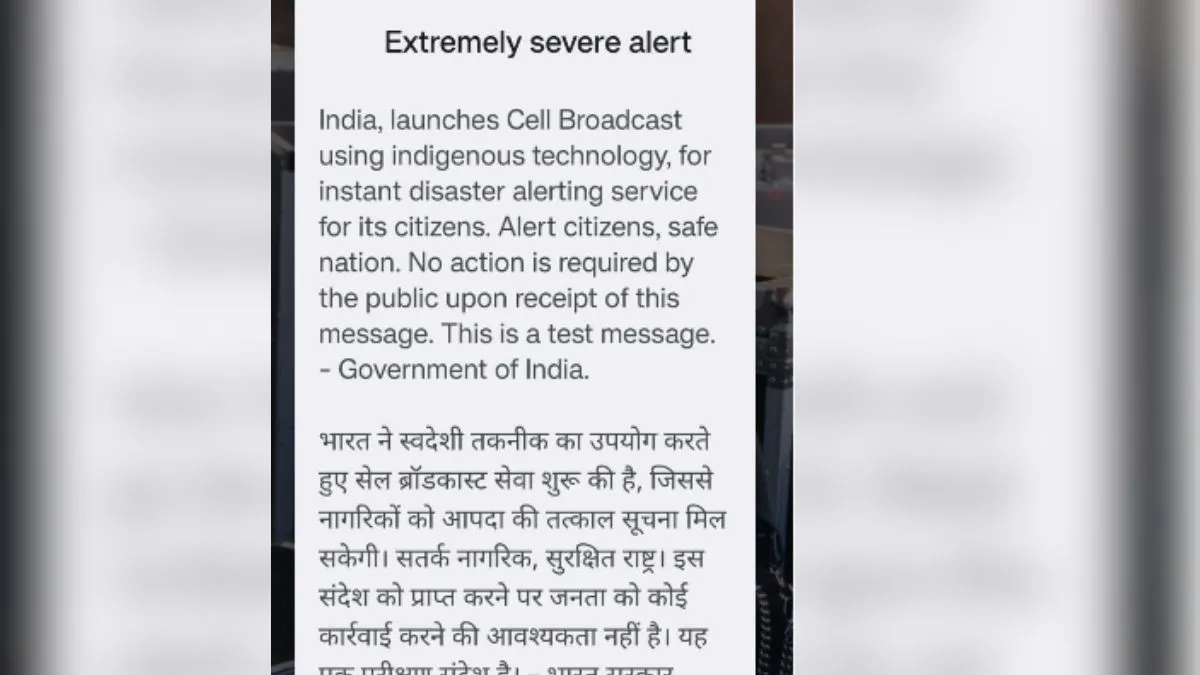
The National Disaster Management Authority (NDMA) conducted a nationwide test of the Cell Broadcast Alert System on Saturday as part of efforts to strengthen India’s emergency communication network.
Department of Telecommunications, Govt. of India tweets, "If you receive an Alert Message on your phone, do not panic. This is part of the testing of the Emergency Alert System, so that accurate information can be received on time during disasters. During testing, this message… pic.twitter.com/nXNCDqTptK
— ANI (@ANI) May 2, 2026
India is developing its own advanced alert system to better protect citizens during natural disasters and other emergencies. Known as the Cell Broadcast Alert System, the platform is currently undergoing pan-India testing. So, if you received a flash SMS alert accompanied by a loud alarm sound from the NDMA, there is no cause for concern as it was part of a nationwide test.
#BREAKING: India tests Emergency Alert System on phones across different parts of the country. No need to panic. pic.twitter.com/wCveznfoAe
— Aditya Raj Kaul (@AdityaRajKaul) May 2, 2026
The government aims to ensure timely dissemination of critical information during emergencies, and direct alerts on mobile phones are considered one of the most effective ways to achieve this. As part of its disaster preparedness strategy, India has developed this indigenous cell broadcast system to rapidly notify people in affected areas.
These test messages were sent to mobile phones with Cell Broadcast test channels enabled. Users can manage these alerts by going to:
Settings > Safety and Emergency > Wireless Emergency Alerts > Test Alerts
The alerts are designed to verify the efficiency of the mobile network infrastructure and ensure seamless communication before real emergencies occur.
ALSO READ: Sandeep Pathak Under Scrutiny: 2 FIRs Against Rajya Sabha MP In Punjab Days After BJP Switch
When triggered, the alert causes phones to emit a loud alarm tone along with a flashing message to immediately capture users’ attention.
The system is intended to provide disaster and emergency-related warnings for events such as tsunamis, earthquakes, lightning strikes, gas leaks, chemical hazards, and other natural or man-made disasters, delivering location-specific SMS alerts directly to people in affected regions.