
- By Aditya Jha
- Tue, 17 Mar 2026 10:04 AM (IST)
- Source:JND
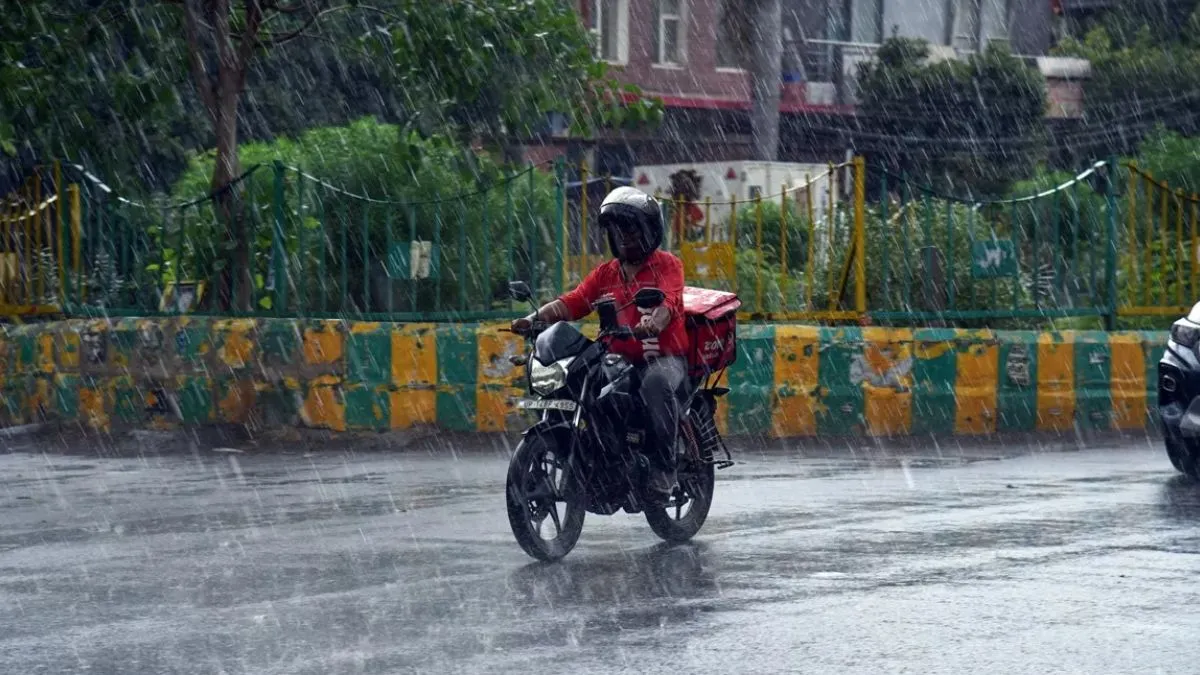
Delhi Rain Alert: The India Meteorological Department (IMD) has stated that Delhi is likely to witness light to moderate rainfall for the next two to three days. The weather department asserted that along with downpour, the capital city is also set to receive strong surface wind, lightning, and thunderstorms. The maximum temperature is also likely to drop by two to three degrees Celsius due to the continuous rainfall, providing major relief from the heat.
While providing details, the weather department stated that the residents are set to witness surface winds with speeds of 40-50 kmph. While the maximum temperature is likely to be calculated at 28 degrees Celsius, the minimum temperature is set to remain around 12 degrees Celsius. The change in weather is likely to provide relief to the residents, as the capital city has witnessed more than usual heat in March.
ALSO READ: US-Israel-Iran Live Updates: American Embassy In Baghdad Targeted; UAE Briefly Shuts Airspace
The continuous rainfall is likely to lead to waterlogging in several regions, leading to inconveniences to the daily commuters. Earlier on Monday, the capital city witnessed cloudy skies and wind speeds of nearly 20 km per hour, providing relief from the heat.
The weather department added that the maximum temperature was recorded at 32.2 degrees Celsius, 3.3 degrees above normal. It further stated that the minimum temperature was recorded at 17.4 degrees Celsius, 2.3 degrees above normal. However, the IMD clarified that the temperature will surge again after a temporary relief, further urging the residents to follow the guidelines to avoid inconveniences.
Earlier on Monday, the weather department asserted that several northern states, including Delhi, Punjab, Uttar Pradesh, Bihar, and Jharkhand, are set to witness rainfall in the upcoming days. The experts have also pointed out that these states are likely to witness more than usual heat in the upcoming months.