
- By Mohammad Saqib
- Fri, 10 Apr 2026 10:52 PM (IST)
- Source:JND
The Delhi Police Special Cell has uncovered an advanced espionage and terror-linked network that operates in a much more covert fashion than most traditional terror networks and uses technology as its main source of support.
Instead of carrying out direct attacks, the network initially engaged in digital mapping of sensitive areas and creating surveillance systems, so that information could be gathered without suspicion for a long time, and the ground could be prepared for a bigger operation in the future.
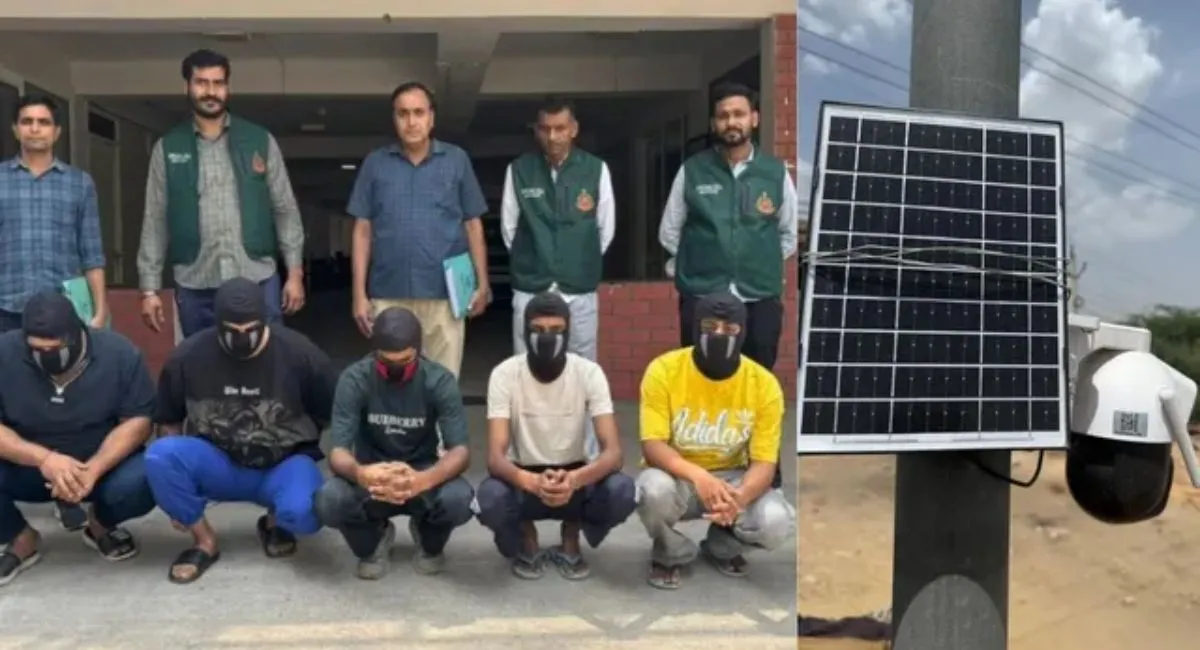
According to the investigation, the accused had developed a surveillance system using ordinary-looking resources, which appeared to be a normal surveillance system from outside, but was recording and transmitting activities at sensitive locations.
Mobile applications, internet connectivity and SIM cards obtained on fake identities were used extensively in this network. Each member of the module was assigned different responsibilities.
According to Special Cell officials, the network operated on a completely decentralised model, with each member having limited access to information and assigned different responsibilities.
Key Accused And Responsibilities Assigned:
- Manpreet, a BCA graduate, was the mastermind of this module and was in direct contact with a Pak-based handler. He received and delivered weapons and arranged SIM cards.
- Anmol and Sahil came in contact with Pakistani handlers through encrypted apps, and they installed solar CCTV cameras in defence-sensitive areas of Punjab.
- Atul Rathi earned an MBA in New Zealand, returned to India in 2004, and contacted a Pakistani handler through an encrypted app.
- Rohit, an MBA graduate, was involved in arms smuggling from Punjab along with Atul Rathi.
- Accused, Ajay, was involved in arms smuggling.
- Gurjeet Singh used to send photos and videos of Army Cantonment areas to Pak-based handlers.
- Rimaldeep Singh used to share location photos with Pak-based handlers of the Army and BSF.
- Harprati Singh used to provide information about drug smuggling to Pakistan-based handlers.
- Salvinder Singh, along with Rimandeep, used to share photos and videos of sensitive areas.
- Boota Singh used to send photographs and videos of BSF and Army cantonment areas to Pak-based handlers.
Officials said encrypted communication platforms were used extensively, making detection difficult. However, sustained technical surveillance, data analysis, and ground intelligence helped investigators gradually dismantle the network.
Authorities added that the module was not limited to surveillance activities and was allegedly preparing for further operations.