
- By Nidhi Giri
- Thu, 30 Apr 2026 03:17 PM (IST)
- Source:JND
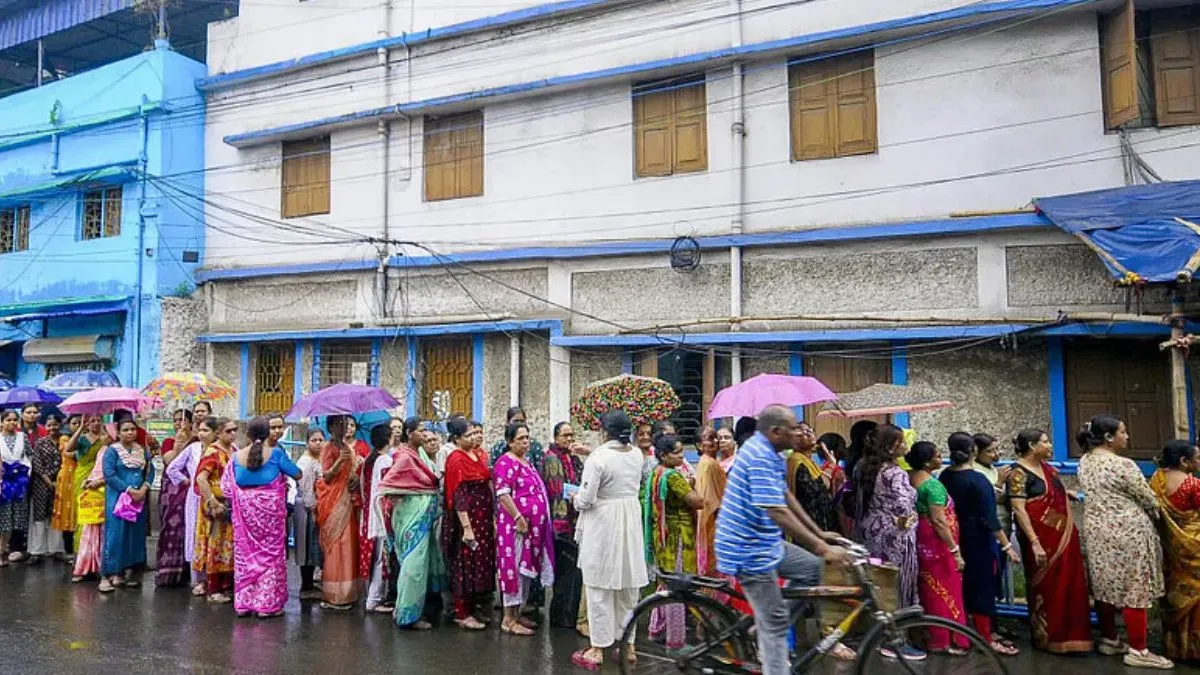
The second phase of the Bengal Assembly elections has revealed a startling picture. The total number of voters in the state has dropped by nearly 51 lakh compared to the previous election, yet voter turnout has increased by more than 3 lakh. This unusual trend has pushed the state's voter turnout to historic levels. According to Election Commission data, 92.63 per cent voter turnout was recorded as of midnight after the second phase of voting. The combined turnout for both phases reached 92.93 per cent, which is believed to be the highest voter turnout not only in Bengal but in any assembly election in India.
Experts cited by Jagran believe that this time, a significant number of voters who typically do not vote or abstain for some reason turned out at polling stations. These additional votes could decisively influence the outcome of this election.
According to data, of the 3 lakh new voters, approximately 21 lakh voted in the first phase alone. At the assembly constituency level, on average, each seat saw an increase of approximately 10,000 votes. This increase in the first phase was an average of 14,237 votes per seat, while in the second phase, the figure was 6,615.
Additional Voters To Decide Direction Of Election Results
The question now is who will win this massive turnout. Various exit polls have shown the BJP leading, while others have predicted a strong TMC retaining power. However, nearly all surveys clearly indicate a close contest. Electoral history shows that exit polls are often wrong.
The general perception is that high voter turnout often signals an anti-incumbency wave, but there are examples to the contrary. Trinamool Congress leaders are citing previous Lok Sabha and state assembly elections to claim that despite high voter turnout, the public supported the ruling party.
Opposition Giving Example Of 2011
The Opposition, meanwhile, is citing the 2011 elections, when a voter turnout of 84.33 per cent ended 34 years of Left rule. All eyes are now on which party this record turnout will favour. Clearly, the additional voters this time around will be the deciding factor in the election outcome.
Completely Peaceful, Fair Election For Third Time In 50 Years
Bengal has set a historic precedent in the 2026 Assembly elections. This marks the third time in nearly five decades that the state has witnessed a completely peaceful and fair election. Prior to this, such a situation was observed during the Assembly elections of 1971 and 2011. This time around, during the election period, spanning not just the polling day but the entire campaign trail, no incidents involving violence or loss of life and property were reported. The Election Commission's strict oversight and strategic decisions are being cited as the primary reasons behind this success.
The voter turnout across the two phases of polling stood at 92.93 per cent, indicating that voters were able to reach the polling stations without any fear. In comparison with previous elections, the 2021 Assembly elections witnessed 24 fatalities, while seven lives were lost in 2016. In stark contrast, this figure remained at zero in 2026.
Pivotal Role Of Election Commission Officials
Election Commission officials played a pivotal role in bringing about this transformation. The strategies and administrative control exercised by the State Chief Electoral Officer Manoj Agarwal, Special Observer Subrata Gupta, and Special Police Observer NK Mishra are considered to be the decisive factors.
Even before the formal announcement of the elections, these officials implemented large-scale reshuffles within the police and administrative machinery, thereby bringing the entire system under their direct control.
Experts believe that, unlike in the past, the emphasis this time was placed on strengthening and ensuring the impartiality of the administrative framework, rather than taking direct punitive action against political parties. It is for this very reason that the entire electoral process remained completely transparent and peaceful.
From a historical perspective, electoral violence and rigging have long been major issues in Bengal. The 1972 election is considered the most controversial in the state's history, while 1977 marked a change of power. However, the 2026 election charts a new course, distinct from all these controversies.
Political analysts and leaders from various parties have acknowledged this election as peaceful, crediting the Election Commission, the administration, central forces, and the political parties alike. In the times to come, this election could well serve as a model for other states across the country.