
- By Aditya Jha
- Sat, 09 May 2026 11:26 AM (IST)
- Source:JND
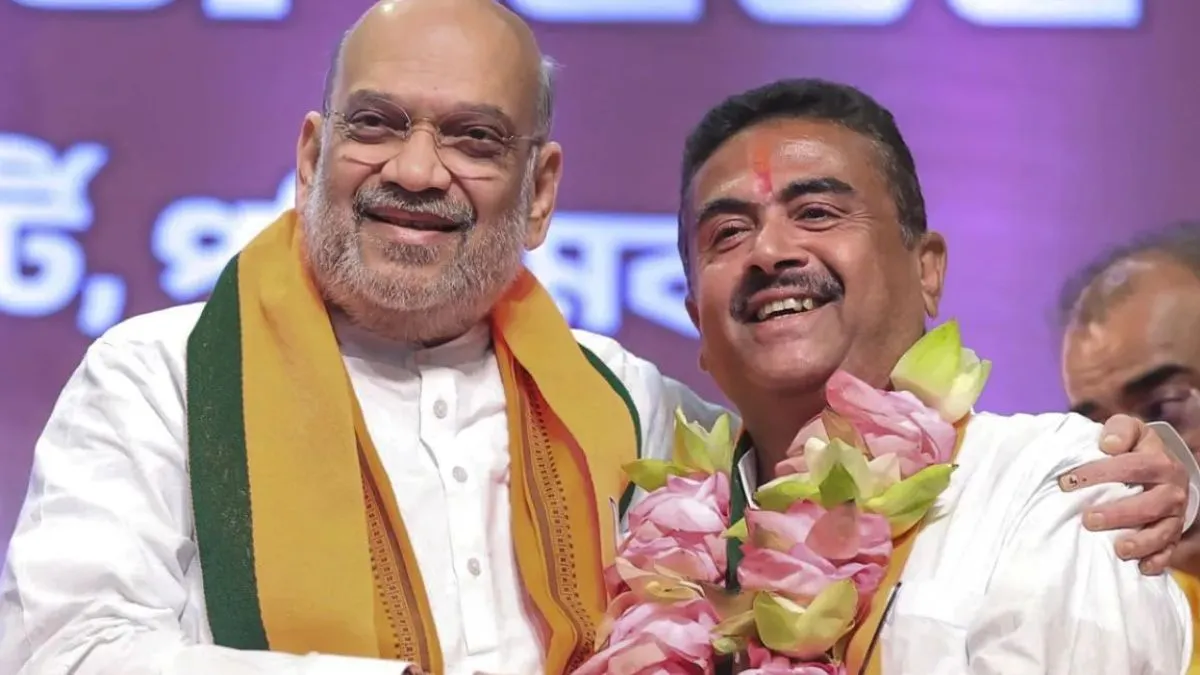
Bengal Politics: In a major transition in the politics of West Bengal, the Bharatiya Janata Party (BJP) registered a landslide victory in the recently conducted assembly election. It emerged as the single largest party by winning 207 of the total 294 constituencies, ending the 15-year rule of the Mamata Banerjee-led Trinamool Congress (TMC). Suvendu Adhikari, who defeated his former boss Banerjee in Bhabanipur, has been selected to be the first-ever chief minister of the BJP in the eastern state.
Bengal Persists With One Leader
The politics of Bengal, for nearly the past five decades, have been largely dominated by three chief ministers- Jyoti Basu, Buddhadev Bhattacharya, and Mamata Banerjee. While Basu ruled Bengal for 23 straight years, Bhattacharya remained head of the state for 11 years.
ALSO READ: Indian Sailor Killed, 5 Injured As Vessel Caught In Strait Of Hormuz Crossfire Amid Iran-US Tensions
Mamata Banerjee-led Trinamool Congress (TMC) first formed its government in 2011 and ruled the state for 15 years before being defeated by the BJP. While states like Karnataka, Maharashtra, Kerala, and Tamil Nadu change their governments frequently, states like Bengal have persisted with a single party for a long time.
Why Does Bengal 'Stick'?
As per the Cambridge University Press, the ruling parties build a strong cadre across the state, making it difficult for the opposition parties to appeal to the voters. Apart from this, ideology has played an integral role in voting in the past few decades. While the left forces relied on social justice and class politics, the narrative of the TMC was fixed around the Bengali identity and beneficiary schemes.
Suvendu's Case Explained
The situation could be tougher for Suvendu Adhikari as the BJP has not built its cadre system across the state, especially in the southern region. Apart from this, the recent voting has also suggested that along with ideology, the voters have also focused on several issues, including law and order and employment.