
- By Raju Kumar
- Tue, 17 Mar 2026 06:45 PM (IST)
- Source:JND
West Bengal Polls: The political landscape in the country has drastically changed since the Narendra Modi-Amit Shah era commenced in national politics with the landslide victory of the National Democratic Alliance (NDA) in 2014. In the last 12 years, there have been only a few political fortresses that have not been conquered by the Modi-Shah-led Bharatiya Janata Party. Mamata Banerjee's West Bengal has been one of them. Banerjee's Trinamool Congress (TMC) has been in power since 2011, overcoming the anti-incumbency. The TMC defeated the BJP in the last two assembly elections, arresting the Modi wave.
Here Are Five Factors That Give An Advantage To Mamata Banerjee:
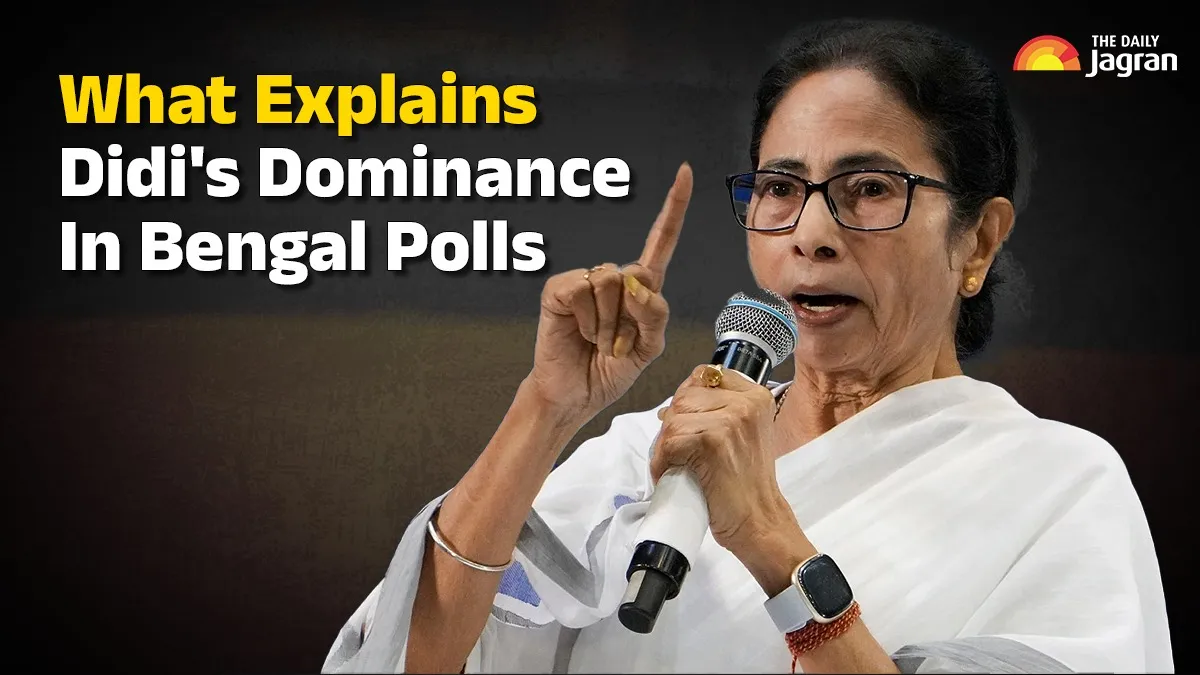
1. Strong Leadership: Popularly known as Didi, Banerjee has been winning elections in West Bengal consistently since 2011, riding on her popularity in the state. She herself holds the reins of the party. Her simple lifestyle, aggressive politics against the right-wingers, and 'Didi' (Sister) image have made her very popular among the poor and middle class. She represents herself as a protector of secular fabrics in Bengal to counter the BJP's politics around Hindutva. With the debacle of the Left in the state, Banerjee has emerged as the tallest leader in the state, and to date, no party has been able to produce a leader of her stature.
2. Popular Welfare Schemes: It's not only her personality that helps the TMC to counter anti-incumbency, but the government's social welfare policies also strengthen it. Several schemes, such as the Kanyashree Prakalpa, the Sabuj Sathi and the Lakshmir Bhandar. She also brought programmes that help to pacify religious bodies. The government provides a monthly honorarium (stipend) scheme to registered Hindu priests (purohits) and Muslim muezzins/imams. Just two days ago, she increased the financial aid by Rs 500. Now they get Rs 2,000. Thus, she managed to keep her vote bank intact.
3. Strong Grassroots Organisation: The TMC is a cadre-based party. It has a long history of struggling against the Left's aggression. Over the years, the TMC has strengthened the organisation at the rural level, breaching the Left and Congress' vote banks. The TMC workers are constantly active from the Panchayat to the block-level.
4. Bengali Identity: Banerjee prudentially used the Bengali identity to counter the BJP's Hindutva. Taking a cue from the Dravidian politics in Tamil Nadu, she made Bengal's culture and regional identity a political issue, which reaped electoral results in her favour. In the last few months, she strongly campaigned against the alleged harassment of Bengali-speaking people in BJP-ruled states.
5. Weak Opposition: Though the BJP rose from single digits to double digits in Bengal, it failed to present a local leader who could challenge Banerjee. Suvendu Adhikari, who defeated Banerjee in the Nandigram seat in 2021, has emerged as the biggest challenger, but his TMC background is his biggest enemy. In 2016, the BJP won just three seats, with a vote share of 10.16%, but in 2021, the saffron party jumped to 77 seats with 37.97% of the vote. The BJP saw a rise in Bengal, yet Banerjee is the most popular leader in the state. The Left and Congress failed to yield any remarkable results, which ultimately helped Banerjee.