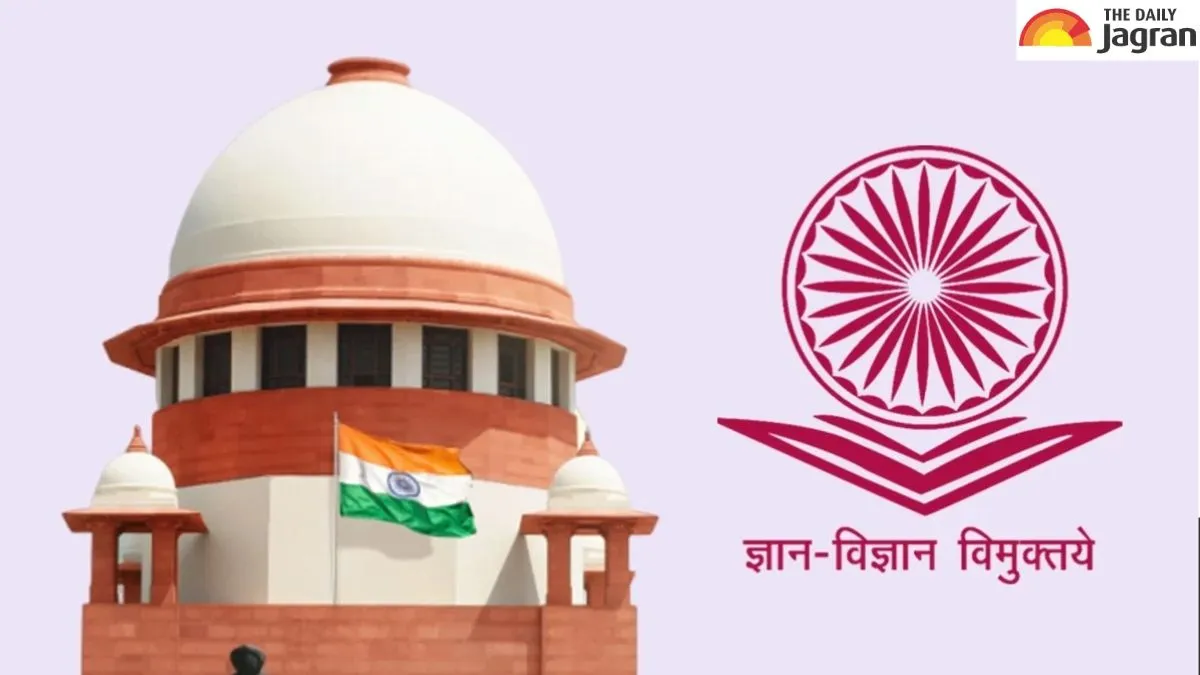
- Centre considering committee for UGC Equity Regulations 2026.
- Supreme Court stayed 2026 regulations due to vagueness.
- Regulations address caste discrimination and student welfare concerns
UGC Regulations 2026: The central government informed the Supreme Court on Thursday that it is considering setting up a committee to re-examine the 'University Grants Commission (Promotion of Equity in Higher Educational Institutions) Regulations, 2026'. The Court had stayed these regulations earlier this year.
The Centre has informed the Supreme Court that it is setting up a special committee to re-examine the UGC’s 2026 regulations on promoting equity in higher education institutions, whose implementation was stayed by the court in January. Solicitor General (SGI) Tushar Mehta submitted before a bench headed by Chief Justice of India (CJI) Surya Kant that the government was looking at ways to address students’ concerns and ensure that no group feels excluded, threatened or apprehensive under the framework. The CJI said the exercise must safeguard the interests of all students and emphasised that the concerns and well-being of the younger generation should remain central. The court had earlier stayed the 2026 regulations after raising concerns that their provisions were prima facie vague and could be misused. It had directed that the 2012 UGC equity regulations would continue to apply until further consideration.
— ANI (@ANI) November 5, 2026
What Did the Centre Tell the Court?
Solicitor General (SG) Tushar Mehta informed a bench headed by the Chief Justice of India (CJI), which also included Justice Surya Kant and Justice Bagchi, that the government is examining the matter to ensure that students' concerns are addressed and that there is no discontent or apprehension among any section. He further stated that the government has resolved to safeguard the interests of every student, keeping the well-being of the younger generation in mind.
“The government is contemplating appointing a committee,” the SG said.
The Chief Justice of India stressed the need to protect the interests of every student. The Court adjourned the batch of petitions for four weeks.
What is this case about?
This case relates to 'Abeda Salim Tadvi v. Union of India' and other connected matters. In 2019, the mothers of Rohith Vemula and Payal Tadvi, both of whom died by suicide after allegedly facing caste-based discrimination on their respective campuses, filed a petition. The petition sought stricter safeguards to prevent such discrimination in higher educational institutions. Following consultations, the University Grants Commission (UGC) notified a new set of regulations in January 2026, which replaced the 2012 framework.
Recommended For You
Why was a stay imposed on these regulations?
In January 2026, the Supreme Court stayed the implementation of these new regulations. The Court observed that, prima facie, the provisions appeared vague and were susceptible to misuse. It directed that the 2012 regulations would remain in force in the interim.
The primary concerns centered on the definition of "caste-based discrimination" under Regulation 3(1)(c), which focused on unfair treatment faced by individuals from Scheduled Castes (SC), Scheduled Tribes (ST), and Other Backward Classes (OBC). Petitioners from the 'general category' argued that this framework was discriminatory and could foster bias against non-reserved category students. Conversely, the other side emphasized the necessity for specific protective measures.
Earlier, in August 2026, the Central Government informed the Court that these regulations were being reconsidered.