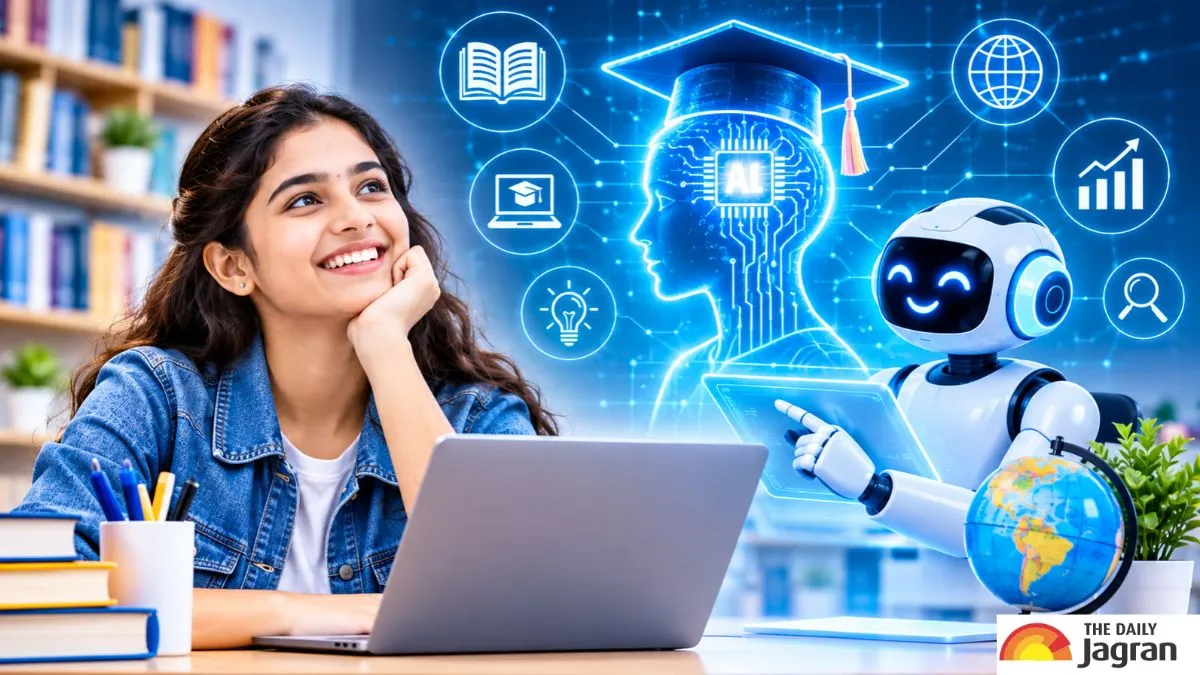
- Harness AI benefits while keeping human judgment central in education.
- Schools must train teachers and adapt application-based evaluation methods.
- Empower students to use AI wisely, ethically, and purposefully for learning.
AI In Education: As artificial intelligence becomes mainstream in education, the priority is to harness its benefits for teachers and students while keeping human judgement at the centre. This begins with how learning is measured. Schools should move towards application-based evaluation and allow AI use only to the extent that it supports students’ work rather than creating dependency.
Teachers also need training to interpret the results AI tools provide, and schools should set clear internal standards for using such technology. Tasks can be designed so that students must explain and prove their understanding, verify information and defend their stances, keeping critical thinking at the forefront of learning.
Why the Right Question Matters?
According to Rima Singh, Head, DPS International, AI can provide answers, but human judgement determines which questions are worth asking. While it can analyse information, generate ideas and simplify complex tasks, it cannot replace empathy, integrity, discernment, creativity and compassion, the qualities that give learning its true meaning.
Recommended For You
Students must therefore be empowered to use AI wisely, ethically and purposefully. The future belongs to learners who can question what technology presents, recognise bias, evaluate evidence and make informed decisions, rather than accept machine-generated output at face value.
Building Thoughtful and Responsible Learners:
Both school leaders agree that AI is a tool to enhance learning, not a substitute for thinking. Ms. Jawa says the effectiveness of any such technology should be judged by the value it adds to the educational process, and that it must preserve students’ ability to navigate information, think critically and reach their own conclusions.
Ms. Singh adds that the goal at DPS International is not merely to create technologically proficient learners, but thoughtful, compassionate and responsible global citizens who exercise sound judgement and use innovation for the greater good.