
- By Aditya Pratap Singh
- Fri, 03 Apr 2026 04:09 PM (IST)
- Source:JND
Many young individuals who have either started their career or have been working for a while struggle to manage their money on a monthly salary of less than Rs 50,000. Living in a tier-1 city with a steep fixed cost, including rent, food, travel, and unexpected expenses, often leaves little room for savings. However, beyond the expenses, budget mismanagement is one of the key aspects, lowering the chance of investment or savings.
A simple budgeting formula, like the 50/30/20 rule, can help bring structural spending, even on a modest income.
What is the 50/30/20 Rule?
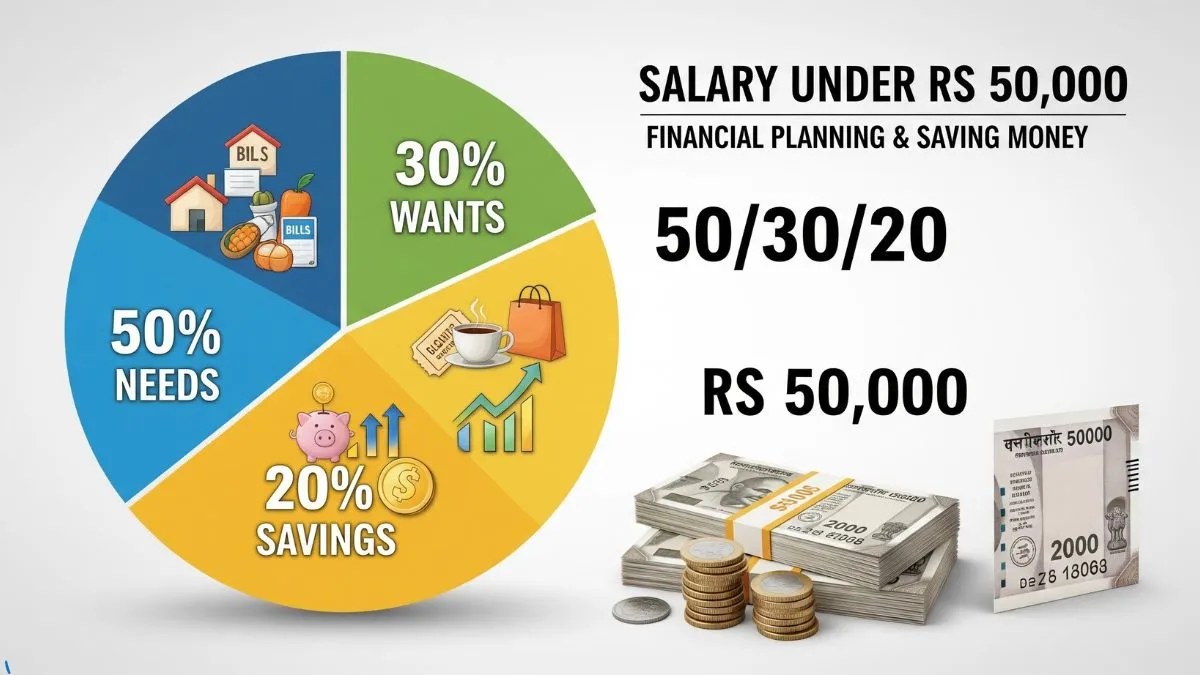
The 50/30/20 rule is a basic way to divide your monthly income into three structural parts. According to the formula, a salaried individual spends 50 per cent of his or her salary for his or her basic needs. 30 per cent of the salary would go to wants–lifestyle, travel or any hobby, and 20 per cent should be used for savings.
For many individuals, this may sound difficult to bring into practice on a lower salary. However, a few small adjustments can make it happen.
Understand The Calculation?
Let’s take an example. Suppose an individual earns Rs 40,000 per month. According to the 50/30/20 rule, he should spend around Rs 20,000 on his needs, which include rent, groceries, electricity bills, mobile recharge, daily commute, and water bill.
In tier-1 cities, rent itself can take up a big chunk, so the person should choose to live in shared accommodation. If this does not work, then he should try to live slightly farther from his workplace or choose a bit affordable area nearby.
30 per cent of the salary, which translates into Rs 12,000, should be used for wants. This includes dining out with friends, some subscription to OTT or any other apps, shopping, or a short travel plan.
In a budget of Rs 12,000, this could be possible only if the individual has control over his spending. Frequent dining out should be avoided; to fund other wants as per priority. The thinking should be to cut down unnecessary spending, which can free up money for more important goals.
Saving is the most essential part for an earning individual, and that is what the remaining 20 per cent or about Rs 8,000 of the Rs 40,000 salary is meant for. The savings could be used for emergency funds, SIP investments, or recurring deposits in case the person wants a risk-free investment.
For the first few months, saving Rs 8,000 feels difficult. However, starting with a smaller amount and gradually increasing it can build financial discipline over time.
The formula does not apply to limited income group
However, experts say the rule should not be followed strictly if your income is limited. In reality, the majority of young individuals in the nation end up spending 60–70 per cent on basic needs. In such cases, they should focus on maintaining a habit of saving, even if it is just 10–15 per cent or less.