

Jumping into a startup journey is a luxury that was earlier enjoyed by professionals in Tier 1 and metro cities. However, the waves of entrepreneurship travelled to Tier II and Tier III cities in the past decade, thanks to high-speed internet connectivity, expansion of logistics mediums and some flagship government schemes.
Now, the trend of starting up a business or diving into the luxury of owning a venture– and serving national and international customers has expanded further to small towns and villages. I can say it with full confidence as I have recently witnessed it first-hand.
When I stepped into the UP International Trade Show at the International Trade Expo in Greater Noida this Monday, September 28, 2026. I anticipated an encounter with the founders who have been building impactful businesses far from metro hubs. However, I did not expect to meet such young founders from small towns and villages building compelling brands that serve customers across India and in international markets.
Navigating through Halls 15-16–a dedicated section featuring businesses supported by CM Yuva—a flagship state scheme providing interest-free, collateral-free loans up to Rs 5 lakh to young entrepreneurs. I interacted with a handful of young fellows, building fortunes from villages and small towns. Their stories were overwhelming; however, I interviewed three of them.
Among them is a young woman solving bridal clothes rental problems for low-income families in villages and small towns from her village, ‘Khedamastan’, 28 kilometres away from Muzzafarnagar–a district headquarters; a 26-year-old man from a remote location in Barabanki building a ‘Honey’ product brand–taking his 20-year-old family farming business to a national stage; and an IIT Patna MBA graduate woman running an Ayurveda D2C brand from Varanasi.
Furthermore, what is even more appealing is that these founders are driving local employment and community empowerment.
Vidhi Turns Sister's Wedding Experience Into Business
Hailing from Khedamastan, a small village 28 km from Muzaffarnagar, Vidhi Mallik is an engineering and MBA graduate who stepped away from UPSC preparation to build her venture, Bridal Spot. Starting with just Rs 500, Vidhi got the idea for her business while managing her sister's wedding, where she realised that costly, single-use bridal items create major financial hurdles for low-income families in villages and small towns.
To solve this, she launched an affordable rental bridal service.
Taking a next step, recognising that the sacred Tulsi plant deserved proper adornment, she also created specialised decorative clothes for Tulsi ji. A video featuring these creations went viral with millions of views, opening major new opportunities and making them her best-selling product line.
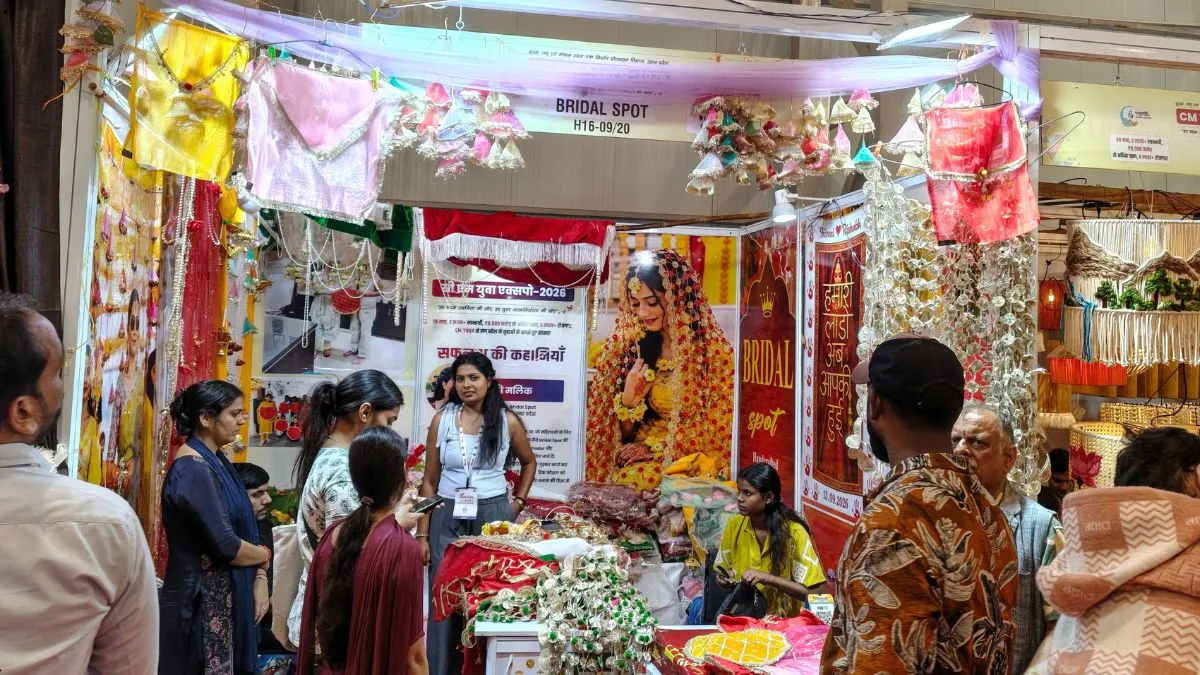
Accessing an interest-free, collateral-free loan of Rs 5 lakh through the CM Yuva scheme subsequently enabled her to expand operations and showcase her portfolio at the UP International Trade Show.
Vidhi's initiative empowers local women by providing flexible employment, scaling her team from 2 to 25–30 women with an ambitious vision to employ over 100 rural women.
Alongside serving local brides with rental dupattas and bridal entry drapes, her customer base has expanded across India (including Rajasthan and Mumbai) and into international markets such as the US and Germany, with orders around Rs 4,000.
With product prices starting at Rs 1,000 for custom designs and 30 to 40 rental orders handled monthly, Vidhi is proving that small-town entrepreneurship can thrive globally.
"Itne chote gaon se yha tak aa gyi hu ab aage jana hai" ("I have come this far from such a small village, now I want to go even further"), she shares.
Aditi’s Modern Ayurvedic Wellness Mission
Driven by her personal health battle with PCOD/PCOS, IIT Patna MBA graduate Aditi Singh launched Shree Vidhi Organics in 2025 to make traditional Ayurveda convenient and accessible for modern consumers, particularly Gen Z. Based in Varanasi, her startup develops ready-to-use health mixes and herbal capsules designed for easy, everyday use.
Utilising an interest-free, collateral-free loan under the CM Yuva scheme and sourcing ingredients like moringa directly from farmers and dealers, Aditi empowers a community of 10 to 12 local women involved in the processing and packaging of her product line.
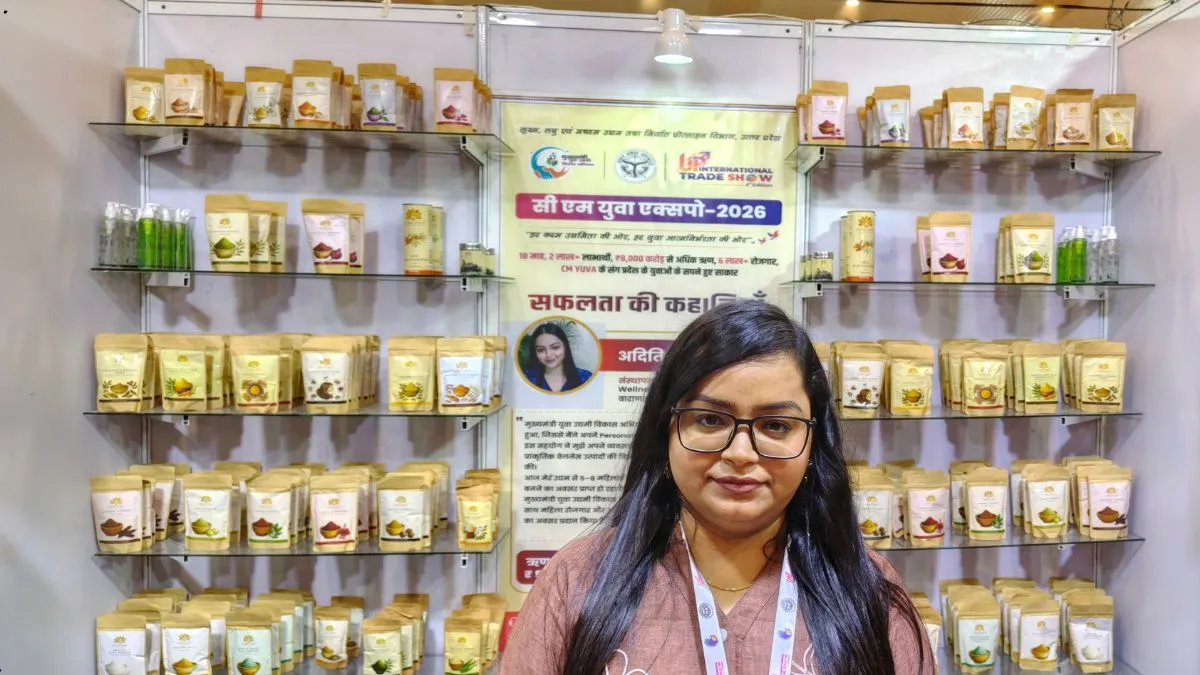
In its very first year, the D2C wellness brand generated nearly Rs 65 lakh in revenue through Amazon, Flipkart, and its official website. Participation in trade expos opened key international export channels for her hero products, including Seabuckthorn Pulp.
She noted that participation in trade expos opened international export channels for her hero products, such as Seabuckthorn Pulp and others.
Reflecting on her vision to share India's natural heritage, Aditi emphasises connecting traditional wisdom with contemporary lifestyle needs: "Jo hamari heritage hai aur jo khazana Ayurveda mein chupa hua hai, use hum logon tak pahuchayenge" ("We want to introduce our heritage and the hidden treasures of Ayurveda to people").
Aryan Chaudhary Scaling Beekeeping To National Prominence
In Daravpur village, Barabanki district, 26-year-old Aryan Chaudhary has been transforming his family's two-decade-old beekeeping tradition into a thriving direct-to-consumer brand– FarmerSun Honey.
Managing 2,500 bee boxes producing 120 tons of honey annually, Aryan realised that third-party vendors were re-packaging his produce and reselling it online at quadruple the price. Seeing the margin and opportunity, he established an independent digital brand and website offering raw honey, honey vinegar, honey-infused ketchup, green tea, and candles.
FarmerSun Honey reports an annual turnover of Rs 1.2 crore–combining digital retail with substantial B2B contracts, Aryan says.
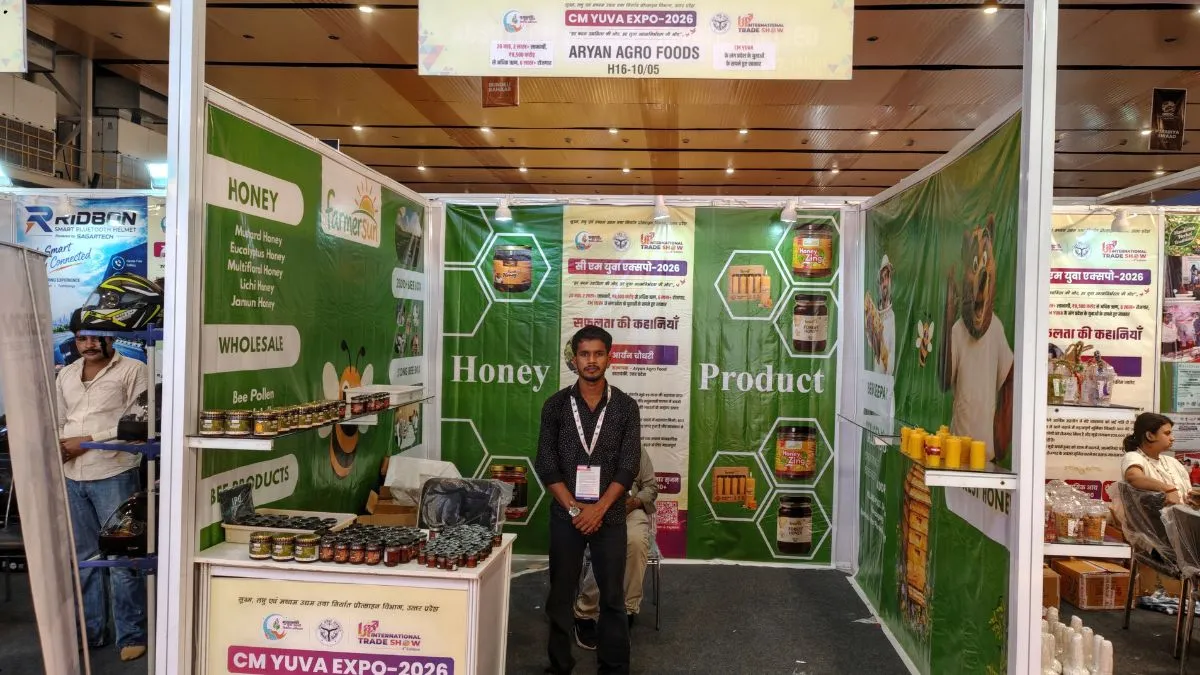
Beyond managing operations, Aryan has established a 1-acre beekeeping farmhouse where he offers free training to local farmers. This initiative fosters a strong community of beekeepers across adjoining areas while driving community building, marketing, and brand advocacy.
When I first interacted with him, he was initially nervous about media coverage—noting "Camera pr to nhi loge na" ("You won't take this on camera, right?") before agreeing to an audio interview—Aryan maintains ambitious plans.
His vision is to scale directly from his village and position FarmerSun against legacy FMCG competitors across national pharmacy chains and national and global e-commerce platforms.