
- By Pawan Mishra
- Fri, 01 May 2026 10:35 AM (IST)
- Source:JND
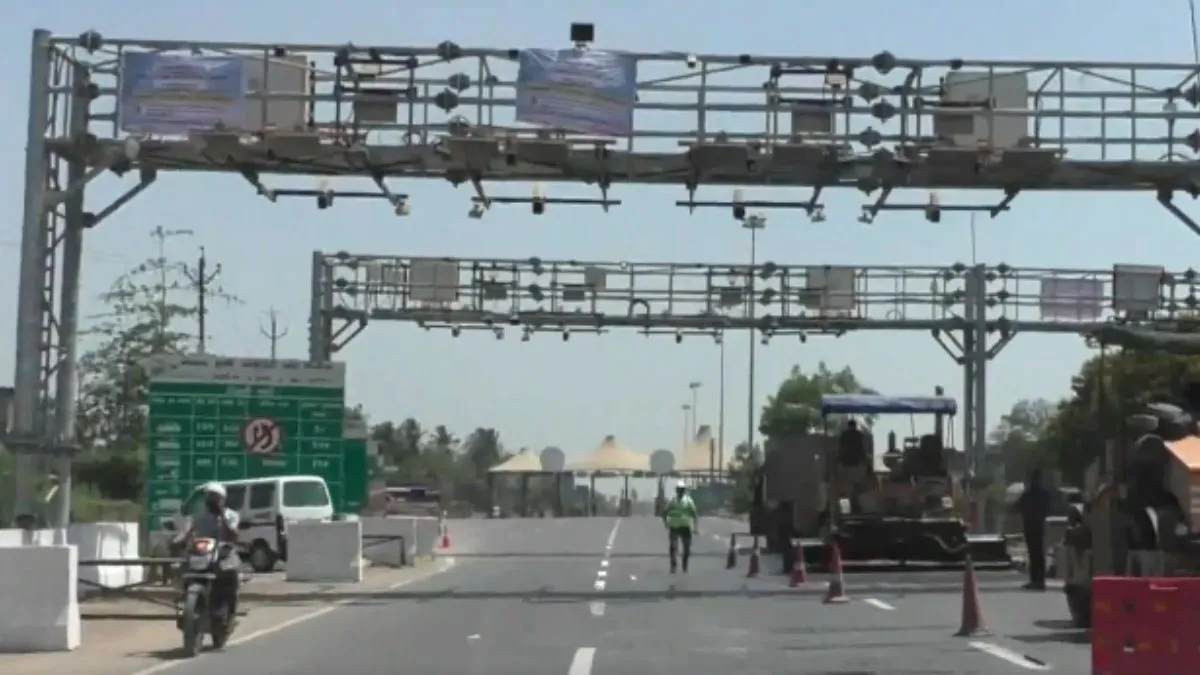
Choryasi Toll Plaza NH-48 News: Union Minister for Road Transport and Highways, Nitin Gadkari, recently said that India will go completely Barrier-Free in terms of tolls by the end of 2026. India’s first barrier-free toll was successfully installed on the Chauryasi toll plaza in Surat, Gujarat. The barrier-free toll system uses a Multi-Lane Free Flow (MLFF) tolling system to operate, and it deducts toll fees without disrupting the flow of traffic on the highway. The MLFF tolling system uses a combination of advanced technology, including RFID readers and ANPR cameras. Let’s take a look at how the Barrier-Free Toll System in India works.
India’s First Barrier-Free Toll Plaza
A video of India’s first-ever barrier-free toll collection system was recently shared by ANI on the social media platform X. The first barrier-free toll collection system has been implemented at the Choryasi Toll Plaza on NH-48 in Surat, Gujarat. The video shared by ANI clearly shows an overhead frame with RFID readers, cameras, and other sensors. You can watch the video here:
#WATCH | Surat,. Gujarat: India’s first barrierless, Multi-Lane Free Flow (MLFF) tolling system has been officially implemented at the Choryasi toll plaza on NH-48 near Surat.
— ANI (@ANI) May 1, 2026
(Visuals from Choryasi toll plaza) pic.twitter.com/jVwAEM8Icu
Also Read: Oben Rorr Evo Electric Bike Launched At Rs 1 Lakh: Check Range, Features, And Specs
Barrier-Free Toll Plaza: What Is It?
Conventional toll plazas deduct toll fees by using a physical barrier, which stops vehicles, and the fee is deducted from the FASTag using the camera, or the vehicle owner pays through UPI. This often creates long queues of vehicles at the toll plaza and interrupts the free-flowing traffic. The barrier-free toll collection system is based on Multi-Lane Free Flow technology, which uses overhead frames with integrated sensors and cameras to detect vehicles and automatically deduct fees without disrupting traffic flow.
Also Read: 2026 Volkswagen Virtus Facelift Launch Soon; Here’s What To Expect In Terms Of Features And Specs
Barrier-Free Toll Collection: How It Works?
As mentioned above, the barrier-free toll collection system uses an overhead frame that has sensors and cameras. The system also integrates FASTag with Automatic Number Plate Recognition (ANPR) technology. The sensor detects the passing vehicle and uses high-performance AI cameras to read the number plate; meanwhile, the RFID sensors read the FASTag and automatically deduct the amount from the linked bank account. If the FASTag of the vehicle is inactive or missing, the camera identifies the vehicle using the number plate and directly sends an e-notice to the owner.
Also Read: Next-Gen Hyundai i20 Launch This Year? Check Expected Design, Features, And Specs
Barrier-Free Toll Plaza: Benefits
The vehicles can pass through the toll points at a speed of 80 km/h without stopping or slowing down. This eliminates the need to stop at the toll plaza and reduces congestion, and this will also reduce the travel time on highways. Another benefit of the barrier-free toll collection is that it will improve the fuel efficiency, as vehicles will not be required to stop and wait.