
- By Raju Kumar
- Thu, 05 Mar 2026 06:20 PM (IST)
- Source:JND
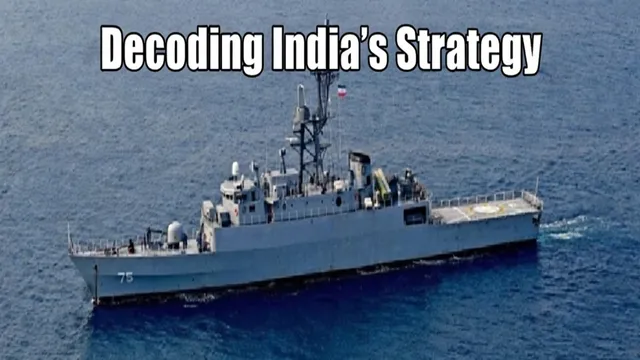
India-Iran War: The ongoing war, which began on February 28, led by the US and Israel against Iran, has started showing its spiral effects. Now, the war has reached the Indian Ocean. With the US submarine sinking an Iranian warship in the Indian Ocean, tensions spread in the region, near Sri Lanka. The Iranian frigate, IRIS Dena, was attacked in international waters off the Sri Lankan coast on Wednesday when it was returning after participating in the Milan naval exercise, a multilateral wargame hosted by India.
'IRIS Dena Guest Of India's Navy: Iran
After the attack on an Iranian warship, Iran's Foreign Minister Seyed Abbas Aragchi strongly condemned the United States, describing the incident as an "atrocity at sea". Aragchi said the warship had recently visited the Indian Navy and was carrying around 130 sailors at the time of the attack. "The US has perpetrated an atrocity at sea, 2,000 miles away from Iran's shores. Frigate Dena, a guest of India's Navy carrying almost 130 sailors, was struck in international waters without warning.
ALSO READ: Jaishankar Talks To Iran Foreign Minister Abbas Araghchi Amid War In Middle East
The periscope video when American torpedo (launched by a submarine) hits the Iranian naval ship IRIS Dena. The Iranian ship was outside Sri Lanka’s territorial waters but still within its economic zone, 44 nautical miles (81km) off the southern coastal city of Galle. Sri Lankan… pic.twitter.com/bRxNxKfcdN
— PANKAJ CHOUDHARY (@PANCHOBH) March 4, 2026
What Does India's Silence On Warship Incident Mean?
In a surprise turn of events, on Thursday, India offered condolences to the slain Iranian Supreme Leader Ayatollah Ali Khamenei. Foreign Secretary Vikram Misri signed the Condolence Book at the Embassy of Iran in New Delhi. However, India remained silent on the warship attack in the Indian Ocean, which is a crucial trade route for the country. Since February 28, New Delhi has taken very calculated steps as the war may affect lakhs of Indians living in the Gulf countries. While India solidified its ties with Israel and other Gulf countries during the war, it constantly called for a diplomatic solution to the ongoing dispute over the nuclear programme in Iran.
On Tuesday, PM Modi spoke to Sultan Haitham bin Tarik of Oman, Crown Prince of Kuwait Sheikh Sabah Al-Khaled Al-Hamad Al-Mubarak Al-Sabah and Amir of Qatar Sheikh Tamim bin Hamad Al Thani, whose countries were attacked by Iran. The prime minister also spoke to his Israeli counterpart, Benjamin Netanyahu, showing a shift in India's foreign policy.
In a balancing act, on Thursday, External Affairs Minister S Jaishankar held a telephone conversation with his Iranian counterpart Araghchi, the second communication since the war commenced.
By not condemning the attack by the US and Israel and remaining silent on the Iranian warship sinking, New Delhi showed a shift in its foreign policy amid changing geopolitics. It is in India's favour if Israel wins the war. An Israeli influence on the Pakistan-Iran border will provide a strategic advantage to India against Pakistan.
India's Internal Politics
The ruling Bharatiya Janata Party and Congress have been at loggerheads over the attack on the Iranian warship in the Indian Ocean. Hitting out at the Congress for wanting India to "blindly side with Iran", the BJP said the country's foreign policy must be guided by national interest and the safety of its citizens, not by the compulsions of the opposition party's "outdated ideological reflexes".
The BJP called the Congress "anti-India", alleging that the main opposition party pursues divisive politics. It only loves its vote bank, not the country and its people, the ruling party said.
"Even China, which spent years diplomatically shielding Iran, overlooking its support for proxy terror groups and buying the bulk of its oil, is now distancing itself from Tehran," Malviya said in a post on X.
Congress Attacks Modi Government
A day after a US submarine torpedoed and sank an Iranian warship in international waters off Sri Lanka's coast, the Congress said it is shocking that there has been no response from the Modi government and claimed that never before has the Indian government looked so "timid and fearful".
(With agencies inputs)