
- By Shibra Arshad
- Sat, 21 Feb 2026 12:02 PM (IST)
- Source:JND
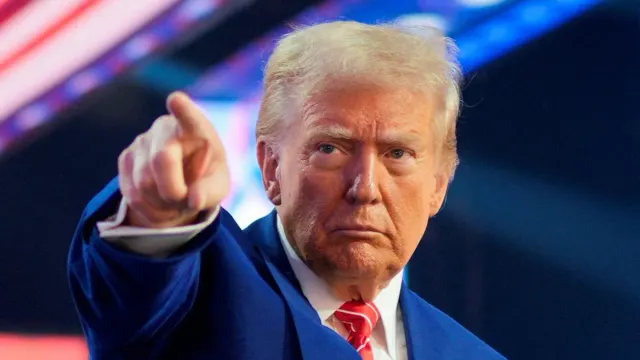
Trump Tariffs: Following the US Supreme Court's striking down of the additional tariffs imposed on American trade partners, calling them illegal and beyond Trump’s administrative powers, US President Donald Trump announced a 10 per cent global tariff and said that he would sign new orders to restore tariffs through alternative legal authorities. Speaking after the court’s ruling, Trump said that he will exercise another set of powers under section 122 to impose a 10 per cent global tariff and would order a launch into what he called illegal trade practise using the powers enshrined in section 301, which can lead to additional Tariffs in future.
“Effective immediately all national security tariffs under Sec 232 & all existing Sec 301 tariffs remain fully in place and in full force and effect. I will sign an order to impose a 10% global tariff under Sec 122 over and above our normal tariffs,” Trump said.
Countries like China, Canada and the UK may attempt to renegotiate the trade agreement after the US invalidated the tariffs imposed by the US President, and the court ruling has created uncertainty.
ALSO READ: US Tariff Puzzle: What Rate Applies To Indian Goods Now- 50%, 25%, 18%, 10% Or 3%?
Trump, in his speech after the SC ruling, mentioned section 122, 301 of the Trade Act of 1974, and section 232 of the Trade Expansion Act of 1962, in reference to the imposed additional tariffs on certain business partners and his plan to impose global 10 per cent tariffs.
What Is Section 122
Section 122 of the Trade Act of 1974 grants the US President the right to impose up to 15 per cent tariffs to address the ‘large and serious’ balance-of-payment deficits and other issues linked to the trade deficit. However, if tariffs are imposed on this authority, they can not last more than 150 days until Congress votes in favour of extending it.
What Is Section 301
Section 301 of the Trade Act of 1974 provides rights to impose kind of punitive tariffs in response to unfair foreign trade practices. Tariffs under this right are imposed in cases such as intellectual property theft, forced technology transfers, or discriminatory measures. Trump imposed 25 per cent tariffs on Chinese products reaching hundreds of billions in goods under this very right. The goal was to target anticompetitive behaviour.
What Is Section 232
Section 232 of the Trade Expansion Act of 1962 allows tariffs or quotas on imports that can be a threat to national security. Trump had used the same power to imposed 25 per cent tariff on steel and a 10 per cent tariff on aluminium in 2018. These tariffs affected Canada, Mexico, the EU, and other countries. Tariffs imposed under this section will remain in place, as it was not imposed using emergency powers.
ALSO READ: 'Will Take Effect Almost Immediately': Trump Signs 10% Global Tariff After Supreme Court Setback
What Is IEEPA
The International Emergency Economic Powers Act (IEEPA) gives the President of the United States the power to regulate international commerce after declaring a national emergency in response to any unusual and extraordinary threat to the United States, which has its source or substantial part of it outside the US. The act was signed by President Jimmy Carter in 1977. President Trump relied on the IEEPA to order additional tariffs. But the law does not mention tariffs. Trump argued that the US trade deficit was so severe that it constituted an emergency, a claim that was dismissed by the Supreme Court.
The IEEPA, which allows the president to seize assets and block transactions during a national emergency, was first used during the Iran hostage crisis and has since been invoked in response to global events, including the 9/11 attacks and the Syrian civil war.