
- By Shubham Bajpai
- Tue, 09 Jun 2026 06:53 PM (IST)
- Source:JND
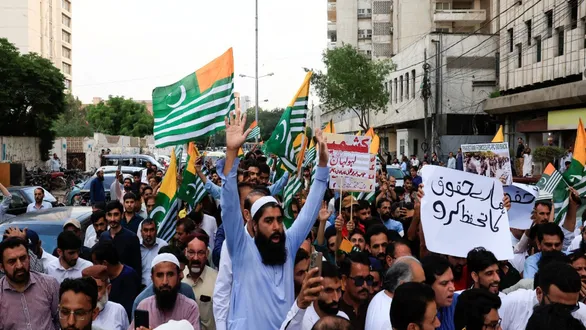
Massive protests are currently underway in Pakistan-occupied Kashmir (PoK), which turned violent after Pakistan Army-led security forces launched a crackdown, causing at least 30 deaths and leaving over 200 injured. People are taking to the streets to protest against the Pakistani establishment. At the helm of the protests in the Joint Awami Action Committee (JAAC), which launched a major movement against the Pakistan Army and government, echoing as far as London.
On Monday, hundreds of protesters gathered outside the Pakistan High Commission in London, raising slogans against alleged human rights violations and political repression in PoK.
What is the controversy over the 12 reserved seats?
The PoK Assembly has a total of 53 seats. Of these, 45 candidates are directly elected, while eight are reserved for women, technical experts, and religious scholars. The dispute concerns the 12 seats within these 45 seats that are reserved for refugees.
These 12 seats are reserved for people who migrated from Jammu and Kashmir to other parts of Pakistan during the wars or other conflicts of 1947, 1965, and 1971. Six seats are for refugees from Jammu and six for refugees from the Kashmir Valley.
The JAAC and other local organisations allege that these reserved seats are undermining the political representation of the local population living in PoK. They argue that decisions regarding the region's future should rest solely with residents, not outsiders, who they often suspect of colluding with Pakistan to rob them of their rights.
JAAC has long demanded the abolition of these 12 seats. The organisation alleges that the election process for these seats is not transparent and benefits certain political families. This issue has now escalated into a major public movement, especially when the elections are scheduled for July 27 in PoK. The issue of reserved seats has become politically sensitive ahead of the elections.
2025 protests and Muzaffarabad Agreement
This is not the first time that JAAC and local PoK residents have hit the streets against the Pakistani establishment. Whether it was about rights, wheat subsidy, electricity supply or any other survival issue, JAAC has been fighting on the streets since 2023.
In October 2025, the Pakistan government, the PoK administration, and the JAAC reached an agreement, dubbed the Muzaffarabad Agreement, after violent protests.
Back then, the government had made many promises like subsidy on wheat and electricity, compensation to the families of those killed in the movement, administrative reforms, better education-health services and strengthening local rights.
However, JAAC alleges that the government has not implemented most of these promises, which is also one of the causes of the ongoing protest.
Tuesday strike
Angered by these issues, the JAAC called for a strike and widespread agitation across PoK starting June 9. The organisation says that instead of addressing public problems, the government has only offered assurances, leading to growing resentment.
However, the Pakistani government claims that most of the JAAC's demands have already been met, but agreement remains elusive on issues such as local autonomy, reserved seats, and long-term subsidies.