
- By Priyanka Koul
- Mon, 23 Feb 2026 09:14 PM (IST)
- Source:JND
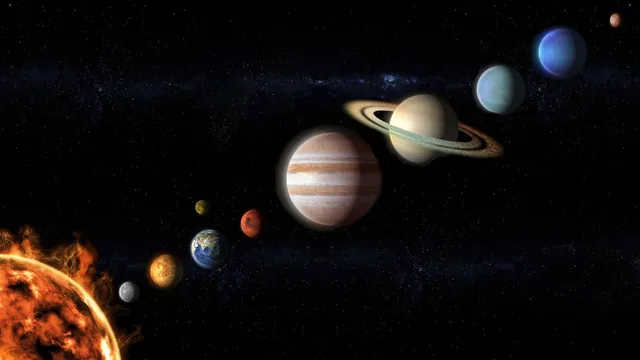
Planetary Parade: Six planets will align in the sky at the end of February, and most will be visible to the naked eye. This is known as a planetary parade, which occurs when multiple planets appear to line up in the sky. While they aren’t in a perfect straight line, they will be positioned close together on one side of the Sun.
Skywatchers can generally spot two or three planets after sunset, according to NASA. Encounters with four or five planets visible to the naked eye are rarer and typically happen once every few years. Last year saw lineups featuring all six and all seven planets.
Planetary Parade: When can you see them?
On Feb 28, if the skies are clear, Mercury, Venus, Jupiter, and Saturn will be visible to the naked eye. Uranus and Neptune, however, can only be seen with binoculars or a telescope.
ALSO READ: 15 Dead After Military Helicopter Crashed In Peru
Planetary Parade: Best time for viewing
The ideal time for viewing is about an hour after sunset. Head to an area with an unobstructed view, away from tall buildings and trees. Look towards the western sky to spot Mercury, Venus, and Saturn near the horizon. Jupiter will be positioned higher up, along with Uranus and Neptune.
ALSO READ: 'Any Country That Wants To Play Games With SC Ruling..': Trump Warns Nations Of Higher Tariffs
Planetary Parade: How to observe the spectacle
As planetary scientist Sara Mazrouei from Humber Polytechnic in Canada explains, “If it’s twinkling, it’s a star. If it’s not twinkling, it’s a planet.”
The parade will be visible throughout the weekend and in the days that follow. Eventually, Mercury will fade from view as it dips below the horizon. According to NASA, at least one bright planet can be seen on most nights. Seeing multiple planets in the sky at once offers a chance to connect with astronomers from centuries past, as noted by planetary scientist Emily Elizondo from Michigan State University.