
- By Shivangi Sharma
- Tue, 27 Jan 2026 10:21 PM (IST)
- Source:JND
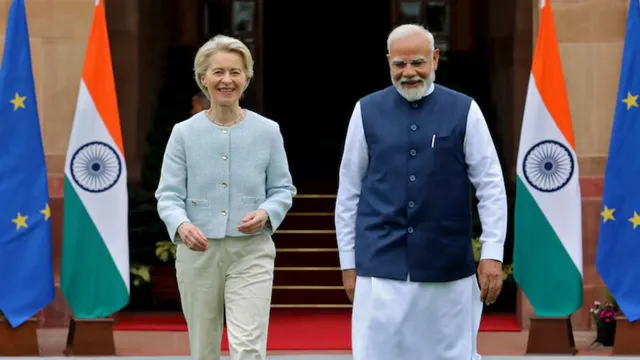
The proposed India–European Union Free Trade Agreement (FTA) in 2026 is shaping up to be far more than a conventional trade pact. By covering nearly 97 per cent of traded goods, the deal is poised to recalibrate global commerce, curbing China’s manufacturing dominance, reducing reliance on US-centric supply chains, and positioning India and Europe as a powerful third pole in the international economic order.
At its core, the agreement offers India a decisive opening. Indian exporters are expected to gain an estimated 12 per cent duty advantage over Chinese goods in key EU markets. That margin could redirect hundreds of billions of dollars in trade toward India, especially in labour-intensive sectors such as textiles, leather, engineering goods and electronics, where China has long held sway. For New Delhi, this aligns squarely with its ambition to emerge as a global manufacturing hub and a credible alternative to China.
Europe Reduces Reliance On China
For Europe, the motivation is equally strategic. Brussels has been under pressure to reduce overdependence on China, particularly in critical industries like steel, aluminium, pharmaceuticals and automotive components. The pandemic, followed by geopolitical shocks and supply disruptions, exposed the risks of concentrated sourcing. The India-EU deal offers European firms smoother access to Indian manufacturing hubs, helping diversify supply chains while lowering vulnerability to political or economic coercion from Beijing.
Challenging US Economic Influence
The pact also subtly checks American economic hegemony. In recent years, Washington, especially under former president Donald Trump, has used tariffs and trade barriers as tools of diplomacy. The threat of punitive US tariffs on both European and Chinese goods has nudged Europe to seek deeper trade ties with India, an emerging power outside the traditional US-China binary.
ALSO READ: US Intervention In Venezuela: A Global Order At Risk | Opinion
Strategic Cooperation Beyond Trade
Beyond tariffs, the agreement signals a broader geopolitical realignment. Thirteen parallel agreements were reached alongside the trade negotiations, including frameworks for the movement of Indian talent to Europe and a joint strategic agenda through 2030. Together, they underline a shared commitment to a rules-based global order at a time when post–World War II institutions are visibly fraying.
By deepening economic integration, India and the EU are effectively creating a two-billion-consumer market that balances Chinese economic influence and mitigates US trade pressure. In doing so, the deal doesn’t just shift trade flows, it reshapes alliances, signalling that the future global order may no longer be dominated by a single power, but by flexible partnerships built on shared strategic interests.