
- By Aditi Priya Singh
- Tue, 10 Feb 2026 01:08 PM (IST)
- Source:JND
"World Pulses Day" is celebrated annually on 10th February to raise awareness about the significance of pulses like lentils, chickpeas, peas and beans. These food items are very nutritious and play a critical role in a healthy diet, especially in developing countries. This is because they contain protein, fibre, and minerals.
The United Nations officially recognised World Pulses Day in 2018 following the success of the International Year of Pulses 2016, with the intention of continuing to raise awareness of the benefits of pulses to human beings and nature. This day also encourages farmers and governments to adopt pulses because they are important for improving fertility and use little water compared to many of the other crops that are grown.
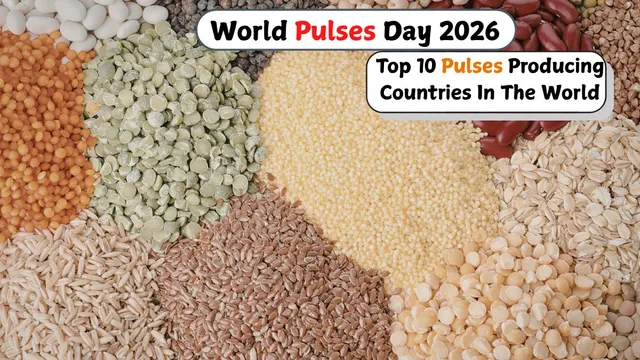
Top 10 Largest Pulse Producers In The World
Due to favourable climates, high demand and supporting agricultural policies, many nations produce huge amounts of pulses worldwide. Here are the top 10 nations in the world that produce pulses are mentioned here.
| Rank | Country | Annual Production (2023-2024) |
|---|---|---|
| 1. | India | 25 to 28 million tonnes |
| 2. | Myanmar | 5.5 – 6 Million tonnes |
| 3. | Canada | 5.1 Million tonnes |
| 4. | China | 5 Million tonnes |
| 5. | Russia | 4.1 Million tonnes |
| 6. | Nigeria | 4 Million tonnes |
| 7. | Niger | 3.5 Million tonnes |
| 8. | Ethiopia | 3.47 Million tonnes |
| 9. | Brazil | 2.9 Million tonnes |
| 10. | USA | 2 Million tonnes |
Source: Official sources like PIB, APEDA and Site Adda247
1. India – 25 to 28 Million Metric Tons
-1770708811361.jpg) Top pulse-producing countries (Image: Canva)
Top pulse-producing countries (Image: Canva)
India is the largest producer of pulses because pulses are an integral part of the Indian diet. India has a large population of vegetarians. Pulses are a very good source of protein for vegetarians. India has large agricultural areas, such as Madhya Pradesh, Rajasthan, Maharashtra, Uttar Pradesh, etc., that are suitable for the cultivation of pulses. Government support is also available through the minimum support price for such pulses.
2. Myanmar – 5.5 to 6 Million Metric Tons
Due to the favourable tropical climate and plains, Myanmar produces a quantity of pulses. Pulses are one of the important export crops of the country, especially to India and other Asian emerging markets. Pulse farming requires relatively low investment, hence preferred by farmers, and improves soil fertility.
3. Canada – 5.1 Million Metric Tons
Canada is one of the largest exporters of pulses, most specifically lentils and peas. The cold climate and advanced technology in farming help with its high productivity. Mechanical farming on a large scale and strong demand on the global platform contribute to its high production.
ALSO READ: Laptops, Gadgets To Dairy Products, Pulses: What All Will Get Cheaper After India-US Trade Deal
4. China – 5 Million Metric Tons
-1770708933479.jpg) Top pulse-producing countries (Image: Canva)
Top pulse-producing countries (Image: Canva)
China mainly produces pulses to fulfil the food requirements of its huge population. Beans and peas are grown as part of mixed cropping patterns. The food security and mixed farming agendas set by the government ensure that pulse production remains stable.
5. Russia – 4.1 Million Metric Tons
Russia has increased pulse production in recent years due to increased demand globally. This is due to the large size of its land and the favourable temperature for cultivation. Pulses are used for crop rotation to enrich the soil.
6. Nigeria – 4 Million Metric Tons
Nigeria is one of the major pulse-producing countries in Africa, especially in cowpeas. Pulses are widely used as a cheaper source of protein. The warm climate, along with conventional production practices, makes Nigeria a major producer of pulses.
7. Niger – 3.5 Million Metric Tons
Pulses play a significant role in Niger’s food security as well as income generation. Farmers cultivate them, particularly the drought-resistant kind, which can survive in harsh weather conditions. Pulses can thrive in the semi-arid conditions of Niger.
8. Ethiopia – 3.47 Million Metric Tons
Pulses such as lentils, chickpeas, and beans are grown in Ethiopia due to the highland climate and well-drained soil. Pulses form an integral part of the local diet and are also exported. Diversification programs of the government have encouraged the production of pulses.
ALSO READ: 5 Best Nutrient-Rich Foods That Help Control Diabetes Naturally; Know From Doctor
9. Brazil – 2.9 Million Metric Tons
-1770709012624.jpg) Top pulse-producing countries (Image: Canva)
Top pulse-producing countries (Image: Canva)
Brazil is a large producer of pulses like beans because they are a staple crop. Brazil’s large agricultural land, advanced farming technology, and tropical climate make bean production consistent throughout the year.
10. USA – 2 Million Metric Tons
The United States primarily produces pulses for export, such as chickpeas, lentils, and peas. The climate and soil in places like Montana and North Dakota are ideal. Research, efficient supply chains, and cutting-edge technology all contribute to steady productivity.