
- By Raju Kumar
- Wed, 11 Mar 2026 01:36 PM (IST)
- Source:JND
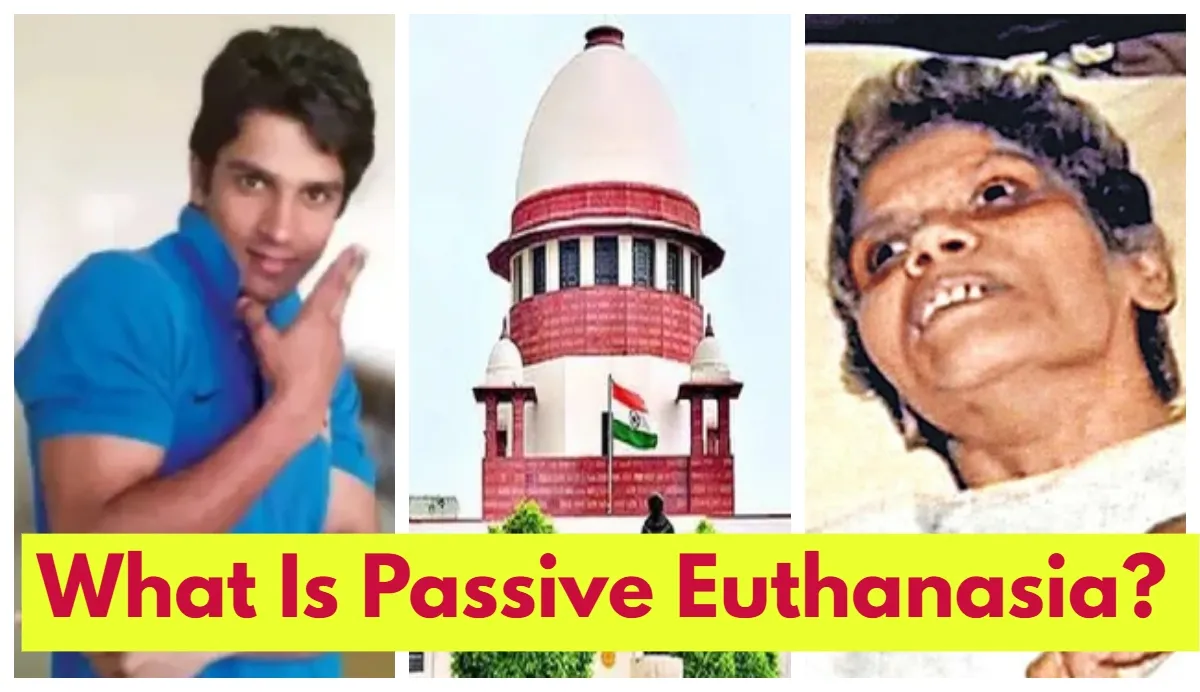
Passive euthanasia is in the news after the Supreme Court, in a landmark ruling, permitted the withdrawal of artificial life support of a 31-year-old man, Harish Rana, who has been in a comatose condition for more than 12 years, saying it must be ensured that it is withdrawn with a tailored plan so that dignity is maintained. This was the first case in which the apex court permitted passive euthanasia, also known as mercy killing or right to die.
ALSO READ: Euthanasia: This Country Allows Critical Patients To End Their Lives Legally | Know Rules In India
Why the Supreme Court Order Matters
The Supreme Court order allowing passive euthanasia is in terms of its 2018 Common Cause judgment, which was modified in 2023, recognising the fundamental right to die with dignity. Now, passive euthanasia has a legal standing. In the 2018 judgement, a constitution bench had recognised passive euthanasia and the right to die with dignity as a fundamental right under Article 21. The court had held that passive euthanasia could be carried out using "Advance Medical Directives". On January 24, 2023, a five-judge Constitution Bench modified the 2018 Euthanasia Guidelines to ease the process of granting passive euthanasia to terminally ill patients.
What Is Passive Euthanasia?
Passive euthanasia is the intentional act of letting a patient die by withholding or withdrawing life support or the treatment necessary to keep him alive. The Union Health Ministry had released the draft of "Guidelines for Withdrawal of Life Support in Terminally ill Patients" in October 2024. The guidelines issued states that it should be based on "considered decision" taken by doctors on withdrawal of life support in terminally ill patients based on certain conditions.
ALSO READ: SC Allows Passive Euthanasia For 31-Year-Old Man In Landmark Ruling; Why 'Right To Die' Matters?
What Are the Conditions For Passive Euthanasia?
According to the draft guidelines the withdrawal includes four conditions:
- a) Any individual declared brainstem death as per the THOA (Transplantation of Human Organs and Tissues ), Act 1994, which regulates the removal, storage, and transplantation of human organs and tissues for therapeutic purposes.
- b) Medical prognostication and considered opinion that the patient's disease condition is advanced and not likely to benefit from aggressive therapeutic interventions
- c) Patient/surrogate documented informed refusal, following prognostic awareness, to continue life support d) Compliance with procedure prescribed by the Supreme Court.
Aruna Shanbaug Case
Aruna Shanbaug, who was a nurse at Mumbai's KEM Hospital, was brutally assaulted and raped in 1973 by ward boy Sohanlal Valmiki. Aruna was strangled with a dog chain, causing severe brain damage and blindness, and lived in a vegetative state for 42 years until she died in 2015. A journalist, Pinki Virani, filed a plea in the Supreme Court for euthanasia. Nearly 38 years after she suffered the brutal assault, the apex court responded to the plea in 2011 by turning down the mercy killing petition. But the Aruna Shanbaug case became historic as it led to a Supreme Court ruling legalising passive euthanasia in India.
Countries Where euthanasia Is Legal
Belgium, Canada, Colombia, New Zealand, Spain, all six states of Australia (partially), Ecuador, Luxembourg, the Netherlands and Uruguay allow euthanasia.
(With agencies inputs)