
- By Priyanka Koul
- Sat, 07 Feb 2026 12:29 AM (IST)
- Source:JND
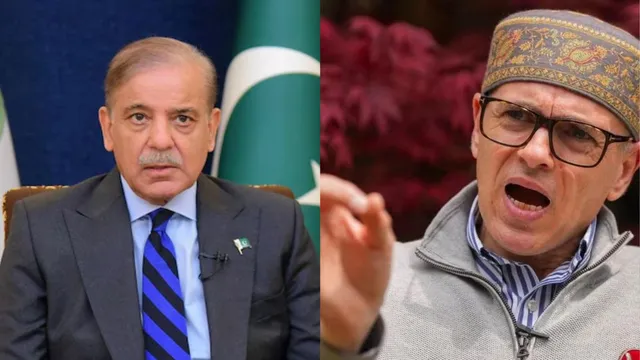
In a sharp rebuttal to Pakistan Prime Minister Shehbaz Sharif’s comments about Kashmir being Pakistan’s "jugular vein" and one day becoming part of the country, Jammu and Kashmir Chief Minister Omar Abdullah questioned Pakistan’s ability to manage the territory it already controls.
Responding to Sharif’s provocative remarks, Abdullah sarcastically asked how Pakistan could absorb Kashmir, given its struggles with the regions it currently holds. The National Conference leader wittily retorted, "We will be part of them? They can't handle what they already have. What will they do with us?"
Sharif's comments, made on Thursday, sparked fresh tensions with India when he declared that "Kashmir will become a part of Pakistan" while addressing a gathering in Pakistan-occupied Kashmir. The speech came amid rallies and demonstrations held across Pakistan to mark Kashmir Solidarity Day.
In his speech, Sharif reaffirmed Pakistan's "unwavering support" for the Kashmiri people and reiterated the country’s long-standing position on the disputed region.
“The solution to the Jammu-Kashmir dispute is to honour the wishes of the people of Kashmir and implement the UNSC’s resolutions,” he remarked.
“I have come to stand in solidarity with our brothers in Kashmir on behalf of the Pakistani people and the Pakistani leadership,” Sharif added. In a direct and forceful remark, Sharif declared, “Kashmir will become a part of Pakistan.”
India has consistently affirmed that Jammu and Kashmir "was, is, and shall forever remain" an integral part of the country.
Home Minister Amit Shah has also asserted in the past that Pakistan-occupied Kashmir is a part of India, and that the country will reclaim it.
ALSO READ: Why Mosque Attacks Persist In Pakistan Despite Being A Muslim-Majority Country; Explained
In the meantime, Jammu and Kashmir Chief Minister Omar Abdullah commented on the return of Kashmiri Pandits, asserting that their return would only be feasible once their sense of security is fully restored. He made it clear that no amount of funding, packages, or schemes could guarantee their return.
"I have always maintained that Kashmiri Pandits left the valley because their sense of security was taken away. They felt unsafe living in the valley. They will only be able to return when that sense of security is restored," Abdullah said.
He emphasised that restoring the confidence of Kashmiri Pandits should be a collective effort, not only to help them return but also to facilitate the return of all those who fled the valley during the late 1980s and early 1990s.