
- By Shubham Bajpai
- Sat, 28 Feb 2026 06:20 PM (IST)
- Source:JND
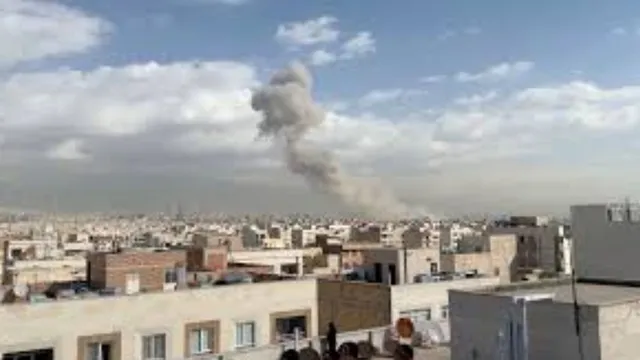
Long-simmering tensions between the United States and Iran have reached a tipping point as Pentagon, along with Israel, launched a major combat operation on Tehran on Saturday. In retaliation, Iran struck US bases in Qatar, Bahrain and UAE, raising concerns of a broader conflict, expanding to the entire region.
The latest escalation has alarmed the neighbouring countries as most of them have issued advisories to their citizens, warning against leaving homes or visiting near military infrastructures. The conflict has yet again brought Strait of Hormuz in focus as it is key to global oil supplies and India's crude imports.
Strait of Hormuz at risk of blockade
The Strait of Hormuz is around 161 km long and 33 km wide at its narrowest point. Located south of Iran, the Islamic nation has time and again claimed authority over it and has threatened to close it.
On multiple occasions, it has boasted of the capability to impose a naval blockade. However, it has refrained from any aggressive action for over 40 years. Around 10 days ago, Tehran had already decided to temporarily close it on February 17 as nuclear talks with the US were underway.
ALSO READ: World Leaders React To Israel-US Attack On Iran: Here's Who Said What On Escalating Tensions
Conflict amid India's rising dependence on Gulf
Experts believe that a complete blockade will affect over 50 per cent of India's monthly total imports, according to data from commodity tracking firm Kpler.
India's dependence on the route has been rising in recent months. This year, India has already imported nearly 2.6 million barrels per day (mbpd) from Gulf countries in 2026 till February 24.
A report by Money Control, citing Sumit Ritolia, lead research analyst at Kpler, stated that roughly 2.6 mbpd of India’s crude imports pass through the Strait, primarily from Iraq, Saudi Arabia, the UAE and Kuwait.
Analysts believe that a day of blockade could cause Brent Crude prices to surge to somewhere between $120 and $150, which has averaged $66 a barrel year-to-date as of Feb. 20.
ALSO READ: Nuclear Test In Bangladesh? Kolkata Earthquake Sparks Online Uproar
Options for India
In case of a wider conflict and subsequent oil supply disruption, India could explore secure routes like Saudi Arabia's East-West pipelines to the Red Sea and the UAE’s Abu Dhabi Crude Oil Pipeline (to Fujairah). Both of these pipelines are designed to bypass Hormuz.
However, Ritolia cautioned that the pipelines' capacities are finite and are prioritised for producer export strategies.