
- By Priyanka Koul
- Fri, 06 Feb 2026 11:45 PM (IST)
- Source:JND
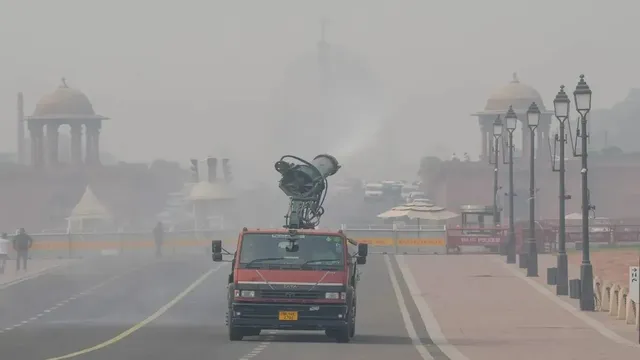
Delhi-NCR Air Quality: In January, Delhi ranked as the second most polluted city in India, following Ghaziabad, with a monthly average PM2.5 concentration of 169 micrograms per cubic metre almost three times higher than the country's National Ambient Air Quality Standards limit of 60 micrograms per cubic metre.
Ghaziabad was the most polluted city, with a monthly average PM2.5 concentration of 184 micrograms per cubic metre, consistently exceeding the daily national air quality standard throughout the month.
A monthly analysis by the Centre for Research on Energy and Clean Air (CREA) revealed that, during January 2026, Delhi endured 24 days of 'Very Poor' air quality, 3 days of 'Severe' air quality, 2 days of 'Poor' air quality, and 2 days of 'Moderate' air quality.
According to the CPCB, an AQI between zero and 50 is considered 'good', 51 to 100 'satisfactory', 101 to 200 'moderate', 201 to 300 'poor', 301 to 400 'very poor', and 401 to 500 'severe'.
Across the country, 123 out of 248 cities had monthly average PM2.5 concentrations exceeding the national standard. None of the cities met the World Health Organization's (WHO) daily safe guideline of 15 micrograms per cubic metre.
"Among cities covered under the National Clean Air Programme (NCAP), air quality remained largely non-compliant. Of the 97 programme cities with sufficient data, 46 exceeded India's daily PM2.5 standard, while all 97 breached the World Health Organisation guideline," the report noted.
Cities such as Noida, Gurugram, Greater Noida, Dharuhera, Gangtok, Singrauli, Bhiwadi, and Narnaul also ranked among the top ten most polluted cities. Uttar Pradesh and Haryana each had three cities in the top ten.
PM2.5 refers to fine particles with a diameter of 2.5 micrometres or less, approximately the width of a human hair. These particles are so small that they can penetrate deep into the lungs and even enter the bloodstream, posing significant health risks.