- By Himanshu Badola
- Fri, 20 Feb 2026 11:04 PM (IST)
- Source:PTI
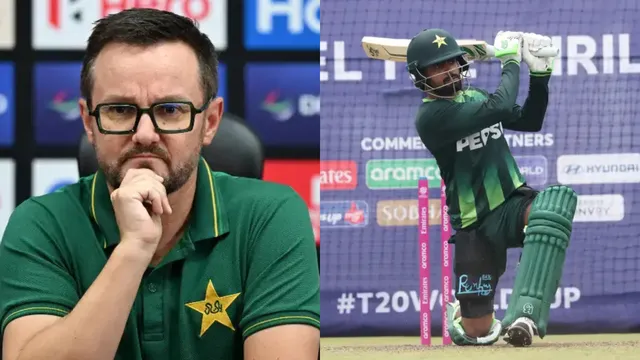
Pakistan head coach Mike Hesson on Friday dismissed claims that the demotion of batting stalwart Babar Azam and the omission of pace spearhead Shaheen Shah Afridi for the Namibia match were knee-jerk reactions of the crushing defeat against India in the T20 World Cup, maintaining the decisions were purely tactical.
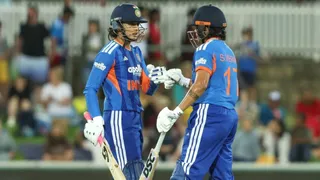
India outclassed Pakistan by 61 runs in yet another high-voltage clash between the arch-rivals, with opener Ishan Kishan spearheading the emphatic triumph with a commanding knock in a group stage league match. Shaheen Afridi endured a costly outing, leaking 15 runs in his final over, and Babar fell for just five runs, failing to live up to the high expectations.
"No, I wouldn't say that (Shaheen was dropped because of poor performance, and Babar pushed down the order because of the loss to India). I think, as I said, (pacer) Salman Mirza deserved his opportunity," said Hesson in a media interaction.
Recommended For You


"And Babar was the first to recognise when left-arm spin was taking shape, and it was turning that it wasn't a smart move to send out two right-handers." Babar Azam did not get an opportunity to bat against Namibia, as Sahibzada Farhan anchored the innings from start to finish, smashing an unbeaten century to carry Pakistan through. So no, certainly not a paradigm shift, (it was) more about roles," said Hesson, when asked if there was a "paradigm shift" in the team's thinking after the drubbing from India.
Pakistan face New Zealand in their opening Super 8 clash in Colombo on Saturday, with improving their modest powerplay average set to be a key focus area as they look to make a strong impact in the first six overs.
Hesson was blunt in his assessment, stating that Babar was moved down from the opening slot solely because his strike rate in the power play had been below par. "Babar is well aware of that. I think he's well aware that his strike rate in the power play in World Cups is less than 100 in T20s. So clearly, that's not a role that we think we need here. We think he's a fine player through the middle, if required, in terms of if we're in a little bit of trouble, or as we saw against the USA," said Hesson.
"Once he gets himself set, he can increase his strike rate at that point. So, we brought Babar back in for a specific role post the Asia Cup. We wanted some batsmanship through the middle, and he certainly brings that for us."
Against Namibia, Shadab Khan was promoted ahead of Babar, who ultimately did not get a chance to bat as Sahibzada Farhan and Shadab saw out the full 20 overs. Hesson said Babar was not the ideal batter to walk in around the 12th over, as Pakistan were looking to accelerate at that stage of the innings. "So, the other day, we got to the 12th over mark, and at that point, Babar Azam is not the best person to come in. We've got plenty of other options who can come in and perform that role towards the end. He knows that he's got a certain set of skills that the team require, and there are certain times where other players can perform that role more efficiently," added Hesson.
Asked whether he intended to deploy mystery spinner Usman Tariq as an attacking weapon or a containing option, Hesson said the bowler -- who has drawn considerable attention for his unorthodox action -- was versatile enough to be effective in both roles.
"I think he's one of those bowlers around the world who does both. He's able to attack and defend at the same time. And that's an incredible skill to have, so we're very fortunate that he's on our side."
Asked if Pakistan would hold a psychological edge over New Zealand in the Super 8 opener, given their superior win-loss record against the Kiwis, Hesson played it down, saying matches are not decided by psychology but by the execution of skills on the day.
"I don't think games are won or lost psychologically. I think they lost; they won through skill. New Zealand have played a huge amount on the subcontinent in recent times. Sri Lanka tends to spin a little bit sharper than it does in India as a general rule.
"And, we saw that a little bit at SSC. We saw that also during the first innings in particular, here the other night. So I don't believe anyone's got a psychological edge," he said.