
- By PTI
- Fri, 06 Mar 2026 01:26 PM (IST)
- Source:PTI
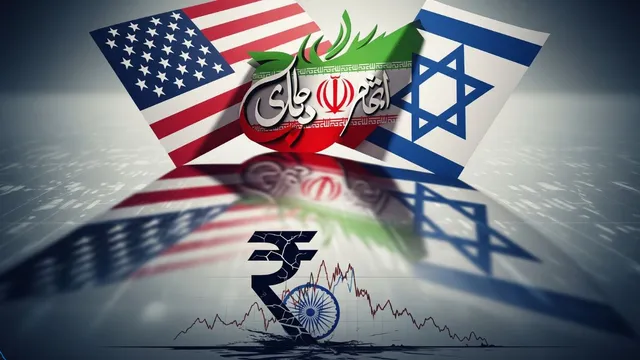
US-Iran Conflict Impact: India could face pressure on the rupee, higher inflation and a widening current account deficit if the escalating Middle East conflict spikes energy prices and disrupts supplies, given its heavy dependence on crude and LNG imports from the region, according to Moody's Ratings.
"India stands out among the large Asian economies that rely on crude and LNG from the Middle East," the rating agency said.
The country imports about 46 per cent of its oil and natural gas requirements from the Middle East. Supplies from the region have been disrupted as the widening West Asia conflict has blocked the Strait of Hormuz, a key conduit for crude oil and LNG exports from the region.
"Costly energy imports would weaken the rupee, raise inflation, worsen the current account balance and complicate monetary policy as well as fiscal management if they lead to expanded subsidies to help offset the economic shock," Moody's said in a note on oil supply shock in prolonged West Asia conflict.
Strait of Hormuz key risk point
Moody's said the Middle East conflict poses a substantial risk to the global economy, particularly if it causes prolonged disruption in global energy markets. The Strait of Hormuz, a vital shipping route for oil and Liquefied Natural Gas (LNG), remains a critical choke point.
Although infrastructure damage so far has been limited and global inventories offer short-term buffers, shipping through the strait has largely stalled, and some regional ports have suspended operations, disrupting trade in oil and LNG.
"But a prolonged disruption in navigation through the Strait of Hormuz, beyond our baseline of a few weeks, would likely trigger sustained supply shortages; prices averaging higher than USD 100 per barrel for Brent, the main international benchmark crude; higher inflation; tighter financial conditions; and slower global growth," it said.
Energy-importing regions in Asia and Europe would sustain the most immediate stress from USD 100-plus Brent crude.
"Sizable crude inventories and advance shipments by Gulf producers will limit the effects of the Middle East conflict on the energy markets and economies for the next few weeks. But the conflict remains fluid, raising risks of regional escalation with immediate implications for global energy security and market stability," it said.
While core energy infrastructure has not been significantly damaged, shipping through the Strait of Hormuz has largely stalled, and regional ports have suspended operations, disrupting trade for oil and liquefied natural gas (LNG).
"A prolonged blockage would restrict significant global supply and drive energy prices higher," the rating agency said.
Short disruption manageable
In its baseline scenario, Moody's assumes the conflict will be relatively short-lived and navigation through the Strait of Hormuz will resume soon.
Under this scenario, Brent crude prices would average USD 70-80 per barrel in 2026, only moderately higher than the USD 69 per barrel average in 2025, limiting the impact on global growth.
"We frame our analysis with two main scenarios, with outcomes ranging from a baseline scenario with short-lived disruption to a much longer and more disruptive adverse scenario. Our baseline scenario assumes Brent prices are moderately higher than average levels in 2025," it said.
If the conflict is relatively short-lived, safe navigation through the Strait of Hormuz will pick up again and will lead to swift resolution of supply restrictions.
Prolonged conflict could strain the global economy
However, a prolonged disruption that pushes Brent prices above USD 100 per barrel would significantly strain energy-importing regions, particularly Asia and Europe.
Higher energy costs would raise consumer prices and production costs globally, erode household purchasing power and weigh on investment, Moody's said. Persistent inflation risks could also force major central banks to keep interest rates higher, tightening financial conditions and slowing global growth.
"Our adverse scenarios consider a sustained increase in crude prices to USD 100 per barrel and higher, exacerbating energy security concerns and economic strain amid prolonged disruptions to energy supply from the region," it said.
"Significantly higher oil prices for a sustained period would strain energy-importing regions, especially Europe and Asia."
High energy prices would raise consumer prices and production costs globally, eroding household purchasing power and weighing on investment. Inflation risks could compel major central banks to even raise rates.
"The resulting tightening in financial conditions and increased uncertainty will crimp global growth," the rating agency added.
Disclaimer: This story has been directly published from agency feed (PTI). No changes have been made except the headline.